





What is Bitcoin Halving?
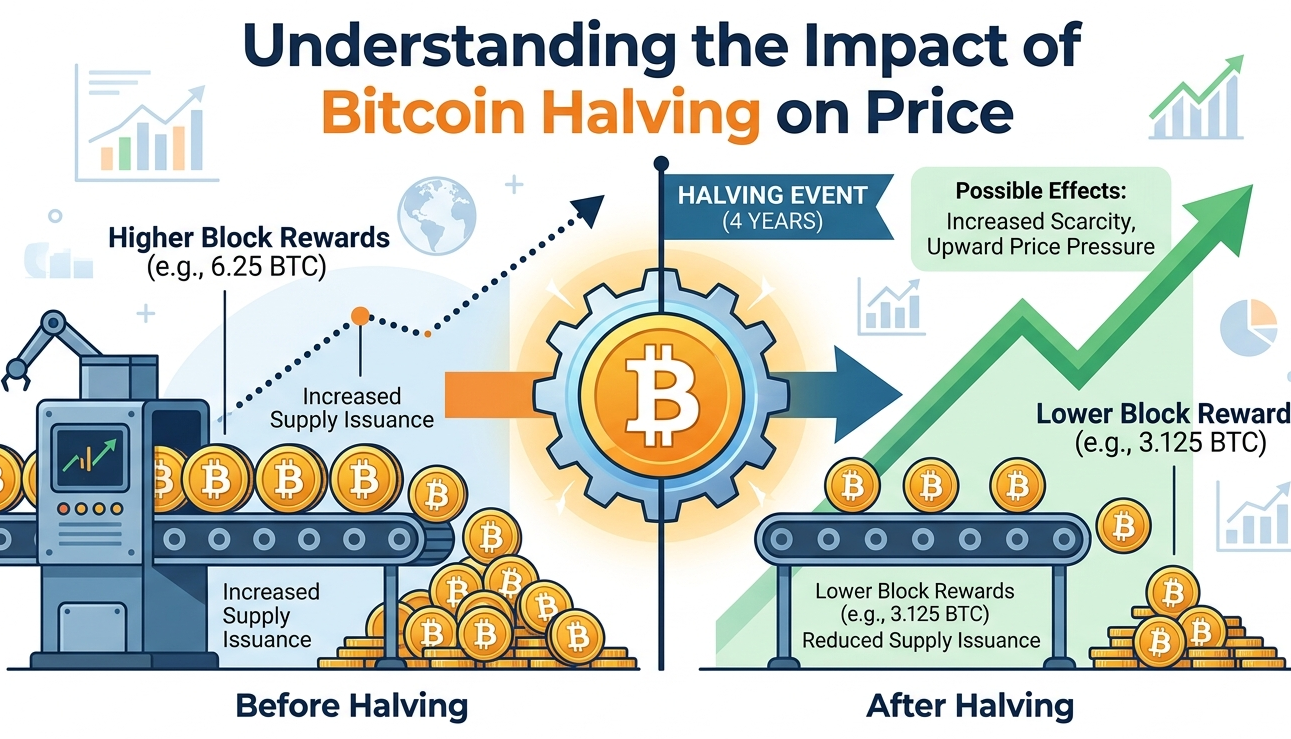
Bitcoin halving is a central event in the Bitcoin ecosystem that fundamentally influences its economic model. It occurs approximately every four years, or after every 210,000 blocks are mined, drastically reducing the reward that miners receive for validating transactions within the blockchain. Originally, miners received 50 bitcoins per block when Bitcoin was launched in 2009. This reward has halved three times: first to 25 bitcoins in 2012, then to 12.5 in 2016, and subsequently to 6.25 bitcoins in 2020. The next anticipated halving, projected to occur in 2024, will reduce the block reward to 3.125 bitcoins.
The primary significance of the halving process lies in its role in regulating Bitcoin’s supply. Unlike fiat currencies, which can be printed in unlimited quantities by governments, Bitcoin has a capped supply of 21 million coins. This deflationary measure is designed to combat inflation and promotes scarcity, much akin to precious metals like gold. By halving the reward periodically, Bitcoin’s issuance becomes more controlled, fostering an environment where demand may potentially outpace supply, thereby driving up the price.
Historically, Bitcoin halvings have been associated with substantial price rallies, with fluctuations recorded in the months leading up to and following each event. Market speculation and anticipation play a significant role in the dynamics surrounding halving events, making them crucial moments for investors and traders alike. Understanding the halving mechanism is essential for anyone engaging with Bitcoin, as it impacts mining operations, network security, and the overall market landscape.
Historical Price Movements Post-Halving
Bitcoin halving events have been pivotal moments in the cryptocurrency market, historically correlated with significant price movements. The first halving occurred in November 2012, where the block reward for miners was reduced from 50 BTC to 25 BTC. Following this event, Bitcoin experienced a substantial price increase, rising from around $12 to nearly $1,150 in the subsequent year. This dramatic rise exemplified the market’s reaction to the reduced supply of new coins entering circulation, thereby fostering increased demand.
The next halving transpired in July 2016, reducing the block reward to 12.5 BTC. Following this reduction, Bitcoin’s price showcased a notable rally, escalating from around $650 to nearly $20,000 by December 2017. Market sentiment during this period was overwhelmingly bullish, driven by growing public interest and adoption of Bitcoin as an investment asset. Notably, the 2016 halving reinforced the view that halving events can stimulate market enthusiasm and attract new investors, further contributing to price surges.
The most recent halving took place in May 2020, which cut the reward to 6.25 BTC. In the following months, Bitcoin commenced another significant bull run, climbing from approximately $8,500 at the time of the halving to an all-time high of over $60,000 in early 2021. This growth was characterized not only by supply constraints but also by heightened institutional adoption and investor interest, underscoring the intricate dynamics between halving events and market performance.
In summary, the historical analysis of Bitcoin’s price movements post-halving events reveals a consistent pattern of price surges. While past performance does not guarantee future results, these patterns point toward a potential correlation between halving events and bullish market behavior, driven by supply and demand economics as well as market sentiment. Understanding these historical trends can provide valuable insights for investors and enthusiasts as they navigate the complexities of cryptocurrency trading.
Market Influences and Speculation
The phenomenon of Bitcoin halving has significant consequences on market behavior and price dynamics within the cryptocurrency ecosystem. Halving events, which occur approximately every four years and reduce the mining rewards for Bitcoin by half, create a unique landscape for investor speculation and market psychology. Leading up to a halving, traders and investors often exhibit heightened speculative behavior as they anticipate potential price increases due to the decreased supply of new Bitcoins entering the market.
Investor sentiment plays a crucial role in shaping market dynamics surrounding a Bitcoin halving. The widespread dissemination of information through social media, forums, and news outlets fosters a collective narrative that influences buying and selling decisions. Many investors, fueled by historical precedents showing post-halving price surges, tend to accumulate Bitcoin in anticipation. This behavior further exacerbates price volatility, creating upward pressure as demand increases against a backdrop of declining supply.
Additionally, external economic conditions can impact Bitcoin’s price during halving events. Factors such as changes in global market trends, regulatory developments, and macroeconomic indicators often interact with investor sentiment, influencing trading behaviors. For instance, a robust economy may lead to increased disposable income for investments, while economic downturns may trigger risk aversion, limiting Bitcoin’s price potential.
In the aftermath of a halving, the adjustments in mining rewards can also influence market stability. Miners’ operational costs, which include electricity and hardware, become pivotal. If the Bitcoin price does not rise sufficiently following the halving, miners may cut back on operations, leading to reduced network security and potential market ramifications. Thus, understanding the intricate interplay of investor speculation, market psychology, and external factors is essential to grasp the overall impact of Bitcoin halving on its price movements.
Future Projections and Implications
The future price of Bitcoin following its halving events has been a topic of much debate among analysts and investors alike. Historically, Bitcoin halving has had profound implications for its price trajectory. Many experts argue that the reduction in the supply of new bitcoins entering the market, combined with sustained or increasing demand, typically leads to upward price movements. Analysts have employed various predictive models, including stock-to-flow and regression analysis, to forecast Bitcoin’s price post-halving.
One prominent model, the stock-to-flow model, posits that Bitcoin will experience significant price appreciation driven by its decreasing inflation rate—a direct consequence of halving events. According to this model, Bitcoin’s scarcity is expected to increase exponentially, suggesting potential price levels reaching into the hundreds of thousands of dollars per Bitcoin in the long term. However, these forecasts also come with a range of caveats, as market conditions can fluctuate dramatically.
Technological developments within the Bitcoin network, including scalability enhancements and increased adoption rates, can further influence its price trajectory. For instance, improvements such as the Lightning Network aim to enable faster and cheaper transactions, potentially increasing user adoption. As the network matures, these advancements may lead to a broader acceptance of Bitcoin as a valuable asset and medium of exchange, reinforcing its price stability and growth potential.
Nonetheless, various risks accompany these optimistic projections. Regulatory challenges, market volatility, and macroeconomic factors present uncertainties that could impede Bitcoin’s price recovery post-halving. Cybersecurity threats and potential forks in the network also pose risks that could impact investor sentiment negatively. As such, while there are bold predictions about Bitcoin’s price trajectory in the aftermath of halving, the landscape remains intricate and needs careful monitoring.