





Introduction to Predictive Analytics
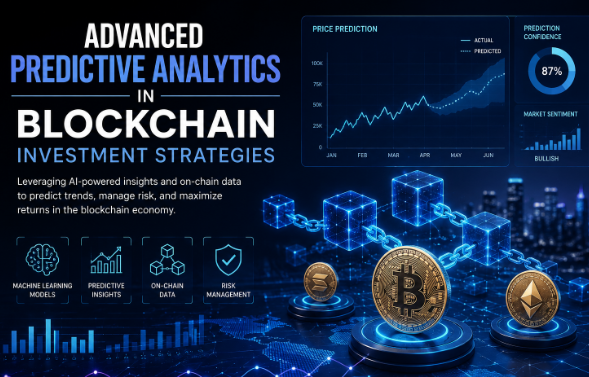
Predictive analytics serves as a crucial methodology in various sectors, with investment strategies being a prominent application. Its purpose is to harness historical data and utilize advanced statistical algorithms and machine learning techniques to forecast future events. In the realm of finance, and specifically in blockchain investment strategies, predictive analytics has emerged as a vital tool for enhancing decision-making processes.
By analyzing patterns within historical data, predictive analytics enables investors to gauge potential risks and rewards associated with blockchain investments. The technology is particularly relevant in the context of the highly volatile and rapidly changing cryptocurrency market. Here, predictive models can provide insights into price movements and market trends, allowing investors to make informed decisions based on statistical probabilities instead of mere speculation.
Investment strategies that leverage predictive analytics can benefit immensely from the integration of machine learning. This technology improves over time, learning from new data and refining its algorithms to produce more accurate forecasts. Consequently, investors can use predictive analytics to identify investment opportunities, assess market sentiment, and establish optimal entry and exit points for their trades. In doing so, they enhance their ability to navigate the complexities of blockchain investments.
Moreover, the significance of predictive analytics in blockchain extends beyond short-term trading strategies. Long-term investors can utilize these analytical techniques to evaluate the potential growth of blockchain projects, assess the sustainability of their business models, and predict future market conditions. Such comprehensive analyses ultimately contribute to more strategic and calculated investment approaches.
The Role of Blockchain in Investment Strategies
Blockchain technology has emerged as a pivotal element in the landscape of investment strategies, primarily due to its inherent characteristics that enhance both efficiency and effectiveness in decision-making. One of the standout attributes of blockchain is its transparency. Every transaction on the blockchain is recorded on a public ledger, allowing all parties involved to verify and audit expenditures and investment movements in real-time. This feature is particularly beneficial for investors seeking to minimize risks associated with fraud and misrepresentation.
Another significant characteristic is security. Blockchain employs advanced cryptographic techniques that safeguard data from unauthorized access and manipulation. This security framework is crucial in investment strategies, where protecting sensitive financial information is paramount. By ensuring that transaction data remains immutable, blockchain fosters trust among investors, making them more inclined to participate in blockchain-based investments.
Additionally, the decentralization provided by blockchain technology contributes to its attractiveness. Unlike traditional financial systems that are controlled by central authorities, blockchain enables peer-to-peer transactions. This decentralization not only reduces transaction fees but also eliminates the risk of centralized failures, empowering investors through increased autonomy over their assets.
Furthermore, the real-time accessibility of data offered by blockchain enhances the application of predictive analytics. Investors can analyze up-to-date market data and trends without delays, which is critical for making informed decisions in fast-paced financial environments. This immediate availability of information enriches investment strategies by allowing real-time adjustments based on current analytics.
In essence, the combination of transparency, security, decentralization, and real-time data access positions blockchain technology as a formidable tool in modern investment strategies, ultimately amplifying the capabilities of predictive analytics.
Data Sources for Predictive Analytics in Blockchain
Predictive analytics in blockchain investments relies heavily on the availability and quality of diverse data sources. These can be classified mainly into on-chain and off-chain data. On-chain data refers to information that is recorded directly on the blockchain. This includes transaction volumes, block times, wallet addresses, and smart contract executions. Each of these metrics provides critical insights into the network’s health and can hint at future price movements. By analyzing this transactional data through algorithms, investors can identify patterns that may influence their investment strategies.
Off-chain data, on the other hand, is information gathered from external sources not recorded on the blockchain. This category includes market analysis reports, macroeconomic data, and information from cryptocurrency exchanges, such as trading volumes and liquidity statistics. Off-chain data is vital because it provides context around the on-chain information and can highlight external factors affecting market conditions.
Another significant aspect of predictive analytics is the assessment of market sentiment, which can be extracted from social media platforms and news articles. Analyzing social media trends and public sentiment allows investors to gauge the mood of the market. By utilizing natural language processing techniques, it becomes possible to assess how public discourse may impact the behavior of potential investors, thus providing a more nuanced view of the overall market environment.
Furthermore, historical transaction data plays a crucial role in predictive analytics. By examining past performance, investors can identify trends and establish benchmarks for future performance. Utilizing this historical data, developers can create predictive models that offer insights into potential future outcomes, allowing investors to optimize their blockchain investment strategies effectively.
In summary, the integration of diverse data sources, such as on-chain and off-chain data, along with market sentiment analysis and historical transaction metrics, forms the backbone of predictive analytics in blockchain investments. Harnessing these data sources can greatly enhance decision-making capabilities in this rapidly evolving field.
Machine Learning Techniques for Predictive Analytics
Machine learning techniques play a pivotal role in enhancing predictive analytics, particularly within the realm of blockchain investment strategies. By employing various supervised and unsupervised learning methods, analysts can extract meaningful patterns from blockchain data, facilitating improved investment decisions.
Supervised learning algorithms are particularly valuable in scenarios where historical data is available. These algorithms learn from labeled datasets, enabling them to predict future outcomes based on input features. Common supervised techniques include decision trees, support vector machines, and ensemble methods. For instance, decision trees can help identify the factors contributing to the price fluctuations of cryptocurrencies, making them invaluable for risk assessments and investment strategies.
On the other hand, unsupervised learning methods are essential when working with unlabeled data. Techniques such as clustering or dimensionality reduction allow analysts to discover hidden patterns in trading data without prior specifications. Clustering can segment different types of cryptocurrencies based on their transaction behaviors, which can lead to insights regarding market trends or anomalies. Additionally, neural networks, particularly deep learning models, are increasingly utilized for their capacity to handle vast datasets and perform complex pattern recognition. These networks are suitable for predicting price movements and can adapt based on new, incoming data.
Regression analysis is another fundamental method that applies statistical techniques to identify relationships among variables, effectively modeling the association between independent and dependent variables. By employing regression models, investors can forecast future returns based on historical performance, thus allowing them to streamline their investment approaches.
An ongoing area of research involves the integration of different algorithms to improve prediction accuracy. Ensemble learning techniques, which combine multiple models, often achieve superior results compared to single algorithms. By leveraging the strengths of various models, investors can improve risk management in blockchain investments, thereby enhancing portfolio optimization over time.
Case Studies: Successful Predictive Analytics Applications
The integration of predictive analytics in blockchain investment strategies has provided numerous companies with substantial advantages, allowing them to make informed decisions that significantly impact their financial outcomes. One notable example is BlockFi, a fintech company that leverages predictive analytics to assess crypto asset volatility. By analyzing historical price movements and transaction data, BlockFi’s proprietary models enable them to forecast price trends and tailor their lending services accordingly. This application not only enhances the risk management process but also ensures competitive interest rates and optimized loan offerings for their clients.
Another significant case study is that of Chainalysis, a blockchain analysis firm that utilizes predictive analytics to provide insights on cryptocurrency market trends. Chainalysis employs machine learning algorithms to analyze transaction data across various blockchain networks. This data-driven approach allows them to identify patterns and predict future activities such as market crashes or growth surges. Their analytical tools have been instrumental for investors in determining optimal entry and exit points, thereby maximizing profits and minimizing potential losses.
Additionally, Coin Metrics, a leading provider of cryptocurrency data, has harnessed predictive analytics in developing market intelligence reports. By utilizing a combination of on-chain data, network statistics, and broader financial metrics, they provide comprehensive forecasts that help investors understand the potential risks and rewards associated with different digital assets. Their clients benefit from accurate predictions that guide investment decisions, which is particularly valuable in the volatile crypto market.
The success demonstrated by these companies illustrates the power of predictive analytics in shaping robust investment strategies in blockchain. As more organizations adopt similar methodologies, the effectiveness and reliability of predictive analytics will continue to evolve, providing investors with the insights needed to navigate the complexities of the blockchain ecosystem.
Challenges in Predictive Analytics for Blockchain Investments
The integration of predictive analytics into blockchain investment strategies presents various challenges and limitations that must be addressed for effective implementation. One significant issue is data privacy. Blockchain’s decentralized nature aims to enhance transparency and security; however, the visibility of transaction data may lead to privacy concerns, especially for investors who prefer confidentiality regarding their investment strategies.
Additionally, the cryptocurrency market is characterized by extreme volatility, making it difficult to employ traditional predictive analytics models. Investments in digital currencies often experience drastic price changes in short periods, leading to unreliable predictions. This volatility complicates the development of accurate forecasting models, as historical data may not adequately represent future trends.
The quality of data is another crucial factor impacting predictive analytics in this context. High-quality, reliable data is essential for developing effective predictive models. However, the blockchain ecosystem comprises diverse sources of data, including exchanges, wallets, and on-chain activities. These sources may vary in reliability, creating challenges in obtaining consistent and clean datasets that are necessary for analysis.
Moreover, adapting conventional predictive models to the unique characteristics of blockchain data presents its own set of challenges. Traditional financial models are often based on linear and predictable patterns, which may not hold when applied to the non-linear dynamics of blockchain technology. Consequently, there is a need for innovative approaches that account for the distinct qualities of blockchain environments and cryptocurrency behavior.
In conclusion, while predictive analytics holds great potential for optimizing blockchain investment strategies, addressing the challenges of data privacy, volatility, data quality, and model adaptation is essential for successful implementation. By navigating these complexities, investors can leverage the benefits of predictive analytics effectively in their blockchain endeavors.
Ethical Considerations and Risks
The integration of predictive analytics into blockchain investment strategies presents a series of ethical considerations and potential risks that merit careful examination. One of the primary concerns revolves around data privacy. Blockchain technology is often hailed for its transparency; however, this characteristic can inadvertently lead to the exposure of sensitive data. As investors increasingly rely on predictive models that utilize vast amounts of data, the risk of infringing on individuals’ privacy looms large. It is essential for practitioners in this field to develop and adhere to rigorous data handling guidelines to mitigate these risks.
Another significant concern is the potential for manipulation. Predictive analytics, while beneficial in forecasting market trends, can be susceptible to skewed data inputs or intentional manipulation. The reliance on these models means that any inaccuracies or deliberate distortions can lead to misguided investment decisions, ultimately harming stakeholders. Furthermore, the issue of algorithmic bias warrants attention. Algorithms are created based on historical data, which may contain biases that reflect past discrimination or systemic inequalities. As such, reliance on predictive analytics could perpetuate or even exacerbate these issues, leading to unethical investment practices.
Furthermore, the implications of relying solely on predictive models in financial decision-making raise questions about the diminishing role of human judgment. Over-reliance on technology can result in a lack of critical analysis among investors, encouraging a passive approach to investment strategies. It is crucial for investors to understand the limitations of predictive analytics and to use them as tools that complement deep financial analysis rather than replacements for sound judgment.
In conclusion, the ethical considerations surrounding predictive analytics in blockchain investments underscore the need for a balanced approach. By prioritizing data privacy, addressing manipulation risks, and acknowledging algorithmic bias, investors can navigate these complexities to promote responsible investment practices.
Future Trends in Predictive Analytics and Blockchain
The landscape of predictive analytics in the realm of blockchain investment strategies is rapidly evolving, shaped by innovations in technology and the increasing complexity of financial instruments. One of the most notable trends is the enhanced use of machine learning algorithms to analyze vast datasets derived from blockchain networks. These algorithms are capable of discerning patterns and anomalies that human analysts may overlook, ultimately informing more accurate investment decisions.
Moreover, the integration of advanced analytical frameworks designed specifically for blockchain data is gaining momentum. Traditional financial models may not adequately capture the unique characteristics of blockchain transactions, which necessitates the development of specialized methodologies that consider factors such as transaction speed, volatility, and network consensus mechanisms. Existing tools are continuously being updated, while new frameworks emerge to ensure robust analytical capabilities tailored for the intricacies of blockchain.
Furthermore, we are witnessing the rise of decentralized finance (DeFi), which is significantly influencing predictive analytics within the blockchain ecosystem. DeFi platforms leverage smart contracts on blockchain networks to provide financial services without the need for traditional intermediaries. This shift not only broadens the scope of investment opportunities but also introduces new datasets that can be harnessed for predictive analytics. By analyzing users’ behaviors and transaction patterns within DeFi ecosystems, analysts can create predictive models that forecast market trends and investor sentiment.
In addition, the increasing collaboration among data scientists, developers, and financial institutions is paving the way for innovative predictive tools. By pooling resources and expertise, these stakeholders can create more sophisticated algorithms that integrate predictive analytics with real-time blockchain data, allowing investors to make prompt and informed decisions. As technology continues to advance, the intersection of predictive analytics and blockchain investment strategies will likely yield transformative outcomes, establishing a more resilient and profitable investment environment.
Conclusion: The Path Forward
As we have explored throughout this discussion, the integration of predictive analytics into blockchain investment strategies holds significant promise for enhancing decision-making processes. By leveraging advanced analytical tools, investors can identify patterns, forecast market movements, and ultimately create more informed investment approaches. This convergence not only allows for better risk management but also fosters a more analytical mindset among investors in the blockchain space.
The blockchain industry is characterized by its rapid evolution. Consequently, investors must remain adaptable and willing to refine their strategies based on the latest advancements in predictive analytics. As technology continues to develop, the tools available for data analysis will become increasingly sophisticated, offering new opportunities for investment optimization. Incorporating machine learning algorithms, for instance, can significantly improve the predictive capabilities when paired with blockchain data, leading to robust insights that can guide investment decisions.
Moreover, the potential of predictive analytics extends beyond merely enhancing investment returns; it also encourages a more comprehensive understanding of market dynamics and investor behavior. By utilizing analytics in their strategies, investors can cultivate a greater awareness of external factors that may influence the blockchain markets, thus enhancing their overall strategic positioning.
In conclusion, embracing predictive analytics within blockchain investment strategies is not merely an option but a necessity in today’s complex financial landscape. As this field continues to evolve, it is imperative for investors to actively explore and adapt these strategies, ensuring that they remain competitive and equipped to navigate the ever-changing market conditions that characterize the blockchain ecosystem.