





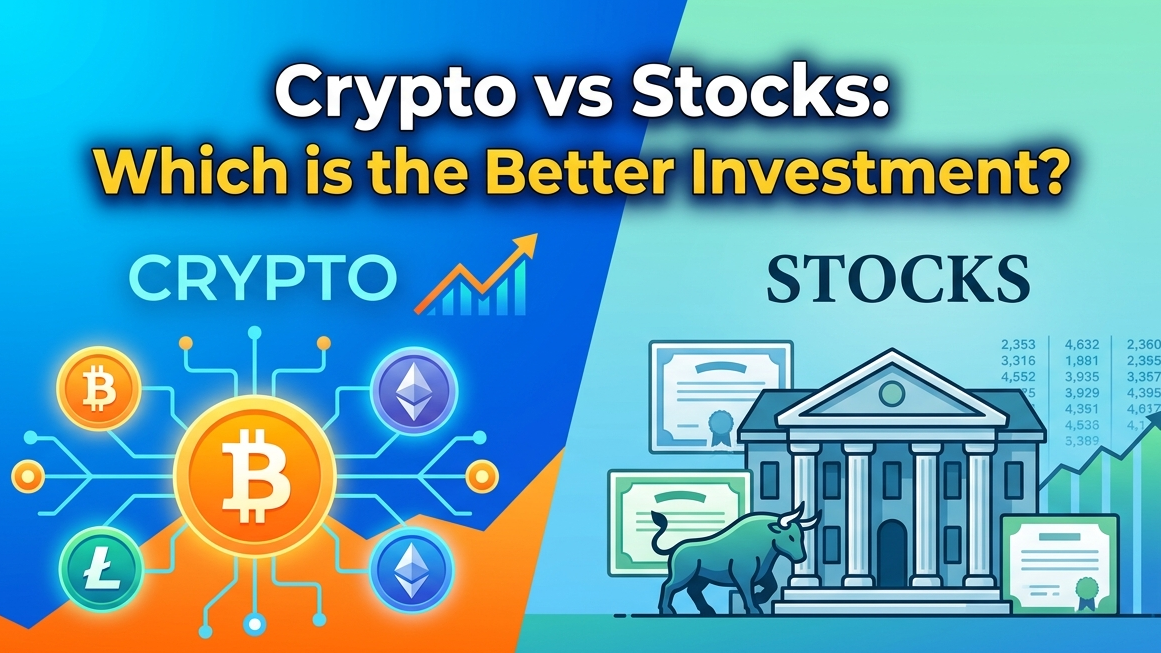
Introduction to Crypto and Stocks
Cryptocurrency and stocks represent two distinct avenues of investment, each with its own set of characteristics and market dynamics. As a digital asset, cryptocurrency utilizes blockchain technology to secure financial transactions and record ownership, providing a decentralized alternative to traditional financial systems. Bitcoin, introduced in 2009, marked the inception of this new asset class, evolving from a niche concept to a mainstream financial instrument that attracts both individual and institutional investors.
At its core, cryptocurrency operates on a peer-to-peer network that empowers users to transact without intermediaries, promoting transparency and reducing costs associated with traditional finance. The blockchain, which underpins most cryptocurrencies, serves as a distributed ledger that verifies and logs all transactions, ensuring their integrity through cryptographic techniques. This innovative technology has paved the way for various cryptocurrencies, each with unique features, use cases, and value propositions.
In contrast, stocks represent shares of ownership in publicly traded companies. When an individual purchases a stock, they acquire a fractional ownership interest in the company, which entitles them to a portion of its profits through dividends and capital appreciation as the company grows. The stock market operates within a well-regulated framework, governed by entities such as the Securities and Exchange Commission (SEC) in the United States, ensuring investor protection and market stability.
Investing in stocks generally involves a longer-term perspective, focusing on corporate performance, market trends, and economic indicators. The volatility of the stock market can vary, influenced by factors such as earnings reports, changes in interest rates, and macroeconomic conditions. Both investment options present unique opportunities and challenges, making it essential for investors to understand their fundamental principles before deciding where to allocate their resources.
Historical Performance of Stocks
Stocks have historically been one of the most favored investment vehicles, offering both the potential for substantial returns and inherent risks. Over the long term, the stock market has demonstrated an average annual return rate of approximately 7-10%, factoring in inflation adjustments. This performance, although attractive, is accompanied by periods of volatility which investors must navigate.
Market trends indicate that stocks tend to appreciate in value over extended periods, although they are prone to fluctuations due to various factors. Economic conditions, interest rates, corporate earnings, and global events often play significant roles in influencing stock prices. Additionally, investor sentiment and market speculation contribute to the day-to-day volatility experienced within the stock market.
Throughout history, notable market crashes have underscored the risks associated with stock investing. Examples include the Great Depression in the 1930s and the dot-com bubble burst in the early 2000s. Each of these significant downturns prompted widespread panic and panic selling among investors. However, it is essential to recognize that the stock market has typically rebounded from such crashes, demonstrating resilience and upward trends over the longer term.
The recovery phenomena emphasize the importance of a long-term perspective when investing in stocks. Investors who hold onto their investments through turbulent periods often reap the benefits of compounding growth when the market stabilizes and begins an upward trajectory once again. An understanding of these historical performance indicators serves as a reminder of the dual nature of stock investment: the potential for high rewards alongside meaningful risks.
Historical Performance of Cryptocurrencies
The historical performance of cryptocurrencies, particularly Bitcoin, has been marked by rapid growth and significant price fluctuations. Bitcoin, created in 2009, saw its value rise from virtually nothing to an all-time high, exceeding $60,000 in 2021. This meteoric rise is indicative of the speculative nature and potential high returns associated with digital currencies. Other cryptocurrencies, such as Ethereum, have followed, carving out their own niches with distinct use cases, further contributing to an expanding market.
However, alongside the spectacular gains, cryptocurrencies have also demonstrated heightened price volatility. Sudden price drops have not been uncommon; for instance, Bitcoin experienced a decline of nearly 50% within a single year multiple times. Such volatility highlights the speculative nature of cryptocurrencies and presents a considerable risk for investors. This risk is exacerbated by factors such as regulatory news and the broader acceptance of cryptocurrencies by major institutions, which have the power to influence market sentiment significantly.
Major events, like regulatory announcements or large-scale investments from established firms such as Tesla and MicroStrategy, can lead to abrupt price changes, illustrating how external influences play a crucial role in defining cryptocurrency values. Moreover, the technology underpinning cryptocurrencies is still relatively nascent, leading to uncertainty regarding future developments and regulatory frameworks.
When comparing the risk and return profiles of cryptocurrencies against more traditional investments, it becomes evident that while cryptocurrencies offer the potential for substantial rewards, they come with a corresponding level of risk that is disproportionate to many conventional assets such as stocks or bonds. Investors must weigh these factors carefully, considering their individual risk tolerance and financial goals when venturing into the volatile yet promising world of cryptocurrency investments.
Market Dynamics: Stocks vs. Cryptocurrencies
The financial landscape is increasingly shaped by both stocks and cryptocurrencies, each exhibiting distinct market dynamics. Stocks, representing ownership in companies, benefit from a long history of market maturity, regulatory frameworks, and established trading systems. In contrast, cryptocurrencies, often hailed as the assets of the digital age, present a more recent and evolving market realm influenced by rapid technological advances and shifting regulatory perspectives.
One of the critical differences between these investment vehicles is the regulatory environment. Traditional stock markets are heavily regulated by governmental bodies, ensuring a level of investor protection and market integrity. For instance, companies are required to disclose financial information and adhere to strict operational guidelines. On the other hand, cryptocurrencies operate in a relatively nascent regulatory framework in many jurisdictions, leading to increased volatility and potential risks associated with fraudulent activities.
Liquidity and trading volume further differentiate the two markets. Stocks have defined trading hours and exhibit steady liquidity due to established market participants. Conversely, cryptocurrency markets function 24/7, allowing for continuous trading and potentially higher liquidity levels at certain times. This uninterrupted access can amplify market volatility, as price movements occur rapidly in response to news or market sentiment.
Moreover, while traditional stock markets see a pronounced array of institutional investors, cryptocurrency markets tend to attract a diverse and dynamic mix of retail investors, creating a different trading environment. This difference can affect price stability, as fewer institutional players may lead to swift price swings in response to buying or selling pressure.
In summary, understanding the contrasting market dynamics associated with stocks and cryptocurrencies is essential for investors. Each asset class presents unique opportunities and challenges, requiring diligent analysis and consideration when making investment decisions in today’s financial markets.
Risk Assessment: Stocks and Cryptocurrencies
Investing in stocks and cryptocurrencies presents varying levels of risk, which potential investors must thoroughly assess before committing their capital. This section delves into several key risks associated with each asset class: market risk, liquidity risk, regulatory risk, and technological risk, with a particular emphasis on cryptocurrencies due to their unique nature.
Market risk refers to the potential for loss due to fluctuations in the overall market environment. Both stocks and cryptocurrencies are susceptible to market volatility, but cryptocurrencies tend to exhibit much higher volatility. Factors such as market sentiment, economic indicators, and geopolitical events can significantly impact cryptocurrency values, leading to potentially substantial swings in investor returns.
Liquidity risk is another important consideration. Stocks, particularly those of well-established companies, generally offer greater liquidity, allowing investors to enter or exit positions with relative ease. In contrast, the cryptocurrency market is fragmented and can present challenges in terms of liquidity, especially for lesser-known digital assets. Investors may find it difficult to purchase or sell cryptocurrencies without affecting market prices, which can further contribute to perceived risks.
Regulatory risk is particularly poignant for cryptocurrencies, as numerous jurisdictions have yet to establish comprehensive regulations governing their use and trading. Changes in legislation can lead to abrupt shifts in market practices, which can significantly impact investment outcomes. Stocks also face regulatory scrutiny, albeit often within a more stable framework, offering investors a clearer understanding of compliance and governance.
Lastly, technological risk pertains to the infrastructure supporting cryptocurrencies, including exchanges, wallets, and blockchain technology. Security vulnerabilities or technological failures can lead to significant financial losses. Stocks also face technological risks, but they are typically more established, with well-defined operational protocols.
Volatility and Investment Strategy
Volatility is a defining characteristic of both the stock and cryptocurrency markets, though the degree and implications of this volatility can vary significantly. Stocks generally exhibit less extreme price swings compared to cryptocurrencies, which can experience dramatic fluctuations within a short time frame. This volatility can lead to a range of investment strategies tailored to the investor’s risk tolerance and financial goals.
For investors in both markets, understanding volatility is crucial. In the stock market, seasoned investors often engage in strategies such as dollar-cost averaging, where they invest a fixed amount of money at regular intervals. This approach serves to mitigate risks associated with market fluctuations, as it averages out the purchase price over time. When applied to cryptocurrencies, dollar-cost averaging can similarly help manage the high level of volatility inherent to this asset class.
Another strategy to consider involves the debate of holding assets long-term versus actively trading. Long-term holding, often referred to as “HODLing” in the crypto world, may buffer against short-term volatility, allowing investments to mature and benefit from potential market uptrends. In contrast, trading—whether through day trading or swing trading—exploits market volatility for profit. This strategy requires a keen understanding of market trends, significant time investment, and often a higher risk tolerance due to the unpredictable nature of short-term price movements.
Diversification also plays a vital role in managing overall portfolio risk. By spreading investments across various asset classes, including stocks, bonds, and cryptocurrencies, investors can reduce the impact of volatility from any single investment. It is advisable for investors to carefully evaluate their risk profiles and consider their individual investment goals when crafting their strategy, particularly in volatile markets.
Long-Term vs. Short-Term Investment Perspectives
Investors often grapple with the decision of whether to adopt a long-term or short-term approach when investing in stocks or cryptocurrencies. Each strategy presents its own merits and challenges, shaped significantly by the unique characteristics of these asset classes.
Long-term investing typically favors a buy-and-hold strategy, where investors commit their capital for an extended period—often years or decades. This perspective allows investments to ride out market volatility and benefit from compound growth. With stocks, historical trends indicate that companies that have strong fundamentals tend to appreciate over time, benefiting from overall economic growth. Similarly, cryptocurrencies, despite their inherent volatility, have shown remarkable growth potential over the long haul, with specific tokens experiencing exponential increases in value.
However, long-term investing requires patience and often the ability to withstand market fluctuations. Investors must be willing to accept temporary dips in value without panicking, particularly in the cryptocurrency market, which can be influenced heavily by external news and regulatory changes.
On the other hand, short-term investments focus on taking advantage of market timing and price movements. Day trading or swing trading are popular strategies in both stocks and cryptocurrencies. While potentially lucrative, short-term trading carries a higher risk and requires substantial market knowledge, quick decision-making skills, and a well-practiced strategy. The discipline involved is crucial, as many traders can fall victim to emotional decision-making during periods of high volatility, particularly prevalent in the cryptocurrency landscape.
Ultimately, the choice between long-term and short-term investment perspectives can significantly shape returns and risk levels. Investors must consider their risk tolerance, market knowledge, and investment goals to determine the most suitable approach for either stocks or cryptocurrencies. Hybrid strategies that incorporate both methods are also gaining popularity, allowing for a balanced risk profile while capitalizing on the strengths of each asset class.
Future Outlook for Stocks and Cryptocurrencies
The landscape for investments, particularly stocks and cryptocurrencies, is evolving rapidly, influenced by economic developments, technological advancements, and shifts in consumer behavior. For stocks, several growth sectors are poised for significant expansion. Technology companies, especially those focused on artificial intelligence, renewable energy, and biotechnology, are expected to see substantial growth driven by innovation and increasing demand. Additionally, the trend towards digital transformation across businesses is likely to bolster the performance of technology stocks, establishing them as strong contenders for investors seeking growth opportunities.
Furthermore, industries such as healthcare, particularly telehealth and pharmaceutical companies focusing on biotech innovations, are anticipated to show resilience and profitability. The electric vehicle (EV) market is also projected to expand significantly as countries increase their focus on sustainability and combat climate change. Investors are advised to keep a close watch on these sectors as they may provide promising avenues for investment in the upcoming years.
On the other hand, the future outlook for cryptocurrencies is equally intriguing yet laden with uncertainties. As mainstream adoption continues to grow, the demand for cryptocurrencies could see an uptrend. Platforms facilitating cryptocurrency transactions are seeing increased user bases, which bodes well for their value and usability. Furthermore, the potential for regulatory changes could either pose challenges or establish frameworks, enhancing legitimacy and security in the cryptocurrency market. Emerging projects in decentralized finance (DeFi) and non-fungible tokens (NFTs) also have the potential to reshape how value is assigned and exchanged, inviting new investors into the crypto space.
As these markets develop, it is essential for investors to stay informed about trends, regulatory updates, and emerging technologies that could enhance these assets’ attractiveness. The ongoing evolution will likely yield both opportunities and challenges, urging investors to tread carefully while evaluating their portfolio choices.
Conclusion: Making the Right Choice for You
As we navigate the dichotomy between cryptocurrencies and stocks, it is essential to recognize that both investment avenues exhibit distinct characteristics and potential for returns. The decision concerning which investment option suits you best is deeply personal and can greatly impact your financial future. It is paramount to weigh your financial goals, risk tolerance, and investment horizons when making your choice.
Investing in stocks has been a time-tested strategy, often regarded as a stable long-term investment vehicle. Stocks of established companies can create wealth over time, particularly with dividends and compound interest contributing to your overall returns. On the other hand, cryptocurrency represents a relatively new market, attracting investors looking for high-risk, high-reward opportunities. The potential for significant returns, coupled with the volatility inherent in cryptocurrencies, may appeal to those with a higher risk appetite.
Additionally, consider your investment timeline; stocks might be more appropriate for individuals looking for gradual financial growth, whereas cryptocurrencies might suit those eager to capitalize on rapid market movements. It is also worth noting that diversifying your portfolio by incorporating both assets could be a viable strategy, balancing the inherent risks and potential rewards each investment type offers.
Ultimately, the best investment choice is influenced by personal circumstances and preferences, making it crucial to conduct thorough research and reflect on what aligns with your financial objectives. By understanding the fundamental differences and embracing a strategy that fits your unique needs, you can make informed decisions that may lead to financial stability and growth.