





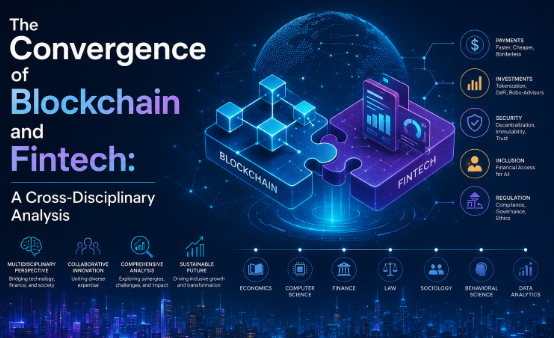
Introduction to Blockchain and Fintech Convergence
Blockchain technology and financial technology, commonly referred to as fintech, represent two of the most transformative forces within the modern financial landscape. Blockchain is a decentralized digital ledger system that enables secure and transparent record-keeping across various applications. Initially popularized by cryptocurrencies, this technology’s unique attributes—such as immutability, traceability, and decentralization—are now being harnessed beyond digital currencies to revolutionize sectors like supply chain management, voting systems, and, most notably, financial services.
On the other hand, fintech is an umbrella term that encompasses a broad range of technological innovations designed to improve, simplify, and automate the delivery and use of financial services. From mobile banking applications to peer-to-peer lending platforms, fintech has democratized access to financial products and services, thereby increasing financial inclusion worldwide. Moreover, it has introduced significant efficiencies, allowing consumers to manage their finances with unprecedented convenience.
The intersection of blockchain and fintech has emerged as a focal point of innovation, addressing some of the key challenges that traditional financial systems face today. In this convergence, blockchain serves as the backbone for enhancing security, efficiency, and transparency. For instance, the use of smart contracts—automated agreements stored on the blockchain—can significantly reduce transaction costs and increase the speed of processes, ultimately transforming how financial institutions operate.
As the world becomes increasingly dependent on digital technologies, understanding the convergence of blockchain and fintech is crucial. This synergy not only holds the potential to reshape the delivery of financial services but also contributes to the development of new business models and regulatory frameworks aimed at tackling the complexities of the digital economy. Exploring this convergence offers insights into the future of finance and its evolving landscape.
Understanding Blockchain Technology
Blockchain technology represents a groundbreaking advancement in how data is recorded, shared, and secured. At its core, a blockchain is a decentralized digital ledger that records transactions across several computers. This ensures that the database is not controlled by any single entity, promoting transparency and reducing the risk of fraud. Transactions are aggregated into blocks, which are then linked to one another, forming a chain. Each block contains a timestamp and a cryptographic hash of the previous block, creating a secure, tamper-proof record.
The essential components of blockchain include the ledger, consensus mechanisms, smart contracts, and cryptographic security. The ledger is the foundational element, where every transaction is recorded. Consensus mechanisms such as Proof of Work or Proof of Stake are employed to validate transactions before they are added to the blockchain, ensuring that all parties agree on the state of the ledger. Smart contracts facilitate automated execution of agreements when certain conditions are met, further enhancing efficiency and reliability.
Blockchain’s inherent benefits are numerous. Decentralization eliminates the need for intermediaries, reducing costs and transaction times. Furthermore, the transparency of blockchain allows all participants in the network to view transaction histories, which fosters trust and accountability among users. Security is enhanced through cryptographic techniques, making it exceedingly difficult for malicious actors to alter data without detection.
The potential impact of blockchain extends far beyond cryptocurrencies, influencing various sectors such as supply chain management, healthcare, and identity verification. In fintech, for instance, blockchain can streamline processes, reduce transaction costs, and enhance security, paving the way for innovative financial services. This transformative technology is poised to reshape industries, creating new paradigms for conducting business in a more efficient, secure, and transparent manner.
The Fintech Revolution: An Overview
The evolution of financial technology, often termed fintech, has transformed the landscape of traditional financial sectors significantly over the past few decades. This revolution began with the advent of the internet, which facilitated new ways for consumers to interact with financial services. Fintech encompasses a wide range of innovations, and its applications are visible in various forms today, including mobile banking, peer-to-peer lending, crowdfunding platforms, and digital currencies.
One of the landmark advancements in fintech is mobile banking. This service empowers individuals with the ability to conduct transactions swiftly and conveniently from their smartphones. As mobile technology proliferated, banks and financial institutions adapted by providing apps that allow users to manage their finances seamlessly, which ultimately increases accessibility to banking services globally.
Peer-to-peer lending platforms represent another vital aspect of the fintech revolution. By removing the intermediaries traditionally involved in lending, these platforms connect borrowers directly with individual lenders. This innovation not only democratizes access to credit but also fosters competitive interest rates, giving borrowers alternatives that were previously unavailable.
Additionally, the rise of digital currencies, spearheaded by Bitcoin in 2009, illustrates the rapid changes in how value is transferred. Cryptocurrencies have introduced decentralized systems for transactions, allowing individuals to bypass traditional banking frameworks. This advancement challenges established financial protocols and introduces new paradigms of trust and value exchange.
In conclusion, fintech’s evolution marks a significant shift in financial services, enhancing customer experience and offering innovative solutions that disrupt traditional models. The ongoing integration of blockchain technology further amplifies these changes, ensuring that fintech continues to reshape the future of finance.
The Interplay Between Blockchain and Fintech
The integration of blockchain technology within the fintech sector represents a significant advancement in financial services, enhancing efficiency, security, and transparency. Blockchain, a decentralized ledger technology, facilitates a variety of applications that are proving transformative for consumers and businesses alike.
One prominent application of blockchain in fintech is in the area of payments. Traditional payment systems often involve intermediaries, which can result in delays and additional costs. However, with blockchain, transactions can occur directly between parties via a peer-to-peer network. This not only expedites the settlement process but also reduces transaction fees. Specifically, cryptocurrencies, which operate on blockchain platforms, are being increasingly utilized for remittances, offering lower costs and faster transfers across borders.
Another critical use case for blockchain within the fintech domain is the implementation of smart contracts. These self-executing contracts with the terms of the agreement directly written into code enable automated execution of contractual obligations without the need for intermediaries. By leveraging smart contracts, businesses can streamline processes such as loan approvals or insurance claims, thereby minimizing the risk of fraud and enhancing trust. Their transparent and immutable nature ensures that all parties can verify the terms and execution of the agreement, reducing disputes.
Furthermore, blockchain technology plays a vital role in identity verification, addressing one of the major challenges in the fintech industry. With rising concerns around data security, blockchain offers a robust solution for storing and managing identity data. The use of blockchain can allow users to maintain control over their personal information while facilitating secure access to services, thus reducing the risk of identity theft.
The symbiotic relationship between blockchain and fintech is evolving, presenting a myriad of opportunities to improve operational efficiency and security while enhancing customer trust and satisfaction.
Regulatory Challenges in Blockchain and Fintech
The evolving sectors of blockchain and fintech face a myriad of regulatory challenges that impact their growth and integration into the financial ecosystem. As both technologies expand their reach, regulators worldwide are grappling with how to effectively oversee these innovations while fostering a supportive environment that encourages progress. The current regulatory landscape for blockchain and fintech is often characterized by a patchwork of laws that vary significantly by jurisdiction, leading to compliance uncertainties for businesses operating in multiple regions. These discrepancies complicate the development and implementation of blockchain solutions in financial services, where adherence to regulatory standards is paramount.
One of the primary challenges lies in ensuring compliance with existing financial regulations that were not designed with blockchain technology in mind. Traditional regulatory frameworks often struggle to accommodate the unique attributes of blockchain, such as decentralization and anonymity. This misalignment raises difficulties in enforcing anti-money laundering (AML) and know-your-customer (KYC) regulations, which are critical for preventing financial crimes. Furthermore, the rapid pace of innovation in fintech, driven increasingly by blockchain capabilities, outstrips the ability of regulatory bodies to create and enforce relevant guidelines.
To address these challenges, there is a growing recognition of the need for frameworks that not only ensure consumer protection and financial stability but also allow for innovation. Collaborative approaches between regulators and industry stakeholders are essential for developing adaptive regulation that can respond dynamically to technological advancements. Furthermore, there is an emerging dialogue about creating sandboxes for fintech startups and blockchain projects to operate under relaxed regulations while subject to oversight. This ensures that innovations can be tested in a controlled environment, mitigating risks without stifling creativity and progress in the sector.
Case Studies of Successful Convergence
The integration of blockchain technology with fintech has yielded numerous successful case studies that exemplify the potential of such convergence. One notable case is the partnership between Ripple and various financial institutions. Ripple’s blockchain-based payment protocol enables instantaneous cross-border transactions, drastically reducing time and cost compared to traditional banking systems. Its implementation by several banks has enhanced operational efficiency, demonstrating the practical benefits of blockchain in streamlining financial services.
Another significant example is the emergence of decentralized finance (DeFi) platforms such as Aave and Compound. These platforms leverage blockchain technology to offer lending and borrowing services without the need for central authorities. By utilizing smart contracts, users can engage in peer-to-peer lending, participating in a trustless environment that enhances transparency and reduces reliance on traditional financial intermediaries. The success of these platforms showcases how blockchain can effectively innovate traditional fintech operations.
Furthermore, the growth of digital asset platforms, like Coinbase, illustrates the integration of fintech and blockchain in cryptocurrency trading. Coinbase has transformed into a primary financial platform for cryptocurrency transactions, allowing individuals to buy, sell, and trade digital currencies seamlessly. Its user-friendly interface and robust security measures have attracted millions of users, highlighting the effectiveness of a fintech approach combined with blockchain technology.
Through these case studies, one can observe a distinct pattern of how innovative strategies derived from the convergence of blockchain and fintech can lead to enhanced services and improved user experiences. The successes these ventures have achieved indicate the future of financial services may well be composed of various hybrid models that incorporate elements from both sectors, providing a glimpse into a transformed financial landscape.
Future Trends: What Lies Ahead for Blockchain and Fintech
The integration of blockchain technology within the financial technology (fintech) sector is anticipated to evolve rapidly over the next few years. This integration is likely to redefine how financial services operate, impacting areas such as payment processing, compliance, lending, and asset management. With its decentralized nature, blockchain offers enhanced security and transparency, which are crucial characteristics that consumers and financial institutions increasingly seek.
One significant trend is the rise of regulatory approval and standards. As governments and regulatory bodies around the world begin to acknowledge the importance of blockchain solutions, we can expect more structured frameworks to emerge. These frameworks will foster a more secure and reliable environment for digital currency and blockchain-based applications, consequently boosting investor confidence and driving wider adoption.
Additionally, the advent of decentralized finance (DeFi) platforms represents a paradigm shift in how financial services are delivered. DeFi eliminates the need for traditional intermediaries, enabling peer-to-peer transactions and innovative financial products tailored to consumer needs. As these platforms become more sophisticated, they could transform service delivery, making financial services more accessible to a global audience.
Furthermore, advancements in blockchain interoperability are expected to enhance collaboration between various platforms and systems. By facilitating greater compatibility among disparate blockchains, institutions can streamline processes and improve efficiency, ultimately reshaping the financial landscape.
Artificial intelligence (AI) and machine learning (ML) will also play pivotal roles in this convergence, as they can enhance analytics and risk management capabilities in blockchain applications. The combination of AI and blockchain could lead to more intelligent automated systems capable of managing transactions and identifying fraudulent activities with greater accuracy.
In conclusion, the future for blockchain and fintech looks promising. As technology advances and regulatory landscapes evolve, we can expect these disciplines to increasingly complement one another, paving the way for innovative solutions that address longstanding challenges in the financial sector.
The Impact of AI and Other Technologies on Blockchain and Fintech
The convergence of blockchain and fintech is not just limited to the blockchain technology itself; it is significantly influenced by advancements in artificial intelligence (AI), machine learning (ML), and the Internet of Things (IoT). These technologies are rapidly evolving, and their integration with blockchain solutions enhances operational efficiency and security. The resulting innovations foster new service offerings that were previously unattainable.
One notable benefit of AI and ML within the blockchain and fintech sectors is the improvement in data analytics. Financial institutions can harness AI algorithms to analyze large datasets securely stored on a blockchain, revealing insights that inform decision-making and risk assessment. This synergy allows for more predictive analytics, which are vital in today’s fast-paced financial landscape. Moreover, AI-driven automation enhances transaction processing speeds and accuracy, reducing manual errors commonly associated with traditional banking systems.
The integration of IoT devices presents another frontier for blockchain and fintech. By connecting various devices, financial transactions can be executed automatically based on predefined conditions. For instance, smart contracts on a blockchain can facilitate real-time transactions between autonomous vehicles, insurance companies, and financial institutions, effectively redesigning the dynamics of service delivery. This not only increases efficiency but also provides a tamper-proof ledger of actions and transactions, mitigating risks associated with fraud.
Additionally, the combination of these technologies enhances security. Blockchain’s decentralized nature, paired with AI’s ability to detect anomalies, creates robust fraud detection systems. These safeguards protect both financial institutions and consumers, ensuring that the digital economy remains secure as it continues to evolve.
Incorporating these sophisticated technologies fosters an environment where innovative financial products can thrive. The intersection of blockchain with AI, ML, and IoT demonstrates a significant shift in how we conceive of financial services, paving the way for a smarter, more efficient financial ecosystem.
Conclusion: The Road Ahead for Blockchain and Fintech
The convergence of blockchain and fintech presents a significant shift in the financial landscape. As industries evolve, the integration of these two technologies heralds a new era characterized by greater efficiency, transparency, and security. Throughout this discussion, we have explored how blockchain technology underpins innovative solutions in financial services, such as decentralized finance (DeFi), smart contracts, and secure transactions. These developments demonstrate not only the potential for enhanced service delivery but also the creation of new business models that could redefine traditional finance.
Investment in blockchain technology indicates strong confidence in its transformative capabilities. Financial institutions are increasingly allocating resources to explore how blockchain can streamline operations, reduce costs, and mitigate risks. Collaboration between fintech startups and established banks fosters an environment ripe for innovation, making it imperative for stakeholders to embrace this convergence. As startups leverage blockchain for new product offerings, established firms benefit through agility and enhanced customer engagement.
Moreover, the broader economic implications cannot be overlooked. The integration of blockchain within fintech encourages financial inclusion by enabling access to services for those traditionally underserved. As barriers to entry diminish, a new user base emerges, contributing to economic growth and stability. The adoption of these technologies also facilitates cross-border transactions, enhancing global commerce and encouraging international collaboration.
In summary, the intersection of blockchain and fintech holds tremendous potential for transforming the financial sector. By promoting innovation, attracting investment, and fostering economic growth, this convergence is poised to reshape the future of finance. Stakeholders must remain vigilant and adaptable, recognizing the continuing evolution as both challenges and opportunities arise. The journey ahead is filled with possibilities, and engaging with these advancements will be crucial for those looking to thrive in the dynamic landscape of modern finance.