




Introduction to Layer-2 Blockchain Solutions
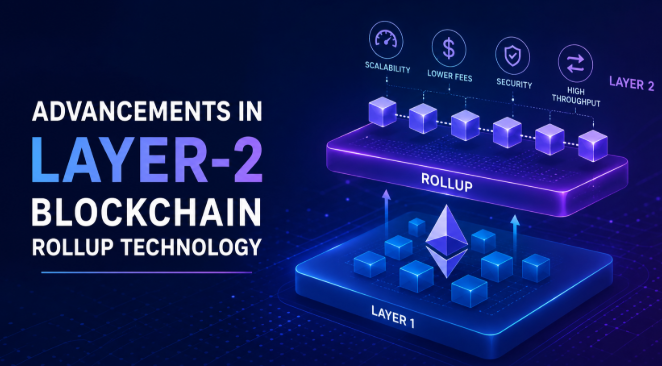
Layer-2 blockchain solutions represent a significant innovation within the blockchain ecosystem, aimed at addressing the limitations of Layer-1 protocols. These protocols, often referred to as the main chain, can face challenges such as congestion, slow transaction speeds, and high fees. To mitigate these issues, Layer-2 technologies operate on top of existing blockchain networks, enabling a more efficient processing of transactions while maintaining secure and decentralized attributes.
The essence of Layer-2 technology lies in its ability to handle transactions off the main blockchain. By doing so, it alleviates pressure on the primary chain, allowing for quicker validation times and reduced transaction costs. This approach often utilizes various methods such as state channels, sidechains, and rollups. Each method offers unique advantages but shares the common goal of enhancing scalability without sacrificing security.
Among the various Layer-2 solutions, rollup technology has gained particular attention due to its efficient handling of batches of transactions. By bundling numerous transactions into a single one, rollups significantly decrease the amount of data that needs to be processed by the main blockchain. This not only reduces congestion but also ensures that users can take advantage of faster transaction confirmation times and lower costs, which are crucial for improving user experience in decentralized applications (dApps).
Moreover, Layer-2 solutions play a vital role in the broader adoption of blockchain technology. As industries begin to recognize the potential of decentralized finance (DeFi) and non-fungible tokens (NFTs), the necessity for scalable solutions becomes paramount. In this context, Layer-2 technologies provide the necessary infrastructure to support the increasing number of transactions and user activity that blockchain networks must accommodate.
Understanding Rollups: Types and Mechanisms
Layer-2 solutions have revolutionized the scalability of blockchain networks, and rollups are at the forefront of this innovation. Among the various types of rollups, Optimistic Rollups and Zero-Knowledge (ZK) Rollups stand out as the most prominent, each employing distinct mechanisms to bundle transactions.
Optimistic Rollups operate under the assumption that transactions submitted are valid by default. The system allows users to submit transactions without providing immediate proof. However, to maintain the integrity of the network, it includes a challenge period during which falsified transactions can be disputed. If a dispute arises, the system reverts to a more comprehensive verification process to confirm the validity of transactions. This method significantly enhances throughput and reduces fees but does expose the system to potential fraud if not monitored adequately.
On the other hand, Zero-Knowledge Rollups utilize cryptographic proofs, particularly zk-SNARKs, to bundle transactions before submitting them to the main blockchain. Each batch of transactions includes a succinct proof attesting to its correctness, which the blockchain can verify independently. This mechanism drastically increases transaction speeds and significantly lowers costs while ensuring high levels of security and privacy. Nevertheless, ZK Rollups can require more complex computations, which may lead to higher operational costs and prolonged integration times compared to Optimistic Rollups.
In summary, while both types of rollups serve to improve scalability, their operational philosophies diverge significantly. Optimistic Rollups focus on simplicity and flexibility but require vigilant oversight to identify and contest fraud. Meanwhile, Zero-Knowledge Rollups offer unparalleled security through advanced cryptographic techniques, albeit at a potentially higher computational expense. The choice between these mechanisms depends on the specific needs of blockchain developers and users, as each type presents unique advantages and challenges.
Current Advancements in Rollup Technology
Recent developments in rollup technology have significantly advanced the capabilities and applications of blockchain systems. Rollups, which are a Layer-2 scaling solution, aim to improve transaction throughput while reducing fees, making them an essential part of scalability strategies in the blockchain landscape. One of the most notable advancements is the enhancement of security features. Improved cryptographic proofs and more robust mechanisms for validating off-chain transactions have made rollups a more secure option for decentralized applications.
Moreover, these security improvements have attracted the attention of major blockchain projects, which are actively integrating rollup solutions into their ecosystems. Protocols such as Optimism and Arbitrum have demonstrated significant success in implementing Optimistic Rollups, which allow transactions to be processed quickly while relying on a verification system that guards against fraudulent activity. These innovations enable a trustless environment while maintaining a high level of security.
In addition to security improvements, advancements in transaction throughput have been remarkable. Some rollup solutions can process thousands of transactions per second, significantly alleviating congestion issues that plague blockchain networks like Ethereum during peak usage times. This scalability has made rollups particularly appealing for decentralized finance (DeFi) applications, where high transaction volume is commonplace.
Furthermore, innovations in data compression techniques are noteworthy. Rollups leverage zero-knowledge proofs and other advanced methods to bundle multiple transactions into a single batch, effectively reducing the amount of on-chain data required. This not only conserves valuable blockchain space but also lowers transaction costs for users. As a result, rollup technology stands at the forefront of efforts to create more efficient, scalable, and user-friendly blockchain applications.
Use Cases for Rollup Technology
Layer-2 rollup technology is revolutionizing several industries by significantly enhancing their performance and scalability. One prominent area in which rollups are making a substantial impact is decentralized finance (DeFi). In DeFi, rollups enable high-speed transactions while reducing gas fees, which facilitates more efficient trading and lending processes. By aggregating multiple transactions into a single batch, rollups effectively decrease the load on the main blockchain, leading to improved throughput and user experience.
Another noteworthy application of rollup technology can be found in the gaming industry. As the popularity of blockchain games grows, the demand for a scalable infrastructure becomes essential. Rollups allow game developers to integrate microtransactions seamlessly, enhancing user interactions without compromising on speed or cost. Through the implementation of rollup solutions, games can support thousands of concurrent players, all while maintaining low latency and ensuring that gamers enjoy a fluid experience.
Furthermore, non-fungible tokens (NFTs) are another domain that has greatly benefited from rollup technology. As the NFT market rapidly expands, the ability to handle numerous transactions efficiently becomes crucial. Rollups facilitate the minting, buying, and selling of NFTs at scale, allowing creators to respond to market demands without being hindered by the limitations of the underlying blockchain. This advancement not only boosts accessibility for artists and collectors but also fosters a thriving ecosystem where the trading of digital assets can occur with ease.
In summary, the versatility and efficiency of rollup technology across DeFi, gaming, and NFTs illustrate its critical role in enhancing the performance and scalability of various applications. By leveraging rollups, industries can significantly improve user experiences and encourage broader adoption of blockchain technologies.
Challenges and Limitations of Rollups
As layer-2 rollup technology progresses, it brings forth both opportunities and challenges that require thorough consideration. One of the primary challenges is user experience. While rollups aim to enhance transaction throughput and reduce costs, the integration of such technologies can inadvertently complicate user interactions. Users may need to familiarize themselves with additional steps or modifications to their regular transaction processes, which can hinder overall adoption. Ensuring a seamless user experience is critical for the success of rollups, as it directly affects the willingness of individuals and businesses to utilize these solutions.
Another significant concern is the potential for centralization. Although rollups are designed to improve scalability and efficiency, they might inadvertently lead to a concentration of control within certain entities. For instance, if a limited number of stakeholders operate the rollup validators, this could pose significant risks to the decentralization that is foundational to blockchain technology. This centralization risk undermines the very principles that make blockchain attractive, raising questions about security, trust, and the systemic resilience of the network.
Moreover, the complexity of smart contract development on rollup platforms presents a notable barrier. Developers are required to possess advanced skills and knowledge to construct robust and secure smart contracts capable of functioning within rollup environments. This increased complexity can deter potential developers, thus slowing down innovation and the expansion of rollup use cases.
To mitigate these challenges, ongoing efforts are being made within the community. Improving user interfaces, conducting extensive user education, and implementing decentralized governance models are just a few initiatives aimed at enhancing the functionality and adoption of rollup technology. As the ecosystem matures, addressing these challenges will be vital to ensuring that layer-2 rollups realize their full potential as practitioners strive to bridge the gap between scalability and decentralization.
Comparative Analysis of Layer-1 vs Layer-2 Solutions
In the ever-evolving landscape of blockchain technology, understanding the distinctions between Layer-1 and Layer-2 solutions is essential for developers and users alike. Layer-1 refers to the base protocol of a blockchain, such as Bitcoin or Ethereum, which processes all transactions directly on-chain. Layer-2 solutions, on the other hand, operate on top of Layer-1 networks and serve to enhance scalability, security, and overall user experience.
One of the primary advantages of Layer-1 solutions is their robustness and security. As they form the foundational layer, they are inherently less prone to vulnerabilities associated with additional layers. However, this security comes at a cost: scalability. Layer-1 networks often experience congestion during peak usage periods, leading to slower transaction times and heightened fees. This limitation has prompted the development of Layer-2 solutions, which utilize various methodologies, such as rollups and state channels, to reduce the load on Layer-1 networks.
Layer-2 solutions are particularly advantageous when addressing scalability challenges. By processing transactions off-chain and subsequently consolidating them onto the main blockchain, Layer-2 technologies can significantly enhance throughput and decrease latency. Moreover, these solutions often provide a more favorable user experience due to lower transaction fees and faster confirmation times. However, this does pose potential trade-offs in security, as reliance on secondary protocols may introduce new vulnerabilities or surface-level risks.
In scenarios where security is paramount, such as high-value transactions or critical applications, opting for Layer-1 solutions may be justified. Conversely, in contexts that prioritize speed and cost-efficiency, Layer-2 solutions prove invaluable. Ultimately, the choice between Layer-1 and Layer-2 solutions should be informed by the specific needs of the application or user case, thus highlighting the nuanced nature of blockchain technology’s evolution.
Future Prospects for Rollup Technology
The future of rollup technology within the blockchain landscape appears promising, with several potential developments that may enhance its functionality and integration with existing systems. As the demand for scalability and efficiency continues to rise in blockchain applications, rollup solutions are likely to play a pivotal role. A key advancement could be the growth of interoperability between various Layer-2 rollup solutions and Layer-1 platforms, facilitating seamless transactions and improved user experiences.
With the nature of decentralized networks in mind, the collaboration between multiple rollups may lead to a more holistic ecosystem. These collaborations could enhance the versatility of decentralized applications by allowing them to harness the strengths of different rollup technologies, therefore broadening their capabilities and performance. Additionally, with the rise of cross-rollup communications, decentralized finance (DeFi) platforms can offer users increased flexibility and improved liquidity options. Such interoperability can also result in significant cost reductions, as it reduces the need for complex bridging mechanisms.
Another exciting avenue to explore is the influence of emerging technologies, such as artificial intelligence and machine learning, on rollup technology. These advancements could enable more dynamic and adaptive protocols that optimize the handling of transactions and data. For instance, AI-driven analytics could assess network traffic and automatically adjust rollup settings, ensuring efficient processing even during periods of high demand.
Moreover, as regulatory frameworks surrounding blockchain technology evolve, rollups may see increased adoption within compliant environments. This adoption could spur innovation and attract traditional businesses looking to leverage blockchain for their operations. As developers continue to refine and enhance rollup technology, it is clear that its future will be integral to the broader adoption of blockchain solutions across various industries.
Community and Ecosystem Development
The advancement of layer-2 blockchain rollup technology is increasingly being shaped by a vibrant community of developers and enthusiasts. This community plays a pivotal role in fostering innovation and creating a robust ecosystem that facilitates the exploration and expansion of rollup capabilities. Major organizations, collaborative forums, and various events dedicated to blockchain technology have emerged as vital platforms for knowledge sharing and networking among stakeholders.
Key organizations, such as the Ethereum Foundation and Optimistic Rollup development teams, actively contribute to the research and deployment of rollup solutions. These organizations not only provide technical resources but also engage with the community to share best practices and educational content. They support the ideology that community-driven initiatives can lead to profound advancements in technology.
Forums such as GitHub and specialized Discord channels are essential for real-time discussions where developers can collaborate, troubleshoot issues, and propose enhancements. These platforms have become hubs for innovation, where groundbreaking ideas about layer-2 rollups are constantly being exchanged. Moreover, discussions around interoperability between different layer-2 solutions have prompted a greater sense of unity among projects, enabling developers to build upon each other’s work efficiently.
Events such as hackathons and conferences dedicated to blockchain technology serve as significant milestones in the community calendar. These events provide opportunities not only for skill development but also for establishing connections that can lead to partnerships. Engaging with industry experts and witnessing live demonstrations of rollup implementations foster a deeper understanding and create excitement around the potential of layer-2 solutions.
As the layer-2 ecosystem continues to evolve, community engagement remains a cornerstone for its growth and success. From the contributions of organizations to the participation of individual developers, the collective effort will undoubtedly propel the innovation and adoption of rollup technologies.
Conclusion: The Path Ahead for Layer-2 Rollups
In recent years, layer-2 blockchain rollup technology has emerged as a crucial solution to the scalability challenges that have plagued the blockchain ecosystem. By processing transactions off the main chain while still leveraging the security and decentralization of the blockchain, rollups effectively enhance the throughput and efficiency of blockchain networks. Throughout this discussion, we have examined the various types of rollups, including zk-rollups and optimistic rollups, highlighting their respective advantages and potential use cases.
One significant takeaway is the collaborative nature of the development of layer-2 solutions, as projects across the landscape integrate with existing blockchain infrastructure to create more versatile and efficient ecosystems. Furthermore, layer-2 rollup technology continues to advance rapidly. This advancement fosters growth in various sectors beyond just finance, impacting areas such as supply chain management, identity verification, and decentralized applications (dApps).
The implications of these developments are profound, as scale, efficiency, and cost-effectiveness drive blockchain adoption in everyday applications. The growing consensus among developers and stakeholders emphasizes the potential of rollups to markedly influence the mainstream acceptance of blockchain technology. In turn, successful implementation of layer-2 solutions may lead to enhanced user experiences and a broader array of services that leverage blockchain’s capabilities.
As we look ahead, the future for layer-2 rollups remains bright. With ongoing research, collaboration, and innovation, the landscape will undoubtedly continue to evolve. This journey not only exemplifies the resilience of blockchain technology but also reinforces the pivotal role of layer-2 rollups in shaping a more scalable and efficient digital economy. By addressing current limitations and harnessing the benefits of these advancements, we are set to witness significant milestones in the journey towards a decentralized future, one where layer-2 rollup technology plays an integral part.