




Introduction to Decentralized Ledger Technologies (DLT)
Decentralized Ledger Technologies (DLT) represent a transformative shift in how information is recorded, stored, and verified. Unlike traditional centralized systems, where a single entity holds complete control over data, DLT allows multiple parties to share access to the same ledger concurrently. This innovation fundamentally enhances trust among users by promoting transparency and ensuring that all transactions are recorded identically across every participant’s ledger.
At the core of DLT is the concept of a distributed network. Transactions are added in blocks, which are linked in chronological order, forming a chain—most notably seen in blockchain technology. Each block contains a timestamp and a unique cryptographic hash of the previous block, ensuring that once data is entered into the system, retrospective alterations are virtually impossible. This characteristic not only embellishes the security measures in place but also fortifies data integrity across the platform.
Beyond blockchain, DLT encompasses other variations like directed acyclic graphs (DAGs), which offer different mechanisms for recording transactions while still maintaining decentralization. These technologies collectively hold the promise of streamlining complex processes across industries, from finance to supply chain management. The decentralized nature of these ledgers acts as a bulwark against fraud, significantly reducing the risk of data manipulation.
The advent of decentralized ledgers can assist in achieving greater operational efficiency. They eliminate the need for intermediaries, thereby expediting processes and minimizing costs related to transaction verification. By harnessing DLT, entities can establish a more trustworthy and efficient ecosystem, characterized by reduced transaction times and enhanced scalability.
In summary, decentralized ledger technologies represent not only an innovative advancement in digital record-keeping but also a pivotal shift towards a more democratic and efficient system of data management.
The Role of DLT in Economic Transformation
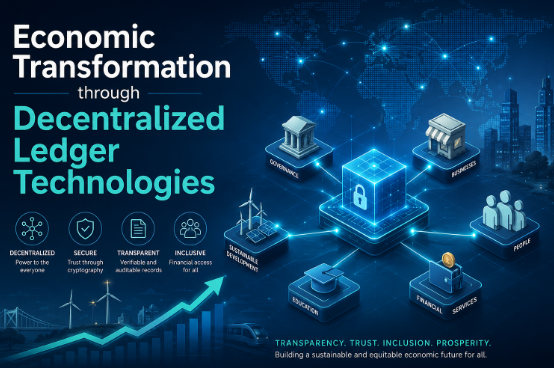
Decentralized Ledger Technologies (DLT) are increasingly recognized as critical tools driving economic transformation across various sectors. By facilitating quicker transaction speeds, DLT enables businesses and consumers to conduct financial exchanges in real-time, eliminating traditional delays associated with banks and intermediaries. The adoption of DLT can significantly streamline operations, enhancing overall efficiency in financial markets.
Moreover, DLT contributes to reducing costs associated with transactions. Traditional payment systems involve numerous intermediaries, which often results in high fees and transactional friction. DLT can minimize these costs by deploying smart contracts and direct peer-to-peer transactions, making it accessible for even small-scale operations. This reduction in costs can be particularly beneficial for startups and entrepreneurs, thereby fostering innovation and investment in emerging markets.
Another notable advantage of DLT is its enhanced security features. Unlike centralized databases that can be compromised, decentralized ledgers maintain a high level of data integrity and security due to their distributed nature. In addition, the use of cryptographic techniques in DLT ensures that transactions are not only secure but also immutable. Businesses and consumers can transact with greater confidence, which can lead to increased participation in the digital economy.
DLT’s transformative impact is evident in various industries, ranging from finance and healthcare to supply chain management and real estate. For instance, in the financial sector, DLT is utilized to facilitate cross-border payments efficiently and securely, thereby reducing the bank’s response time and tapping into underbanked populations. In healthcare, decentralized systems allow for secure sharing of patient data among providers while ensuring patient privacy. The versatility of DLT showcases its potential as a pivotal force in achieving economic transformation on a global scale.
Case Studies: Successful Implementation of DLT
Decentralized Ledger Technologies (DLT) have found successful applications across various industries, demonstrating their potential to transform economic structures and processes. This section examines notable case studies in finance, supply chain management, and healthcare, illustrating both the advantages and challenges encountered during DLT implementation.
In the financial sector, the use of DLT has been exemplified by Ripple, a platform facilitating transactions across borders with reduced operational costs and time delays. Ripple’s consensus algorithm allows for immediate settlement of transfers, providing an efficient alternative to traditional banks. This implementation has not only slashed transaction costs but has also enhanced the accessibility of financial services to underserved regions. However, regulatory compliance and integration with existing banking systems are ongoing challenges that Ripple continues to navigate.
Moving to supply chain management, IBM’s Food Trust illustrates how DLT can enhance transparency and traceability. By utilizing blockchain technology, IBM has enabled stakeholders, from farmers to retailers, to monitor the journey of food products in real-time. This has significantly improved food safety and trust among consumers. The benefits include rapid identification and resolution of food safety issues, which ultimately protects consumers’ health. Yet, the challenge remains in ensuring broad adoption among diverse stakeholders with varying levels of technological readiness.
In healthcare, the implementation of DLT can be seen in the work of Estonia, which has integrated blockchain technology across its healthcare system. This allows patients to control their medical records securely, leading to improved privacy and data security. Furthermore, healthcare providers can securely share patient data, thus enhancing the quality of care. Nevertheless, concerns around interoperability and data standardization continue to pose significant hurdles for broader DLT application in healthcare.
Challenges and Limitations of DLT
Decentralized Ledger Technologies (DLT) hold great potential for transforming various sectors; however, they also face several challenges and limitations that hinder their widespread adoption. One significant issue is scalability. Many DLTs struggle to handle a high volume of transactions efficiently, leading to slower processing times and increased costs. As the user base grows, the need for fast and reliable transaction processing becomes paramount. Solutions such as sharding and the development of second-layer protocols are being explored, yet scalability remains a critical hurdle for many existing platforms.
Another pressing limitation stems from regulatory uncertainties. Various jurisdictions have different approaches toward DLT, leading to an inconsistent regulatory landscape that can stifle innovation and deter investment. Businesses must navigate a complex web of compliance requirements, which can slow down the implementation of decentralized solutions. In some cases, the lack of clarity surrounding legislation related to digital assets has created an environment of hesitance, inhibiting both developers and users from fully embracing these technologies.
Public perception constitutes yet another challenge for DLT. Many individuals still associate blockchain and other decentralized technologies primarily with cryptocurrencies and speculative investments. This often overshadows their practical applications in areas such as supply chain management, healthcare, and finance. Additionally, concerns regarding security, privacy, and the potential for misuse can further entrench skepticism among the general populace. Addressing these concerns through educational efforts and transparent communication is essential in building trust and fostering a more favorable view of decentralized technologies.
In conclusion, while decentralized ledger technologies present promising opportunities for economic transformation, they face significant barriers, including scalability challenges, regulatory complexities, and public perception issues. A concerted effort from stakeholders is required to surmount these challenges and unlock the full potential of DLT.
Future Trends in DLT and Economic Transformation
As the landscape of decentralized ledger technologies (DLT) continues to evolve, several future trends are poised to significantly impact economic transformation globally. One of the foremost advancements is the push towards interoperability between different DLT systems. This integration will allow for seamless interaction between various platforms, facilitating transactions and information exchange across distinct networks. Such interoperability not only enhances operational efficiency but also expands the potential for businesses to engage in cross-border transactions, thus driving global economic integration.
In addition to improved interoperability, the rise of regulatory frameworks surrounding DLT offers another layer of transformation. As various jurisdictions recognize the potential risks and benefits associated with DLT, governments and regulatory bodies are beginning to create structured guidelines. These regulations are designed to ensure consumer protection, promote fair competition, and foster innovation within the DLT space. With clearer regulatory landscapes, businesses can operate with greater confidence, leading to increased participation in decentralized networks and subsequently influencing economic structures. This balance of innovation and regulation will be critical in ensuring that DLT technologies can thrive while also safeguarding the interests of consumers and businesses alike.
Moreover, the adoption of DLT by financial institutions is expected to accelerate, driving substantial changes in traditional banking and financial services. As banks integrate these technologies into their operations, the nature of transactions, record-keeping, and contractual agreements may fundamentally shift, reducing costs and improving transaction speeds. This transformation in the financial sector can lead to a broader acceptance of cryptocurrencies and blockchain-based services in mainstream economics, altering consumer behavior and spending patterns.
In summary, the future of decentralized ledger technologies holds promising trends that are likely to reshape how economies function. Through enhanced interoperability, the establishment of robust regulatory frameworks, and the increased adoption of DLT by financial institutions, economic transformation can achieve new heights.
The Impact of DLT on Global Financial Systems
Decentralized Ledger Technologies (DLT) are reshaping global financial systems at an unprecedented pace. The fundamental characteristics of DLT, such as transparency, security, and immutability, are driving changes in various aspects of financial operations, including banking structures, cross-border transactions, and remittances.
One of the most significant impacts DLT has had is on traditional banking structures. By providing platforms that facilitate peer-to-peer transactions, DLT reduces the need for intermediaries, thus cutting costs and enhancing efficiency. Traditional banks, which often serve as central authorities in financial transactions, are now compelled to adapt their business models to remain competitive. This could lead to a shift from a centralized approach to a more decentralized paradigm, where customers have more control over their assets and transactions.
Moreover, DLT is transforming cross-border transactions, which have historically been plagued by inefficiencies and high fees. Through smart contracts and blockchain mechanisms, DLT allows for instantaneous verification and settlement of international transactions, significantly expediting processes that previously took days or weeks. This revolutionary improvement not only reduces operational costs but also fosters international trade by allowing businesses to conduct transactions with greater ease and reliability.
Remittances are another area witnessing significant shifts due to DLT. Migrant workers often incur hefty fees when sending money to their home countries, diminishing their potential earnings. Blockchain technology, by facilitating direct transfers without intermediaries, lowers these transaction costs substantially. Consequently, the availability of more affordable remittance options can enhance the financial stability of families and communities in developing regions.
In essence, the influence of DLT on global financial systems is extensive, driving a reconfiguration of banking practices, reducing transaction costs, and enhancing access to financial services for individuals worldwide. These changes necessitate that traditional banking and financial institutions not only adapt but also innovate to thrive in this evolving landscape.
Decentralized Finance (DeFi) and Its Implications
Decentralized finance (DeFi) has emerged as a pivotal element within the spectrum of decentralized ledger technologies (DLT). DeFi encompasses a range of financial services that operate on blockchain technology, enabling users to perform transactions without relying on traditional, centralized financial intermediaries such as banks and payment processors. This innovation signifies a substantial shift in the financial landscape, offering numerous implications for both users and the broader economic structure.
One of the primary advantages of DeFi is its accessibility. By eliminating barriers typically associated with traditional finance, such as high fees and stringent requirements for participation, DeFi platforms empower individuals across various socioeconomic backgrounds to gain access to essential financial services. Users can engage in lending, borrowing, and trading on decentralized exchanges without the necessity for intermediary approval. As a result, DeFi democratizes financial mechanisms, allowing a more inclusive approach to capital generation.
Moreover, the use of smart contracts in DeFi applications enhances transparency and efficiency in transactions. These self-executing contracts automatically enforce and execute terms based on predefined conditions, reducing the risk of fraud and human error. However, the decentralized nature of these platforms also brings inherent risks. The absence of a regulatory body means that users must exercise due diligence to avoid vulnerabilities associated with hacking, software bugs, and potential market manipulation.
Furthermore, the volatility often seen in the cryptocurrency market can pose significant risks for participants in DeFi ecosystems, which may lead to rapid financial losses. Despite these challenges, the continued advancement of DeFi technologies holds great promise for reshaping finance, paving the way for innovative solutions that can potentially redefine how financial transactions are performed on a global scale.
Policy Considerations and Regulatory Responses
The integration of Decentralized Ledger Technologies (DLT) within existing economic frameworks raises significant policy considerations and necessitates tailored regulatory responses. Policymakers must assess the unique characteristics of DLT, including its capacity for enhancing transparency, improving transaction efficiency, and facilitating peer-to-peer interactions without centralized intermediaries. However, these advancements also bring forth distinct challenges such as privacy concerns, potential for fraud, and issues surrounding scalability.
Governments are tasked with creating regulatory frameworks that balance innovation with risk management. A first step involves the establishment of clear definitions and categorizations of DLT and its applications, possibly through a tiered approach that takes into account the diversity of technologies and their use cases. This could include distinguishing between public blockchains, which are open and decentralized, and private ledgers, which may offer greater transaction privacy but involve more control.
Regulatory compliance is an area requiring thorough examination. It is essential that laws governing financial transactions, data protection, and anti-money laundering (AML) align with the decentralized nature of DLT. Effective regulators must also collaborate with technology experts and industry stakeholders to understand the potential implications and operational dynamics of different DLT implementations.
Moreover, international cooperation will be pivotal in addressing the cross-border nature of many DLT applications. Establishing a harmonized approach among jurisdictions can help mitigate the risk of regulatory arbitrage, where participants exploit differences in regulation to evade compliance. Supporting innovation is also critical, and governments can foster DLT advancements by providing incentives, funding research initiatives, and establishing regulatory sandboxes — controlled environments where new technologies can be tested with regulatory oversight.
By thoughtfully addressing these policy considerations and developing adaptive regulatory responses, governments can facilitate the safe and effective integration of DLT in economies, ultimately enhancing their resilience and fostering further innovation.
Conclusion: The Path Forward with DLT
The discussion surrounding decentralized ledger technologies (DLT) has highlighted its profound potential to revolutionize various sectors. DLT offers a transparent, secure, and efficient framework for transactions, which can fundamentally transform how economic systems operate. By eliminating intermediaries, DLT enhances trust among participants while reducing transaction costs and inefficiencies associated with traditional systems.
Stakeholders, including businesses, governments, and individuals, are encouraged to embrace the shifts brought about by DLT. The technology is not merely a trend; it represents a significant evolution in how value is transferred and recorded. As organizations begin to explore the capabilities of DLT, those that invest early in these solutions will likely gain a competitive edge, unlocking new efficiencies and facilitating innovative business models.
Moreover, the importance of ongoing dialogue regarding DLT cannot be overstated. Engaging in conversation about the implications of decentralized technologies will enable stakeholders to address challenges and concerns collaboratively. This engagement can foster a regulatory environment that supports innovation while safeguarding users and society at large. Therefore, every participant in the economic landscape has a role to play in shaping the future of DLT implementation.
In summary, the path forward with decentralized ledger technologies is ripe with opportunities. By embracing these changes, stakeholders not only position themselves for success but also contribute to creating a more transparent and efficient economic framework. The transformation of economic systems through DLT is not just a possibility; it is an impending reality that demands proactive involvement from all concerned parties.