





Introduction to Bitcoin Investment
Bitcoin is a decentralized digital currency that emerged in 2009, heralded as a revolutionary form of money. Unlike traditional currencies, Bitcoin operates on a technology known as blockchain, a distributed ledger that ensures transparency and security for all transactions within the network. The concept of Bitcoin was introduced by an individual or group using the pseudonym Satoshi Nakamoto, whose intent was to create a peer-to-peer electronic cash system that could function without the need for intermediaries such as banks or governments.
From its inception, Bitcoin has experienced significant fluctuations in value, which can be attributed to various factors such as market demand, regulatory developments, and technological advancements. Despite its volatility, Bitcoin has gained considerable traction and recognition as an investment vehicle. Investors see Bitcoin not only as a speculative asset but also as a potential hedge against inflation and economic instability. Furthermore, the rise of institutional investment in Bitcoin has bolstered its legitimacy, leading to increased adoption and trust among retail investors.
The evolution of Bitcoin over the years has seen it transition from a niche digital experiment into a mainstream financial asset. Its unique properties, including scarcity, divisibility, and portability, distinguish it from traditional investment options like stocks and bonds. Today, Bitcoin is often referred to as “digital gold,” symbolizing its potential as a store of value. Understanding Bitcoin investment involves weighing the inherent risks against the potential benefits that this digital asset offers. This exploration will facilitate informed decision-making for investors considering entry into the crypto market.
The Rise of Bitcoin: A Brief History
Bitcoin was introduced in 2009 by an anonymous entity known as Satoshi Nakamoto. This revolutionary digital currency emerged as a response to the financial crisis of 2008, demonstrating the need for a decentralized system that challenges traditional banking systems. The Bitcoin white paper, released in October 2008, laid the groundwork for what would become a notable milestone in digital finance. Initially, Bitcoin was primarily used by a small community of enthusiasts who found value in its innovative blockchain technology.
In the subsequent years, Bitcoin’s popularity began to grow as more individuals started recognizing its potential for both investment and everyday transactions. A significant early event that contributed to Bitcoin’s rise occurred in 2010 when the first recorded commercial transaction was made—10,000 bitcoins were exchanged for two pizzas. This highlighted Bitcoin’s practical application, marking a turning point in its journey toward becoming a recognized currency.
Throughout the years, Bitcoin has experienced a series of dramatic price fluctuations, shaping public perception and interest in the cryptocurrency. From a mere few cents at its inception to reaching highs of nearly $20,000 in 2017, Bitcoin’s volatility captured the attention of both individual investors and institutional entities. As the market matured, more businesses began to accept Bitcoin as a legitimate form of payment, contributing to its mainstream acceptance.
By 2020, the surge of institutional interest, coupled with increased adoption, positioned Bitcoin as a leading asset within the burgeoning cryptocurrency market. Major companies and investment funds began allocating resources to Bitcoin, reinforcing its status as a valuable investment. With ongoing discussions around regulation and the role of cryptocurrencies in global finance, Bitcoin continues to evolve, standing at the forefront of a digital economy that is increasingly adopting decentralized solutions.
Understanding the Benefits of Investing in Bitcoin
Investing in Bitcoin offers a myriad of potential advantages that appeal to both novice and seasoned investors. One of the most notable benefits is its high return potential. Over the years, Bitcoin has demonstrated a remarkable capacity for price appreciation, often outpacing traditional assets such as stocks and real estate. Early investors have witnessed substantial gains, contributing to its appeal as a high-risk, high-reward asset.
Moreover, Bitcoin serves as an effective tool for portfolio diversification. As an asset class that often exhibits low correlation with traditional investments, Bitcoin can mitigate overall risk. By integrating Bitcoin into a diversified portfolio, investors may better safeguard their assets against market volatility and downturns, enhancing the overall resilience of their investment strategy.
Another significant aspect is Bitcoin’s nature as a hedge against inflation. In an era where central banks are increasing money supply and inflating currencies, Bitcoin’s finite supply is seen as a safeguard against devaluation of fiat currencies. Investors often turn to Bitcoin, viewing it as digital gold that retains value even in economically turbulent times.
The increasing adoption of Bitcoin in investment portfolios is also noteworthy. As more institutional investors and companies recognize Bitcoin’s potential, it gains legitimacy and stability in the financial markets. This growing acceptance can lead to broader market participation and, consequently, price stability.
Additionally, the liquidity offered by Bitcoin is a compelling benefit. Investors can quickly buy or sell Bitcoin on various exchanges, providing flexibility and ease in managing positions. Furthermore, transactions can be executed directly without the need for intermediaries, leading to reduced fees and increased accessibility.
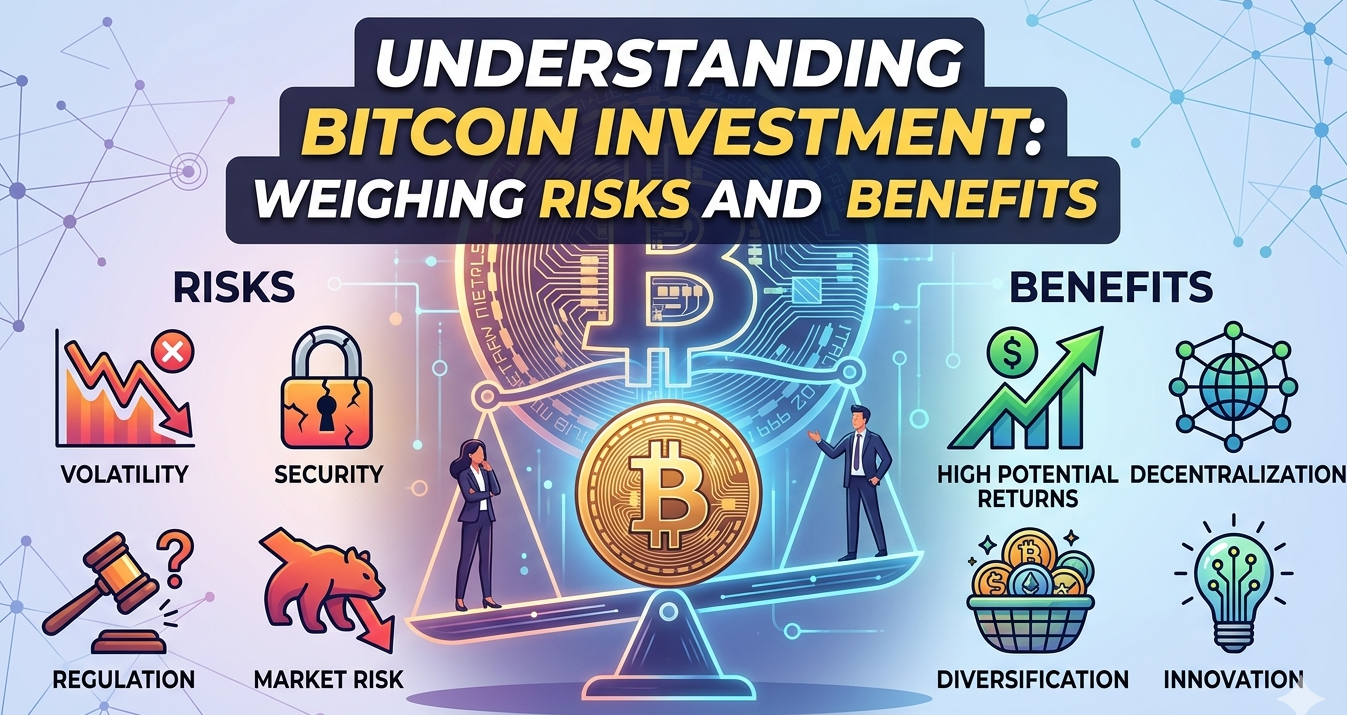
In summary, the benefits of investing in Bitcoin encompass significant return potential, portfolio diversification, protection against inflation, growing acceptance, and enhanced liquidity. Collectively, these factors make Bitcoin an attractive option for investors seeking to navigate the contemporary investment landscape.
Analyzing the Risks of Bitcoin Investment
Investing in Bitcoin presents numerous inherent risks that potential investors should carefully consider. Chief among these is the volatility of Bitcoin prices. Unlike traditional investments, Bitcoin assessments can fluctuate dramatically within a short period, leading to significant losses. The price volatility arises from various factors, including market sentiment, investor behavior, and even external economic conditions that can drastically affect trading values.
Regulatory concerns also pose a risk for Bitcoin investors. As cryptocurrencies grow in popularity, governments and regulatory bodies worldwide are determining how to regulate this digital asset class. These regulations can impact the legality, taxation, and operational behavior of Bitcoin, potentially leading to restrictions that could affect the market value and accessibility for investors.
Security is another critical risk associated with Bitcoin investment. As a digital asset, Bitcoin is susceptible to hacking, fraud, and various forms of cybercrime. Investors must protect their Bitcoin holdings using secure wallets and automated security measures. However, despite best efforts, security breaches can still occur, resulting in losses. The decentralized nature of Bitcoin can also complicate recovery processes in cases of theft.
Market manipulation is yet another concern in the Bitcoin ecosystem. Given its relatively young market structure compared to securities or commodities, Bitcoin is more vulnerable to manipulation by individuals or groups with substantial holdings. Such actions can distort market integrity, leading to artificial price swings that harm unsuspecting investors.
Finally, technology risks are pertinent with the blockchain infrastructure and associated wallets. Bugs, vulnerabilities, or failures in the blockchain system can create significant problems, jeopardizing transactions or investor funds. As technology evolves, the reliability and security of these digital systems must continuously be assessed, keeping investors alert to any potential challenges that may arise.
Market Dynamics and Volatility
Bitcoin’s price behavior is heavily influenced by the underlying market dynamics of demand and supply. As a decentralized digital currency, Bitcoin operates in a unique market environment where numerous factors contribute to its volatility. Demand can rise sharply due to positive market sentiment, often fueled by news surrounding technology advancements, regulatory updates, or the burgeoning adoption of Bitcoin across various sectors.
On the supply side, Bitcoin is constrained by its protocol, which limits its total supply to 21 million coins. This fixed supply, combined with the growing interest from investors and institutions, creates a fundamental imbalance that often leads to significant price fluctuations. As more people look to invest in Bitcoin, driven by a range of motivational factors including but not limited to portfolio diversification and speculation, their collective actions shift the demand curve, contributing to volatility in its price.
Market sentiment plays a crucial role in this dynamic. Sentiment can swing dramatically with the introduction of new technologies, such as the implementation of the Lightning Network, which aims to improve transaction efficiency. Furthermore, external economic indicators such as inflation rates, currency devaluation, and overall economic health can have profound effects on investor psychology, magnifying price movements.
The phenomenon known as FOMO, or Fear of Missing Out, is particularly prevalent in the Bitcoin market. New investors often feel pressured to enter the market as they witness sharp price rises, leading to increased demand and, consequently, further price spikes. This cycle can create a self-reinforcing effect where volatility is not only a product of market conditions but also a function of investor behavior.
In summary, the intricate interplay of demand and supply dynamics, coupled with technological advancements and external economic indicators, creates a volatile Bitcoin market that requires careful consideration and analysis by potential investors.
Regulatory Landscape for Bitcoin Investments
The regulatory landscape surrounding Bitcoin investments is both complex and dynamic, varying significantly across different jurisdictions. In many countries, Bitcoin and other cryptocurrencies are subject to varying levels of regulation that can affect their use and investment potential. Government policies impact the market directly, influencing investor confidence and compliance within the industry.
For instance, some nations have embraced Bitcoin, recognizing it as a legal form of currency, while others impose stringent regulations or outright bans. Countries like El Salvador have adopted Bitcoin as legal tender, promoting its use as a legitimate financial tool. Conversely, China’s crackdown on cryptocurrency mining and trading reflects a cautious stance from governments concerned about financial stability and the potential for illicit activities.
Compliance issues present another layer of complexity for Bitcoin investors. The lack of uniform regulations can lead to confusion regarding tax obligations, oversight requirements, and consumer protection laws. Investors must remain vigilant, as failure to comply with local regulations can result in significant legal repercussions.
Looking ahead, the potential for future regulations poses both challenges and opportunities for Bitcoin investors. On one hand, more stringent regulations may limit the freedom and innovation within the market; on the other, clearer regulatory frameworks could enhance investor protection and stimulate mainstream adoption. Regulatory bodies worldwide are increasingly aware of the need for balance – encouraging innovation while safeguarding against fraud and volatility.
Thus, staying informed about local and international regulatory changes is critical for anyone considering investing in Bitcoin. Investors should consistently evaluate the evolving landscape to navigate compliance issues effectively, minimizing risks while capitalizing on potential benefits.
Long-term Perspectives: Bitcoin as an Asset Class
In recent years, the perception of Bitcoin has evolved markedly, leading many analysts and investors to consider it as a legitimate asset class. Unlike traditional investments such as stocks and bonds, Bitcoin operates on a decentralized network that provides unique characteristics, including transparency through blockchain technology and resistance to inflationary pressures. These features position Bitcoin favorably in the eyes of long-term investors who seek diversification and potential growth in their portfolios.
Historically, Bitcoin has demonstrated remarkable growth compared to many conventional assets. For instance, after its inception in 2009, Bitcoin’s price surged from mere cents to thousands of dollars within the last decade. This unprecedented increase has attracted attention from institutional investors, who increasingly view Bitcoin as a hedge against market volatility and economic downturns. In fact, some investment firms have referred to it as ‘digital gold’ due to its finite supply and store of value properties, which are analogous to precious metals.
Additionally, data suggests that over time, Bitcoin has exhibited less correlation with traditional asset classes. This non-correlation could be a strategic advantage for investors looking to mitigate risk through diversification. By incorporating Bitcoin into a diversified portfolio, an investor may enhance potential returns while maintaining a balanced risk profile. Furthermore, as Bitcoin matures, projections indicate that its market capitalization could continue to grow, inviting further institutional and retail investment.
Investors contemplating Bitcoin should remain mindful about correct allocation to capitalize on its potential while managing inherent risks. A well-thought-out strategy involving systematic investment or dollar-cost averaging can help hedge against market fluctuations. In conclusion, as Bitcoin gains recognition as an asset class, its viability for long-term investment becomes increasingly evident, warranting careful consideration and strategic approach from both novice and seasoned investors.
Future Trends in Bitcoin Investment
The cryptocurrency landscape is continually evolving, and Bitcoin remains at the forefront of these changes. Emerging trends indicate that technological advancements will play a significant role in shaping the future of Bitcoin investment. For instance, the development of the Lightning Network is designed to facilitate faster and cheaper transactions, enhancing Bitcoin’s usability as a payment system. This layer-2 solution aims to solve scalability issues, thus attracting more users and businesses to consider Bitcoin not only as an investment but as a viable currency.
Institutional adoption of Bitcoin is also on the rise, which could dramatically alter the investment landscape. Major financial institutions and corporations are beginning to integrate Bitcoin into their portfolios. This trend is expected to continue as regulatory frameworks around cryptocurrencies are clarified and strengthened. Greater institutional involvement will likely boost market confidence and liquidity, potentially leading to increased price stability which is conducive for long-term investments.
Beyond conventional investment strategies, the potential use cases for Bitcoin are expanding. Innovations such as smart contracts are paving the way for more complex transactions that leverage Bitcoin’s decentralized nature. These contracts allow for automated, trustless agreements between parties, which can be particularly beneficial in sectors such as finance and supply chain management. As Bitcoin’s functionality broadens, it may draw interest from investors looking for a dual-purpose asset—one that serves both as an investment and a utility.
Overall, the future of Bitcoin investment appears promising, characterized by technological innovations, increased institutional participation, and an expanding market for diverse applications. As these trends develop, they present both opportunities and considerations for investors navigating the Bitcoin ecosystem.
Conclusion: Making Informed Investment Decisions
In summary, investing in Bitcoin requires a nuanced understanding of both its potential rewards and inherent risks. As the cryptocurrency market continues to grow, so too does the allure of digital assets like Bitcoin. Investors must recognize that while the opportunity for significant returns exists, it comes alongside volatility and regulatory uncertainties that can affect market dynamics.
Careful consideration of personal investment goals is paramount before making any financial commitments. Prospective investors should evaluate their risk tolerance, taking into account their overall portfolio balance and the amount of capital they are willing to allocate to Bitcoin. It’s crucial to approach this investment with caution, recognizing that, like any financial opportunity, it carries the possibility of loss.
Moreover, the importance of conducting thorough research cannot be overstated. Understanding the mechanisms behind Bitcoin, such as blockchain technology and market trends, will enable investors to make more informed decisions. Engaging with reliable information sources and following the latest developments can further enhance one’s ability to navigate the complexities of cryptocurrency markets.
Ultimately, informed decision-making is the cornerstone of successful investing. By weighing the risks against potential benefits and seeking knowledge and expertise, individuals can better position themselves to make thoughtful investments in Bitcoin and capitalize on its evolving landscape.