




Introduction to Capital Preservation in Digital Assets
Capital preservation refers to strategies aimed at protecting investors’ capital from being eroded by market fluctuations, inflation, or other adverse economic conditions. In the realm of high-risk digital assets, such as cryptocurrencies and tokens, the volatile nature of the market poses significant threats to the sustainability of investments. As this digital landscape evolves, the need for effective capital preservation techniques is paramount.
The digital asset market is characterized by rapid price swings and substantial unpredictability, hence making it crucial for investors to implement proactive strategies to safeguard their investments. Unlike traditional assets, which may exhibit more stability, digital assets can experience swings in value that are extreme and often unexpected. This unpredictability necessitates a focused approach to preserving capital within portfolios aligned with these digital assets.
Practicing capital preservation not only safeguards the initial investment but also helps in minimizing potential losses during market downturns. By adopting techniques that promote capital preservation, investors can create a buffer against the inherent risks of digital asset investments. These techniques may include diversification across various asset classes, using stop-loss orders, or considering stable income-generating digital products. As investors navigate the ebbs and flows of the digital asset market, prioritizing capital preservation can lead to more sustainable growth and long-term financial health.
In essence, as digital assets grow in popularity and adoption, understanding the role of capital preservation becomes increasingly critical. Well-informed investors who proactively implement preservation strategies are better positioned to mitigate losses and protect their investments in this high-risk environment.
Understanding High-Risk Digital Assets
High-risk digital assets are investments that come with a heightened level of uncertainty and potential for loss. This category prominently includes cryptocurrencies and non-fungible tokens (NFTs), both of which have emerged as influential components in the modern financial landscape. Several key factors contribute to their designation as high-risk investments.
One defining characteristic of high-risk digital assets is their inherent market volatility. Cryptocurrencies, for instance, can experience rapid price fluctuations within short timeframes. This unpredictability is driven by various variables including market sentiment, macroeconomic trends, and technological advancements. Traders and investors must remain vigilant, as such volatility can lead to significant financial losses as easily as it can create gains.
Additionally, regulatory challenges play a crucial role in labeling these assets as high-risk. The regulatory environment surrounding digital currencies and NFTs remains in flux, with different jurisdictions approaching the issue with various levels of scrutiny and legislation. This lack of a cohesive regulatory framework can lead to abrupt changes in the market and investor confidence. For example, sudden announcements from governments regarding taxation or bans can profoundly affect pricing.
Technological factors also underscore the risks associated with high-risk digital assets. Issues such as cybersecurity threats, hacking incidents, and technological failures pose significant risks to investors and traders alike. The decentralized nature of digital assets contributes to this vulnerability since, unlike traditional financial systems, there is often no central authority to manage or secure these investments.
In summary, the classification of cryptocurrencies and NFTs as high-risk digital assets hinges on their market volatility, regulatory uncertainties, and technological vulnerabilities. Investors must carefully weigh these factors when considering their engagement in these dynamic yet precarious markets.
Diversification Strategies
Diversification is a fundamental investment strategy employed across various asset classes, including traditional financial markets and high-risk digital assets. The core principle of diversification is to spread investments across a range of different types of assets, thereby mitigating risk and potential losses. In the volatile landscape of digital assets, this approach proves particularly effective as it reduces the impact of a poor-performing asset on the overall portfolio.
Investors can achieve diversification within the high-risk digital asset space by allocating funds to various cryptocurrencies, decentralized finance (DeFi) tokens, non-fungible tokens (NFTs), and other blockchain-based assets. By embracing a mix of established digital currencies such as Bitcoin and Ethereum alongside emerging projects, investors can balance their exposure to market fluctuations. This strategy ensures that if one asset experiences a downturn, the others may hold or increase in value, thus preserving capital.
Additionally, diversification extends beyond merely selecting different assets; it also encompasses various sectors within the digital ecosystem. For instance, an investor might consider investing in blockchain applications across sectors such as finance, gaming, supply chain, and entertainment. This sector-specific diversification further cushions the investment portfolio against erratic market movements driven by sector-specific incidents.
Moreover, geographical diversification is another valuable approach, as it enables investors to tap into growth potentials in different markets and jurisdictions. By investing in digital assets from various regions, especially in rapidly developing markets, investors can leverage the unique growth opportunities these areas present. In summary, a well-diversified investment portfolio in high-risk digital assets not only mitigates risk but also opens avenues for enhanced returns, making it a critical component of capital preservation strategies.
Use of Stablecoins for Capital Preservation
Stablecoins have emerged as a pivotal instrument for capital preservation within the dynamic landscape of digital assets. Unlike traditional cryptocurrencies such as Bitcoin or Ethereum, which can exhibit significant volatility, stablecoins are generally pegged to stable assets, such as the U.S. dollar or commodities, allowing them to maintain a consistent value. This characteristic makes stablecoins particularly attractive for investors seeking to mitigate risk and stabilize their portfolios during turbulent market conditions.
The mechanics of stablecoins often involve collateralization, where a reserve of assets backs the coin’s value. For instance, a fiat-collateralized stablecoin maintains a 1:1 ratio with a specific currency, ensuring that for every stablecoin issued, an equivalent amount of fiat currency is held in reserve. Other models include crypto-collateralized and algorithmic stablecoins, which utilize smart contracts to manage the supply and demand dynamics, further securing their value. By using these mechanisms, stablecoins provide a reliable medium for preserving capital without the drawbacks associated with fluctuating cryptocurrencies.
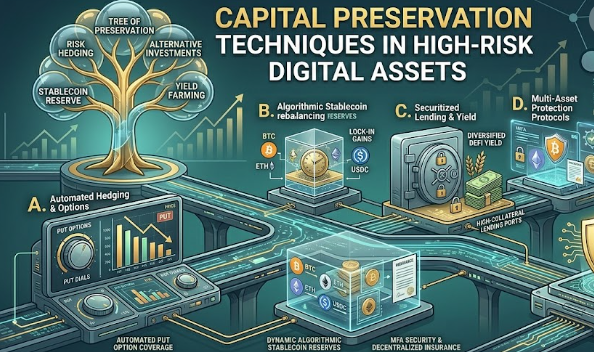
Incorporating stablecoins into an investment portfolio can effectively guard against market fluctuations. Investors may choose to allocate a portion of their digital assets into stablecoins, enabling them to consolidate gains from volatile investments when prices peak. Additionally, stablecoins facilitate liquidity in the market, allowing for quick conversions back into other cryptocurrencies or fiat currencies when advantageous opportunities arise. Furthermore, they can serve as a safe harbor during downtrends, providing peace of mind and stability amidst uncertainty. Leveraging stablecoins strategically can therefore enhance capital preservation efforts, ensuring that investors are well-prepared to navigate the complexities of the digital asset market.
Implementing Stop-Loss Orders
In the realm of high-risk digital assets, where price volatility can lead to significant financial losses, implementing stop-loss orders serves as a vital strategy for capital preservation. A stop-loss order is an automatic instruction to sell an asset when its price falls to a pre-determined level. This approach is particularly essential for investors engaged in high-risk markets, rapidly changing conditions, or both.
To effectively set a stop-loss order, investors should first determine their risk tolerance and establish a critical price point at which they are willing to exit their position. This price should be based not only on current market conditions but also on historical price movement and support/resistance levels. A common practice involves placing a stop-loss order 5-10% below the asset’s current price, although specific percentages can vary depending on the investor’s strategy and market volatility.
The timing of setting these orders is strategic; they are most beneficial when market trends appear uncertain. In such cases, a stop-loss can mitigate losses by executing a sell order before the investor’s financial exposure worsens. Additionally, stop-loss orders can aid in emotional restraint, preventing investors from making impulsive decisions driven by fear or euphoria during market fluctuations.
It is advisable to regularly review and adjust stop-loss orders in response to market movements. As the price of a digital asset increases, investors may consider moving the stop-loss order upwards to lock in profits, a strategy commonly referred to as a trailing stop-loss. Such dynamic management enhances the effectiveness of stop-loss orders in preserving capital, allowing investors to navigate the complexities of high-risk digital investment landscapes with greater confidence.
Staking and Yield Farming for Income Generation
Staking and yield farming are two prominent strategies employed in the realm of digital assets, particularly as methods for generating passive income. Both approaches offer investors the potential to earn returns on their holdings while simultaneously playing a role in capital preservation by mitigating exposure to volatility in the market.
Staking involves locking up a certain amount of cryptocurrency in a wallet to support the operations of a blockchain network. In return for this contribution, stakers are rewarded with additional tokens. This process not only helps secure the network but also allows investors to earn passive income. Importantly, staking can reduce risk as it aligns the investor’s interests with the stability of the blockchain. By holding onto their assets rather than trading frequently, investors may minimize losses related to market fluctuations.
On the other hand, yield farming—another form of decentralized finance (DeFi)—allows investors to lend or provide liquidity to a decentralized platform. In exchange for this provision, they receive interest or additional tokens as rewards. This dynamic increases the overall return on investment and can lead to significant gains in various environments. However, farming also comes with inherent risks, including impermanent loss and smart contract vulnerabilities. Nevertheless, carefully selected yield farming opportunities can elevate income generation while aiding in capital preservation. By diversifying across multiple platforms and understanding the associated risks, investors can effectively generate returns that may help offset any declines in their principal investments.
In summary, both staking and yield farming present avenues for income generation in the digital asset space. By incorporating these techniques, investors can potentially enhance their portfolio’s performance while safeguarding their capital against the high volatility that often characterizes the digital assets market.
Regular Portfolio Review and Rebalancing
In the dynamic landscape of high-risk digital assets, the necessity of conducting regular portfolio reviews cannot be overstated. As market conditions fluctuate, investments may drift from their intended allocations, adversely impacting an investor’s capital preservation strategy. A scheduled assessment of one’s digital asset portfolio allows investors to align their holdings with both current market trends and individual risk tolerance levels.
The interconnectedness of the digital asset market means that changes in one asset can have ripple effects across the entire portfolio. Therefore, periodic reviews serve as a critical checkpoint to evaluate investments’ performance relative to the overall market dynamics. Particularly in the context of high-risk digital assets, where volatility can lead to significant portfolio deviations, maintaining an awareness of these changes is essential for safeguarding capital. This proactive approach enables investors to identify underperforming assets and make informed decisions about potential reallocations.
Moreover, changes in personal circumstances or risk appetite should also prompt a reassessment of investment strategies. For instance, an increase in personal risk tolerance might encourage an investor to explore more aggressive opportunities, while a decline may necessitate a shift towards more stable assets. Regular rebalancing facilitates this adaptability and ensures that the portfolio remains aligned with the investor’s overarching capital preservation objectives.
Ultimately, adopting a disciplined approach to regular portfolio reviews and rebalancing not only enhances the potential for capital preservation but also encourages a more informed investment strategy. Staying vigilant to market movements and personal circumstances ensures that the digital asset portfolio is resilient in the face of uncertainty and poised for longer-term success.
Risk Management Techniques in Digital Investing
Investing in digital assets can yield substantial returns, but it also carries significant risks. Therefore, employing effective risk management techniques is crucial for preserving capital in these volatile markets. One of the foundational strategies is setting predefined limits on investments. By establishing stop-loss and take-profit levels, investors can create a safeguard against substantial losses while also securing profits when assets reach specific price points. These limits help in maintaining a disciplined investment approach in the face of market fluctuations.
Additionally, the use of derivatives can serve as a valuable tool for risk management in digital asset investing. Instruments such as options and futures contracts enable investors to hedge against potential downturns in asset values. For instance, purchasing put options allows investors to protect their holdings by acquiring the right to sell at a predetermined price within a specific timeframe. This strategy can mitigate the impact of adverse price movements and contribute to overall capital preservation.
Maintaining liquidity is another critical component of a comprehensive risk management strategy. This involves ensuring that a portion of the investment portfolio is held in highly liquid assets, allowing for quick access to funds when needed. The unpredictable nature of digital asset markets necessitates the ability to react swiftly to market changes. By holding liquid assets, investors can capitalize on sudden opportunities or respond to emerging risks without being forced to sell off core holdings at a disadvantageous time.
In conclusion, implementing robust risk management techniques—such as setting limits, utilizing derivatives, and maintaining liquidity—provides a strong framework for capital preservation in high-risk digital assets. These methods help investors navigate the complexities of this emerging landscape while safeguarding their investments effectively.
Conclusion: The Future of Capital Preservation in High-Risk Digital Assets
As the digital asset landscape continues to evolve, capital preservation techniques are becoming increasingly vital for investors navigating the inherent volatility. Throughout this discussion, several strategies have been highlighted, including diversification across various asset classes, implementing stringent risk management methodologies, and maintaining ongoing vigilance through continual portfolio reassessment. Each of these techniques plays a crucial role in mitigating risks associated with high-risk digital assets.
Moreover, technologies such as blockchain and advanced analytics are likely to transform capital preservation strategies. The emergence of decentralized finance (DeFi) and smart contracts presents new avenues for securing digital assets while enhancing transparency and reducing counterparty risk. These advancements can empower investors to utilize innovative financial instruments that are designed with risk mitigation in mind.
Furthermore, with increased regulatory scrutiny and market maturation, there is a growing impetus for adopting best practices within the ecosystem. As institutional involvement in digital assets rises, the demand for robust capital preservation techniques will become even more pronounced. This shift will drive the development of sophisticated tools and platforms aimed at providing comprehensive solutions for capital preservation.
Looking ahead, education will remain a cornerstone of effective capital preservation. As the market landscape evolves, investors must stay informed about emerging trends, technologies, and regulatory developments. This continuous learning will empower them to adjust their strategies and safeguard capital against potential market disruptions.
In summary, the future of capital preservation in high-risk digital assets is poised to be shaped by technological innovation, regulatory changes, and a deeper understanding of risk management. Investors who adapt to these trends will be better equipped to protect their assets in this dynamic financial environment.