




Introduction to Smart Contracts
Smart contracts are self-executing agreements with the terms directly written into code. These programs run on blockchain networks, enabling parties to automate contractual processes without the need for intermediaries. Their operation hinges on a decentralized system where transactions and agreements are verified through cryptography, ensuring trust and transparency.
By utilizing smart contracts, entities can streamline transactions, improve efficiency, and reduce costs associated with traditional contracting. The absence of intermediaries diminishes the likelihood of human error, providing a robust mechanism for enforcing terms automatically. This automation allows for real-time execution and monitoring of obligations, significantly optimizing workflows in various sectors such as finance, supply chain, and legal agreements.
However, smart contracts are not devoid of challenges. The immutability feature of blockchain means that once deployed, errors in the contract code cannot be easily corrected, potentially leading to financial losses. Furthermore, legal recognition and regulatory compliance remain gray areas in many jurisdictions, posing additional risks for organizations seeking to adopt this technology.
Despite these obstacles, the significance of smart contracts is evident. They present a transformative approach to traditional agreement models, enabling enhanced security through encryption while reducing transaction times. As industries increasingly adopt blockchain technology, understanding how smart contracts function is crucial for stakeholders aiming to leverage their benefits effectively.
Importance of Smart Contract Auditing
Smart contract auditing is a critical process in the realm of blockchain technology, as it serves to identify vulnerabilities and ensure the security of these digital agreements. Given that smart contracts execute automatically without the need for intermediaries, any flaws in the code can have immediate and significant consequences. The primary focus of auditing lies in verifying the functionality and reliability of smart contracts to prevent potential malfunctions and security breaches.
One of the most pressing reasons for conducting thorough audits is to mitigate risks associated with financial losses. Unverified smart contracts can lead to substantial economic repercussions, including lost funds or unauthorized access to assets. By implementing rigorous auditing practices, organizations can bolster their defenses against malicious attacks, thus protecting their users and stakeholders from potential financial harm.
Moreover, the reputation of a business hinges on the reliability of its smart contracts. A single incident of a security breach can tarnish an organization’s standing and erode trust among users and investors. Auditing, therefore, plays a pivotal role in maintaining the integrity of transactions and fostering confidence in the platform. For developers and companies operating within the blockchain ecosystem, ensuring that their smart contracts are thoroughly vetted through auditing processes can distance them from negative publicity and enhance their market credibility.
In light of these risks, engaging in smart contract auditing is not merely advisable; it is essential. It ensures the robustness of blockchain transactions while affirming a commitment to security and transparency. As the dependence on blockchain technology continues to grow, the importance of systematic auditing will only become more pronounced, defining the future landscape of secure digital transactions.
Common Vulnerabilities in Smart Contracts
Smart contracts, though touted for their security, are vulnerable to a range of exploitable flaws. One of the most notorious vulnerabilities is the reentrancy attack, which occurs when an external contract calls back into the original contract before the initial execution is completed. A historical example of this vulnerability is the DAO hack in 2016, where an attacker exploited the reentrancy flaw to siphon off approximately $60 million worth of Ether. This incident underscored the importance of thorough security audits and the necessity to design contracts that fully mitigate reentrancy risks.
Another significant vulnerability is the issue of integer overflow and underflow, which arises in programming when arithmetic operations exceed or fall below the limits of the variable type assigned. In a notable incident, the CoinDash ICO was affected by this vulnerability, leading to unauthorized token creation, resulting in substantial financial losses for investors. To prevent such occurrences, developers must carefully implement checks before performing arithmetic operations, particularly in languages like Solidity, where such risks are prevalent.
Improper access control also poses a considerable risk in smart contracts. If contract functions are not correctly guarded, unauthorized parties may gain control and manipulate contract behavior. A case in point is the Parity wallet incident, where a flawed access control mechanism allowed an attacker to freeze over $150 million in Ether by exploiting a vulnerability within the multi-signature wallet contract. Developers must ensure that proper role-based access controls are enforced, and they should regularly update these mechanisms to adapt to evolving security challenges.
Auditing Methodologies Overview
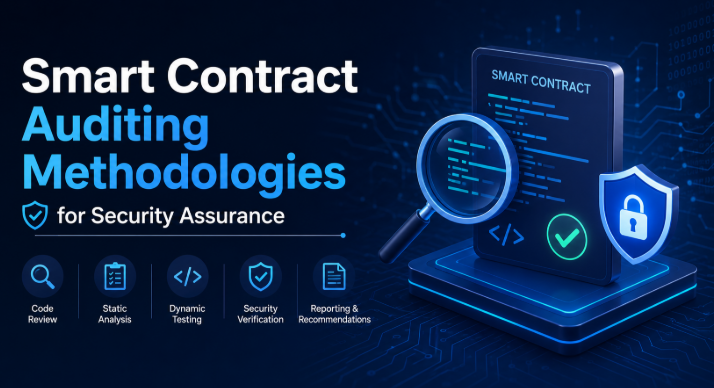
The security of smart contracts is paramount, and various auditing methodologies have emerged to address potential vulnerabilities effectively. The most prominent approaches include manual reviews, automated tools, and a hybrid methodology that combines elements of both. Each of these methodologies plays a crucial role in ensuring the robustness and reliability of smart contracts.
Manual reviews involve a thorough examination of the code by experienced auditors. This process allows for nuanced understanding and interpretation of the code logic, thereby identifying logical errors, security flaws, and unforeseen behaviors. Manual audits benefit from the human ability to reason contextually and apply domain knowledge that automated tools may not capture. Although this approach is time-consuming and labor-intensive, it provides a depth of analysis that is vital for critical applications.
Automated tools have been developed to facilitate smart contract auditing by quickly scanning the code for known vulnerabilities. These tools utilize static analysis techniques to detect coding errors and security loopholes, such as reentrancy attacks or integer overflows. The primary advantage of automated tools is their ability to process large codebases rapidly, which can significantly expedite the auditing process. However, automated tools may produce false positives or miss context-specific issues that only a human auditor might understand.
The combination of manual reviews and automated tools enhances the auditing process’s effectiveness. This hybrid approach allows for both the efficiency of automated scanning and the critical thinking of human oversight. By leveraging the strengths of both methodologies, auditors can mitigate risks more comprehensively and ensure a higher level of security assurance for smart contracts. Thus, combining manual and automated efforts presents a balanced strategy, offering thorough analysis while also accommodating efficiency in handling complex codebases.
Manual Review Techniques
Manual review plays a critical role in smart contract auditing, as it enables auditors to assess the code comprehensively, ensuring an in-depth understanding of potential vulnerabilities and compliance with best practices. One of the foundational techniques employed in manual audits is the code walkthrough, where auditors systematically examine each line of code. This process not only aids in identifying errors but also assists in understanding the flow and functionality of the contract. During a code walkthrough, auditors look for common issues such as uninitialized variables, improper access controls, and potential reentrancy attacks.
Another essential technique is the design review. This involves evaluating the overall architecture and logic of a smart contract before delving into the code itself. By examining the design, auditors can critique how well the contract meets its intended purpose, verify the feasibility of the logic implemented, and determine whether the design adheres to established guidelines. Design reviews can also highlight any design flaws that could lead to security loopholes, offering a high-level perspective on the contract’s potential vulnerabilities.
The use of checklists is also a vital aspect of manual auditing. Developing a comprehensive checklist allows auditors to ensure that no critical areas are overlooked during the review process. Best practice checklists should encompass elements such as compliance with security standards, proper error handling, and adherence to the principles of least privilege. Checklists can serve as valuable tools for maintaining consistency across audits, guiding auditors through the critical areas of examination, and facilitating knowledge transfer among team members.
By applying these manual review techniques—including code walkthroughs, design reviews, and the utilization of checklists—auditors can enhance the reliability of their assessments, ultimately contributing to the overall security assurance of smart contracts.
Automated Tools for Auditing
Automated tools have become integral to the smart contract auditing process, offering efficiencies that manual methods often cannot match. These tools utilize static analysis, formal verification, and other techniques to identify potential vulnerabilities, codifying best practices within the programming languages commonly utilized in smart contract development, such as Solidity.
One widely recognized tool is Mythril, which employs symbolic execution to detect security vulnerabilities in Ethereum smart contracts. It allows developers to analyze contracts bytecode and presents a systematic approach to finding common issues, such as reentrancy and integer overflow. Mythril’s ability to perform comprehensive analysis enhances the safety of smart contracts significantly.
Slither is another popular tool that delivers rapid feedback by combining various code analysis techniques. It focuses on identifying potential vulnerabilities and offers additional insights through user-defined analyses. Slither’s capacity to integrate with other tools and frameworks, as well as its customizable nature, makes it a formidable asset in the auditing toolbox.
Oyente is renowned for its security analysis and has been a cornerstone in the automation landscape. Utilizing symbolic execution, Oyente can infer the behavior of smart contracts and predicts how they could be exploited. Its comprehensive reports aid developers in addressing identified vulnerabilities and enhance the overall design by ensuring adherence to security best practices.
Despite their advantages, automated tools are not without limitations. They may generate false positives or fail to detect complex vulnerabilities that require human oversight, highlighting the need to combine automated methods with manual reviews. Thus, while tools like Mythril, Slither, and Oyente bolster the security assurance of smart contracts, they should be part of a comprehensive auditing strategy encompassing both automated and manual techniques.
Case Studies of Effective Auditing
Smart contract audits have become essential in the blockchain ecosystem, particularly in identifying vulnerabilities that could otherwise lead to significant financial loss. To illustrate the efficacy of thorough auditing processes, this section will delve into notable case studies that highlight how smart contract audits have successfully prevented disasters.
One illustrative case is the audit conducted on the Parity wallet in 2017. Following an identified flaw, the auditing team employed a combination of manual code review and automated testing tools. This comprehensive method uncovered several vulnerabilities, including issues concerning transaction malleability. By addressing these vulnerabilities early on, the audit team enabled the developers to patch the issues prior to their exploitation, which subsequently safeguarded millions of dollars from potential theft.
Another noteworthy example involves the MakerDAO platform, which underwent an extensive audit due to its significant position in the decentralized finance (DeFi) space. The auditors utilized systematic testing, including formal verification and simulation of attack vectors to evaluate the smart contracts’ behavior under various scenarios. This exhaustive approach led to the discovery of several critical vulnerabilities that could have compromised the entire ecosystem. Thanks to prompt rectification initiated by the audit findings, MakerDAO fortified its contracts, enhancing user trust and security.
Additionally, in 2020, the Yearn.finance project experienced a smart contract audit that was pivotal in preventing a number of attacks against its vaults. The auditors conducted rigorous testing and code analysis which successfully identified and reported vulnerabilities related to improper access controls. The project team acted on these findings, ensuring a high level of security for user assets, which ultimately contributed to the project’s reputation as a reliable DeFi platform.
These case studies underscore the critical role of smart contract auditing methodologies in identifying vulnerabilities before they can be exploited. They exemplify how effective audits not only enhance security but also instill confidence in users, thereby promoting a more secure blockchain environment.
Best Practices in Smart Contract Auditing
Smart contract auditing is essential for ensuring that decentralized applications operate safely and reliably. Developers and auditors alike can benefit from following best practices in this domain. Regular audits form the cornerstone of a prudent development workflow. Conducting audits at varying stages of the smart contract lifecycle allows for the identification of vulnerabilities early in the process, ultimately saving time and resources that might otherwise be spent addressing issues after deployment.
Comprehensive testing is another vital practice. Developers should utilize unit tests to verify individual components, alongside integration tests that assess how these components function together under various scenarios. This method not only streamlines the development of smart contracts but also helps uncover unexpected interactions that could lead to security breaches.
Moreover, incorporating formal verification methods into the development process can significantly enhance the security posture of smart contracts. This mathematical approach to verifying that a contract behaves according to its specification provides a higher degree of confidence in its reliability. Tools and frameworks that enable formal verification can be integrated into existing development environments to ensure that contracts are not just tested, but also proven to be secure.
It is also important for development teams to stay abreast of the latest threats and vulnerabilities in the blockchain ecosystem. Keeping an updated library of known vulnerabilities aids in the crafting of better security measures and prompt identification of potential issues in smart contracts. Engaging with the developer community and participating in knowledge-sharing forums can facilitate this ongoing education.
By implementing these best practices, organizations can bolster their smart contract security and establish a foundation of trust within their decentralized applications, ultimately fostering user confidence in the technology.
The Future of Smart Contract Auditing
The landscape of smart contract auditing is rapidly evolving, driven by advancements in technology and increasing regulatory scrutiny. As more organizations and individuals adopt decentralized finance (DeFi) solutions, the need for robust auditing methodologies becomes paramount. One emerging trend is the integration of artificial intelligence (AI) and machine learning in the auditing process. These technologies can enhance the speed and precision of audits, enabling auditors to identify vulnerabilities more effectively than traditional methods allow.
Furthermore, the rise of DeFi platforms has spurred a new wave of innovation in smart contract auditing. With the increasing complexity of financial instruments being created on blockchain networks, auditors are compelled to adapt their methodologies accordingly. The future may witness the development of specialized audit tools tailored specifically for the unique challenges posed by DeFi contracts. Such tools can facilitate more thorough reviews and provide developers with immediate feedback, ultimately leading to higher security standards in the ecosystem.
Regulatory bodies are also beginning to take a more active role in the realm of smart contracts and associated audits. This regulatory scrutiny may introduce mandatory compliance frameworks that require regular audits for smart contracts, especially those involved in financial transactions. As regulations tighten, auditors will need to stay ahead of the curve by continually updating their practices to align with new legislative requirements and industry standards.
In conclusion, the future of smart contract auditing will likely be characterized by greater utilization of advanced technologies, the necessity of compliance with evolving regulations, and the specialization required to meet the unique demands of DeFi. Ensuring security in smart contracts will continue to be a critical focus, as stakeholders recognize the importance of maintaining trust and integrity in the blockchain ecosystem.