




Understanding the Scalability Trilemma
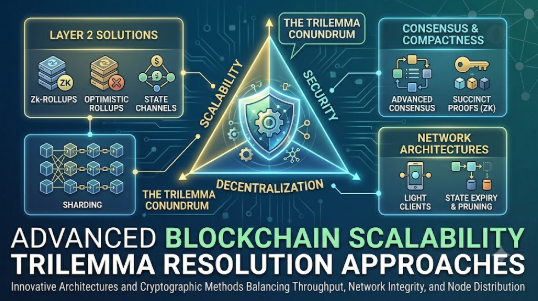
The term “scalability trilemma” refers to the challenge that blockchain developers face in trying to achieve three core objectives: scalability, security, and decentralization. Coined by Ethereum co-founder Vitalik Buterin, this concept highlights the inherent trade-offs that exist within blockchain systems. Each of these components plays a critical role in the overall performance and trustworthiness of a blockchain network.
Scalability is the ability of a blockchain network to handle a large volume of transactions efficiently. This becomes increasingly essential as user adoption grows, and demands for transaction throughput rise. However, enhancing scalability can often lead to compromises in security or decentralization; when more transactions are processed, potential vulnerabilities can arise if not managed correctly.
Security is paramount in maintaining trust within a blockchain ecosystem. It ensures that the network is protected against various forms of attacks, such as double-spending and Sybil attacks. A highly secure network may require incorporating complex algorithms and consensus mechanisms that inadvertently slow down transaction processing times, thus affecting scalability.
Decentralization is another pivotal characteristic of blockchain technology, which fosters resilience and trust. By ensuring that no single entity has control over the network, decentralization aids in distributed governance and enhances security. However, achieving decentralization can complicate scalability efforts, as decentralized networks often rely on a larger number of nodes to validate transactions, which can create bottlenecks in transaction speed.
Historical examples, such as Bitcoin and Ethereum, illustrate these struggles. Bitcoin prioritizes security and decentralization but at the expense of scalability, resulting in slow transaction times during peak congestion periods. Conversely, more scalable solutions, like some centralized alternatives, sacrifice decentralization and, potentially, security. This trilemma is ever-present, creating an ongoing dialogue within the blockchain community as developers seek to innovate and explore solutions to reconcile these competing demands.
Current Challenges in Blockchain Scalability
Blockchain technology has garnered significant attention for its potential to revolutionize various sectors, yet it continues to face notable challenges in scalability. One major issue is network congestion, which occurs when transaction volumes exceed the processing capacity of the blockchain. This bottleneck can cause delays in transaction confirmations, leading to frustration among users. Ethereum, the second largest blockchain platform by market capitalization, has frequently encountered congestion, especially during periods of heightened usage, significantly impacting its functionality.
Another critical challenge is the slow transaction speeds associated with many blockchain networks. Compared to traditional payment systems, which can process thousands of transactions per second, blockchain platforms like Bitcoin are limited to approximately seven transactions per second. This limitation can hinder a blockchain’s ability to serve applications requiring rapid transaction confirmations, such as real-time payments or environmentally focused applications that rely on timely data.
Moreover, users often face high fees during peak transaction periods, further complicating blockchain adoption. On the Ethereum network, for instance, gas prices can surge dramatically during times of increased demand, making small transactions economically unviable. High fees not only discourage users but also limit the utility of smaller decentralized applications, ultimately stifling innovation.
Examining case studies provides insight into how these challenges have been approached by different platforms. In 2017, Ethereum’s network became congested during the CryptoKitties phenomenon, leading to skyrocketing gas prices and transaction delays. In response to such occurrences, various protocols, including Layer 2 solutions, have emerged, aimed at alleviating these scalability issues without compromising the security or decentralization inherent in blockchain technology.
Layer 1 Solutions: Scaling from the Base Layer
Layer 1 solutions are crucial for addressing blockchain scalability challenges, as they focus on enhancing the foundational layer of the blockchain architecture itself. These approaches aim to increase transaction throughput and improve overall network efficiency without altering the underlying protocol significantly. Among the most notable techniques are sharding, block size adjustments, and improvements in consensus algorithms.
Sharding is a method that divides the blockchain into smaller, more manageable pieces, known as shards. Each shard can process transactions independently, allowing for parallel processing. This drastically reduces the load on a single chain, significantly increasing its capacity. Ethereum is a prime example of a blockchain that plans to implement sharding in future upgrades, allowing the network to scale effectively as user demand increases.
Another approach involves increasing block sizes. By allowing more transactions per block, block size adjustments can lead to faster confirmation times and greater capacity. Bitcoin Cash is a well-known example that implemented larger block sizes to facilitate more transactions per second, thereby improving user experience during peak periods.
Consensus algorithm enhancements also play a vital role in scaling solutions. Upgrading to more efficient consensus mechanisms, such as Proof of Stake (PoS) or Delegated Proof of Stake (DPoS), can reduce the energy and time required for transaction validation. Ethereum’s transition from Proof of Work (PoW) to PoS exemplifies a significant effort to enhance scalability while maintaining security and decentralized governance.
These Layer 1 solutions represent foundational methods to address scalability, ensuring blockchains can manage increasing transaction loads effectively. As Ethereum, Bitcoin Cash, and other networks adopt these techniques, the future of blockchain technology looks promisingly scalable.
Layer 2 Solutions: Offloading the Main Chain
Layer 2 solutions have been developed as a vital strategy to enhance blockchain scalability without compromising the security and decentralization associated with the primary chain. These solutions function atop the main blockchain and enable offloading of transactions and data, leading to improved throughput and reduced congestion. By utilizing various techniques such as state channels, rollups, and sidechains, Layer 2 solutions address the scalability trilemma effectively.
State channels represent a prominent Layer 2 solution by allowing participants to conduct multiple transactions off-chain, thus reducing the load on the main blockchain. Once the interactions are complete, only two transactions—the opening and closing of the state channel—are recorded on the blockchain. This method not only speeds up transaction times but also significantly reduces fees, making microtransactions viable and fostering more efficient peer-to-peer interactions.
Rollups, another significant implementation, bundle multiple transactions into a single one before sending it to the main chain. They come in two forms: optimistic rollups, which assume transactions are valid by default and only check if a fraud is suspected, and zero-knowledge rollups that provide cryptographic proofs to ensure all transactions are authentic. This compression of data enhances scalability while maintaining the integrity of the blockchain.
Sidechains operate independently of the main chain yet remain tethered through two-way pegs. They allow for different consensus mechanisms and can optimize specific use cases without burdening the primary network’s resources. By distributing transaction load across various chains, sidechains contribute to overall scalability and adaptability within blockchain ecosystems.
In conclusion, Layer 2 solutions offer promising pathways to address the scalability challenges faced by blockchain networks today. By offloading transactions from the main chain, methods like state channels, rollups, and sidechains not only enhance performance but also pave the way for broader application and adoption of blockchain technologies across different sectors.
Cross-Chain Solutions: Interoperability for Scalability
Scalability remains one of the most pressing challenges within the blockchain ecosystem. As the number of users and applications increases, traditional blockchain networks often struggle to process the sheer volume of transactions efficiently. Cross-chain solutions have emerged as a promising approach to mitigate these challenges by enhancing interoperability among various blockchain networks.
Interoperability refers to the ability of different blockchain systems to communicate and operate with one another, allowing for the transfer of assets and information across platforms seamlessly. One technique gaining significant attention in this area is the implementation of atomic swaps. Atomic swaps enable users to exchange cryptocurrencies directly across different blockchains without the need for an intermediary. This capability can alleviate bottlenecks by facilitating immediate and efficient exchanges of assets, thus distributing transaction loads across networks.
Another method employed to foster interoperability is the use of blockchain bridges. These bridges serve as connections between two distinct blockchain networks, allowing for the transfer of tokens and data securely. By utilizing bridges, developers can enhance the scalability of applications, as assets can be moved off a congested chain to a more efficient one as needed. This fluidity helps decrease congestion and enhances user experience as transactions can be processed with reduced delays.
Furthermore, cross-chain solutions promote the development of decentralized applications (dApps) that draw on the strengths of multiple blockchain platforms, unlocking innovative use cases that would be unattainable within a single-chain environment. As more projects embrace cross-chain functionality, the potential for greater efficiency and scalability within the blockchain space is significantly amplified.
The Role of Protocol Governance in Scalability
The evolution of blockchain technology has led to significant advancements in its scalability solutions, yet the successful implementation of such solutions often hinges on effective protocol governance. Governance models play a crucial role in determining how decisions regarding upgrades, consensus mechanisms, and community engagement are managed. Consequently, these governance frameworks can significantly influence the overall success of scalability strategies.
One of the central tenets of effective protocol governance is the inclusion of various stakeholders within the decision-making process. This participatory approach can ensure that the interests of a diverse group of users are represented, which is essential for long-term sustainability. Projects like Ethereum have shown how community-driven governance can lead to successful upgrades, evidenced by the transition to Ethereum 2.0, where community feedback and involvement were paramount in transitioning from a proof-of-work to a proof-of-stake model.
Moreover, the ability to rapidly adapt to technological advancements is essential for scalability. Governance frameworks that allow for swift decision-making can enable blockchain networks to implement changes or optimizations swiftly, thus enhancing scalability. A clear consensus mechanism, such as an on-chain voting system, can facilitate this adaptability, allowing stakeholders to have a direct say in governance matters. For example, the Decred blockchain employs a hybrid governance model that combines on-chain and off-chain mechanisms, successfully navigating upgrades while ensuring community involvement.
Additionally, successful examples from various projects demonstrate how governance can mitigate conflicts and foster cooperation among stakeholders. The introduction of defined protocols for address changes, protocol upgrades, and resolution of disputes can significantly enhance the scalability of blockchain networks. In these ways, the role of governance transcends mere decision-making; it becomes a foundation upon which effective scalability solutions can be built.
Emerging Technologies and Future Directions
The landscape of blockchain technology is witnessing a significant transformation as innovative approaches emerge to address the scalability trilemma. One of the forefront solutions is sharding, which aims to alleviate congestion on the blockchain by splitting the network into smaller, manageable segments called shards. Each shard can process transactions independently, resulting in an increase in overall throughput. Sharding implementations are still in nascent stages, but they hold the promise of enabling blockchains to scale horizontally while maintaining decentralization and security.
Another pioneering technology making waves in the blockchain space is zero-knowledge proofs (ZKPs). This cryptographic method allows one party to prove to another that a statement is true without revealing any additional information. ZKPs can enhance scalability by enabling off-chain computations, which reduce the load on the main blockchain. Implementing ZKPs effectively can also bolster privacy and security, vital components in any blockchain endeavor. Current projects like zkSNARKs and zk-STARKs exemplify the potential of zero-knowledge proofs in delivering scalable solutions while preserving data confidentiality.
Looking ahead, we can anticipate that the integration of artificial intelligence (AI) and machine learning (ML) in blockchain technology will inject further advancements. These technologies can optimize network performance by predicting congestion, automating transaction validation, and improving security protocols. As blockchain continues to evolve, we may see hybrid models emerge, combining proof-of-stake and proof-of-work systems to achieve heightened efficiency and scalability.
Moreover, the exploration of layer two solutions is expected to flourish. Technologies like the Lightning Network and sidechains aim to facilitate faster transactions and enhance scalability without compromising the main chain’s integrity. As more industry players invest resources into these cutting-edge approaches, the efficacy and application of scalable blockchain systems are poised to unlock new possibilities.
Real-World Applications: Case Studies
Scalability remains a pivotal challenge in the blockchain ecosystem, with various projects implementing innovative solutions to enhance their throughput and user experiences. One notable example is the Ethereum blockchain, which has actively pursued second-layer solutions such as Optimistic Rollups and zk-Rollups. These technologies allow for the processing of transactions off-chain while maintaining the security and decentralization of the network. As a result, Ethereum has witnessed significant improvements in transaction speeds and reduced gas fees, enabling more decentralized applications (dApps) to flourish.
Another relevant case is the Bitcoin network, which is traditionally viewed as less adaptable compared to newer blockchains. However, efforts like the Lightning Network have emerged to tackle Bitcoin’s speed and scalability concerns. This second-layer solution facilitates instant transactions, even during peak usage, and allows users to conduct high-frequency trading without burdening the main blockchain. By leveraging smart contract capabilities, Bitcoin’s ecosystem can engage in more complex transaction scenarios, thus enhancing its usability beyond simple peer-to-peer transactions.
Among the newer blockchain implementations, Solana stands out for its unique approach to scalability through its Proof of History (PoH) consensus mechanism. This innovative architecture significantly increases the throughput, allowing the network to handle thousands of transactions per second. This scalability approach has attracted numerous projects and DeFi applications, resulting in a robust and rapidly growing ecosystem. As a result, Solana can manage a broad range of applications efficiently while retaining low transaction costs, positioning itself as a leading platform in the blockchain space.
These case studies illustrate the varying strategies employed by different blockchain platforms to address scalability issues. Through innovative solutions and active community engagement, these projects not only enhance transactional efficiency but also empower broader applications within the blockchain sphere, ultimately pushing the industry towards a more scalable future.
The Future of Blockchain Scalability
In exploring the advanced scalability trilemma within blockchain technology, it is evident that numerous innovative approaches have emerged to tackle this persistent challenge. The scalability trilemma, which encompasses the delicate balance between decentralization, security, and scalability, represents one of the fundamental hurdles that blockchain developers face in optimizing network performance. Existing solutions such as sharding, layer-2 protocols, and consensus improvements have shown promising results in enhancing the throughput and efficiency of blockchain systems.
As we conclude this discussion on blockchain scalability, it is crucial to acknowledge the ongoing research and collaboration among developers, researchers, and industry stakeholders aiming to push the boundaries of what is achievable within blockchain technology. The future may see an array of solutions, each tailored to specific use cases, which can dramatically improve the performance of decentralized systems while addressing the fundamental aspects outlined in the scalability trilemma.
Furthermore, with the advent of emerging technologies like artificial intelligence and quantum computing, the potential for new theoretical frameworks and mechanisms to enhance scalability is significant. These innovations could lead to unexpected breakthroughs, facilitating increased transaction speeds and reduced latency while maintaining security protocols and decentralization principles.
Ultimately, the journey toward optimal blockchain scalability is a collaborative effort that requires both innovative thinking and practical implementation of ideas. For the blockchain ecosystem to thrive in the coming years, communities must continue to share knowledge, experiment with new methodologies, and remain committed to overcoming existing limitations. By doing so, we can anticipate a future where blockchain technology fulfills its promise as a transformative force across various industries, ensuring that scalability concerns are adeptly addressed.