




Introduction to Threat Modeling
Threat modeling is a systematic approach utilized in cybersecurity to identify, assess, and prioritize potential threats to information systems. This methodology is especially critical in decentralized financial systems (DeFi) due to their complex structures and reliance on blockchain technology. In DeFi, where traditional financial intermediaries are often eliminated, the importance of understanding potential vulnerabilities becomes paramount.
The core principles of threat modeling comprise asset identification, threat identification, and risk assessment. Asset identification involves determining which components of the system hold value and are essential for its operation. In the context of Decentralized Finance, assets may include smart contracts, protocols, user funds, and data integrity. Recognizing these assets allows stakeholders to focus their modeling efforts on what is most critical.
Next, threat identification is the process of recognizing potential adversaries and understanding their motivations, capabilities, and the various tactics they might employ. This could range from external attackers aiming to exploit vulnerabilities to malicious insiders who might misuse their access for financial gain. In a DeFi environment, where assets are often publicly accessible and processes automated, threat vectors are unique and require tailored analyses.
Finally, risk assessment evaluates the likelihood of identified threats materializing and the potential impact they may have on the system. In this phase, organizations can evaluate controls’ effectiveness, prioritize threats based on their potential harm, and develop strategies to mitigate these risks. Risk assessment helps in balancing protection measures with operational efficiency, ensuring that DeFi platforms remain robust against various security threats.
Overview of Decentralized Financial Systems
Decentralized financial systems, often referred to as DeFi, represent a radical shift in the traditional financial landscape by leveraging blockchain technology. These systems operate without a central authority, enabling peer-to-peer transactions, which reduces the need for intermediaries such as banks and payment processors. Through their decentralized nature, DeFi platforms provide enhanced accessibility and inclusivity, allowing users to engage in financial activities openly and transparently.
At the core of decentralized financial systems is the blockchain, a distributed ledger technology that ensures all transactions are securely recorded and immutable. This technology underpins various digital assets and cryptocurrencies, providing the transparency and security necessary for financial operations. Smart contracts, a critical component of DeFi, are self-executing contracts with the terms of the agreement directly written into code. They facilitate automatic transactions and enforce contractual agreements without human intervention, significantly increasing efficiency.
The architecture of decentralized financial systems typically comprises several key components. These include decentralized exchanges (DEXs), liquidity pools, lending platforms, and yield farming protocols, each contributing to an interconnected ecosystem. DEXs allow users to trade cryptocurrencies directly without relying on a central exchange, while liquidity pools provide the capital necessary for these transactions to occur seamlessly. Lending platforms enable individuals to borrow and lend assets, while yield farming allows users to earn returns on their crypto holdings by participating in various DeFi services.
The combination of blockchain technology, smart contracts, and the unique architecture of DeFi systems underscores the need for advanced threat modeling. This approach is crucial to identify potential vulnerabilities and mitigate risks that could jeopardize the integrity of the financial services provided within these decentralized frameworks.
Identifying Assets in DeFi
Decentralized Finance (DeFi) systems have revolutionized the way financial assets are managed and transacted. To effectively conduct threat modeling within these systems, it is essential to identify and categorize the various assets they encompass. Assets in DeFi can be primarily divided into three categories: cryptocurrencies, tokens, and user data.
The first category, cryptocurrencies, represents digital assets that utilize cryptographic technology for secure transactions. They often serve as the foundation of DeFi platforms. Popular examples include Bitcoin and Ethereum. Understanding the specific cryptocurrencies involved in a DeFi system is crucial, as it aids in assessing their market value, volatility, and susceptibility to security threats.
The second group consists of tokens, which are blockchain-based units of value created for specific purposes within a protocol. Tokens can represent assets such as equity, utility, or governance rights. In DeFi, many tokens are created and managed through smart contracts, bringing unique risks, including vulnerability to coding errors or exploits. Identifying different types of tokens and their respective roles in the ecosystem is essential for threat modeling, as it allows for better risk assessment of potential vulnerabilities.
Finally, user data represents another critical asset within decentralized financial systems. This includes personal information, transaction history, and wallet addresses. Protecting the confidentiality, integrity, and availability of user data is paramount in ensuring the overall security of the DeFi platform. Inadequate data security measures can lead to identity theft and unauthorized access, emphasizing the importance of data classification in threat modeling.
In summary, efficient threat modeling in DeFi necessitates a comprehensive understanding of the various types of assets, including cryptocurrencies, tokens, and user data. By recognizing the value and risks associated with these assets, stakeholders can develop more robust security measures to protect decentralized financial systems.
Common Threats in Decentralized Finance
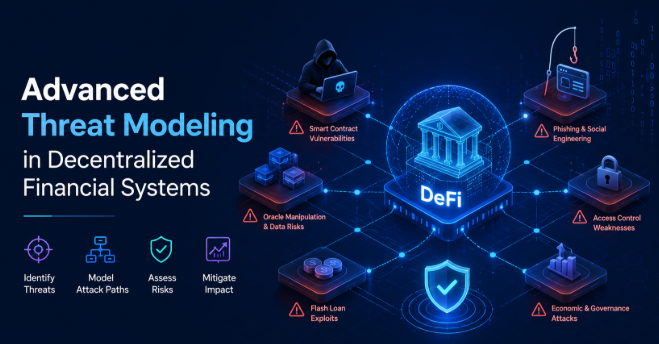
Decentralized Finance (DeFi) has emerged as a transformative paradigm within the financial services landscape, yet it faces a myriad of challenges that can jeopardize the integrity and security of its platforms. Among the most prevalent threats are smart contract vulnerabilities, which arise from coding errors or oversight during contract implementation. These flaws can be exploited by malicious actors, leading to significant financial losses. For instance, the infamous DAO hack in 2016 exploited a vulnerability in the smart contract of the DAO, resulting in the theft of approximately $60 million worth of Ether. Such incidents underscore the critical need for rigorous smart contract audits and testing.
Transaction fraud constitutes another serious threat within DeFi ecosystems. As transactions are executed in a trustless environment, there exists an opportunity for attackers to manipulate market conditions or exploit timing inefficiencies. An example includes flash loan attacks, whereby attackers borrow large amounts of cryptocurrency briefly to manipulate market prices, and then profit at the expense of unsuspecting users. These attacks can create ripple effects within the broader financial system, leading to market instability and loss of trust among participants.
Furthermore, regulatory challenges pose a significant threat to the growth and sustainability of decentralized finance. As DeFi projects operate in a relatively unregulated environment, they often face scrutiny from governmental and financial authorities. This uncertainty can hinder innovation, as projects may struggle to comply with evolving regulatory frameworks. Recent incidents, such as increased enforcement actions against DeFi protocols, signal the growing attention regulators are paying to these platforms. Institutions must navigate these challenges carefully to ensure compliance while fostering innovation.
In conclusion, while Decentralized Finance opens new possibilities, it must also contend with various complexities. Addressing the common threats of smart contract vulnerabilities, transaction fraud, and regulatory challenges is essential for building a more secure and resilient DeFi ecosystem.
Risk Assessment Methodologies
In the realm of decentralized financial systems (DeFi), comprehensive risk assessment methodologies are essential for identifying, evaluating, and mitigating potential threats. Two primary categories of risk assessment are commonly utilized: qualitative and quantitative methodologies. Each approach caters to varying needs and circumstances, and their combined use can yield a robust framework for addressing risks in DeFi environments.
Qualitative risk assessment involves the analysis of risks based on subjective judgment and experience. This approach relies on the expertise of stakeholders to assess potential threats and vulnerabilities without quantifiable data. Techniques such as brainstorming, expert interviews, and scenario analysis allow for an exploration of potential impact and likelihood of risks. In the context of DeFi, qualitative assessments can highlight unique attack vectors such as governance manipulation or smart contract bugs, enabling teams to prioritize their response strategies based on perceived risk severity.
On the other hand, quantitative risk assessment quantifies risks using statistical methods and numerical data. This often involves calculating the potential financial losses associated with different risks based on historical data and projected scenarios. In DeFi, quantitative methodologies can be leveraged to model loss events, forecast potential impacts on liquidity, and assess market volatility. By employing methods such as Monte Carlo simulations or Value at Risk (VaR) analyses, developers can make informed decisions on risk management and allocation of resources.
By integrating both qualitative and quantitative risk assessment methodologies, DeFi projects can create a comprehensive risk profile that addresses various dimensions of potential threats. This multidimensional approach allows for tailored mitigation strategies that are vital in the fast-evolving landscape of decentralized finance, where new vulnerabilities can emerge in response to innovations or shifts in user behavior. Furthermore, effective communication of these risks within teams and to other stakeholders enhances the overall security posture of the project.
Frameworks for Threat Modeling in DeFi
Threat modeling is a vital process for identifying and addressing vulnerabilities in decentralized financial (DeFi) systems. Several established frameworks provide a structured approach for evaluating the security risks associated with these innovative platforms. Among the most recognized frameworks are STRIDE, PASTA, and OCTAVE, each of which offers distinct methodologies suited for the unique challenges of DeFi.
The STRIDE framework categorizes threats into six specific types: Spoofing, Tampering, Repudiation, Information Disclosure, Denial of Service, and Elevation of Privilege. This approach helps DeFi developers systematically identify potential threats against their applications and user assets. By analyzing how each threat can manifest in the decentralized context, teams can prioritize security measures to mitigate these risks effectively.
PASTA (Process for Attack Simulation and Threat Analysis) provides a risk-centric perspective by focusing on the attacker’s behavior and motivations. This framework emphasizes threat modeling throughout the software development life cycle, which is especially relevant in the rapidly evolving field of DeFi. By simulating attacks, developers can assess the efficacy of their security measures and adapt them in response to emerging vulnerabilities.
On the other hand, the OCTAVE (Operationally Critical Threat, Asset, and Vulnerability Evaluation) framework takes a more holistic approach by considering organizational policies and practices in conjunction with technical vulnerabilities. It encourages teams to evaluate the critical assets of the DeFi system, understand their value, and prioritize them when assessing threats. This perspective is essential for developing a comprehensive defense strategy that incorporates both technical and operational security facets.
In conclusion, selecting the appropriate threat modeling framework is crucial for enhancing the security posture of DeFi systems. By leveraging frameworks such as STRIDE, PASTA, and OCTAVE, stakeholders can address the multifaceted nature of threats inherent in decentralized environments and build more resilient financial systems.
Best Practices for Threat Mitigation
In the evolving landscape of decentralized financial systems (DeFi), identifying and mitigating threats is paramount to ensure robust security and maintain user trust. One of the most effective strategies for mitigating threats involves conducting robust smart contract audits. Smart contracts form the backbone of most DeFi applications; therefore, ensuring their code is free from vulnerabilities is essential. Regular audits conducted by experienced third-party firms help to uncover potential weaknesses and ensure compliance with best practices. This proactive approach minimizes the risk of financial loss due to exploitation of smart contract flaws.
Another critical technique for enhancing security is the implementation of multi-signature wallets. Multi-signature wallets require multiple private keys to authorize transactions, thereby reducing the risks associated with a single point of failure. By distributing control among several parties, these wallets significantly enhance the security of digital assets. This is particularly important in environments where large sums of cryptocurrency are involved, as it acts as an effective deterrent against unauthorized access.
Establishing rigorous governance protocols is equally vital in preserving the integrity of decentralized ecosystems. Governance protocols dictate how decisions are made within DeFi projects, influencing everything from policy changes to financial practices. By ensuring that governance structures are transparent, inclusive, and accountable, potential threats related to operational misconduct or malfeasance can be substantially reduced. Engaging the community in the decision-making process further enhances trust and fosters a culture of accountability.
Finally, it is important to continually educate all participants within the DeFi ecosystem regarding security practices. This collective awareness is essential in minimizing risks associated with social engineering attacks, phishing attempts, and other user-centric vulnerabilities. Combining these best practices creates a comprehensive framework for threat mitigation, ultimately leading to a safer environment in decentralized financial systems.
The Role of Continuous Threat Modeling
The decentralized finance (DeFi) landscape is continuously evolving, driven by innovative technologies and increasing user adoption. As a result, the necessity for continuous threat modeling has become apparent. As new threats and vulnerabilities emerge, maintaining an adaptive approach to risk management is critical for ensuring the security of decentralized financial systems. Continuous threat modeling involves the ongoing evaluation of potential risks associated with these systems, providing real-time insights that facilitate proactive decision-making.
Adaptive modeling techniques play a significant role in the threat assessment process. These techniques allow organizations to adjust their threat models dynamically, considering changing market conditions, regulatory requirements, and advancements in technology. For instance, machine learning algorithms can analyze patterns in transaction data to identify anomalies that may indicate potential fraud or security breaches. This integration of advanced analytics enables financial institutions to respond promptly to shifting threat dynamics, minimizing potential risks before they materialize.
In addition to adaptive techniques, leveraging specialized tools can enhance continuous threat modeling practices. Tools such as threat intelligence platforms, risk assessment software, and automated vulnerability scanners can significantly streamline the monitoring and evaluation processes. These resources aid organizations in collecting and analyzing data on the latest threats, thereby enabling them to refine their threat models and implement appropriate mitigation strategies effectively.
By embracing continuous threat modeling, organizations within the decentralized finance sphere can not only enhance their overall security posture but also build trust with users and stakeholders. The proactive identification and management of risks ensure the resilience of decentralized financial systems in an increasingly complex and competitive environment. This approach is crucial for safeguarding the multifaceted interests each participant holds in this innovative financial ecosystem.
Conclusion and Future Outlook
In the rapidly evolving landscape of decentralized financial systems, effective threat modeling has emerged as a crucial element for ensuring security and integrity. The complex nature of these systems necessitates a tailored approach to threat identification, assessment, and mitigation. Throughout this blog post, we have explored various methodologies in advanced threat modeling, highlighting the pressing need for innovative security practices in the DeFi space.
As decentralized finance continues to gain traction, the risks associated with smart contracts, asset custody, and user privacy are becoming increasingly pronounced. The analysis of potential threats must evolve in parallel with technological advancements to safeguard stakeholders. Additionally, integrating emerging technologies such as artificial intelligence and machine learning can enhance the effectiveness of threat modeling processes, allowing for real-time data analysis and risk assessment.
The implementation of robust framework guidelines and community collaboration will be essential in building resilience against attacks, especially as malicious actors become more sophisticated. Regulatory compliance and governance structures must also be considered, as they play a vital role in shaping decentralized financial systems. Finally, fostering a culture of security awareness among developers, users, and investors can contribute positively to minimizing vulnerabilities.
Looking ahead, the future of threat modeling in decentralized financial systems will likely involve a combination of adaptive strategies and collaborative insights. It is imperative for stakeholders to remain vigilant and proactive in their security approaches as the DeFi ecosystem expands. By continuously refining threat modeling practices and keeping abreast of emerging threats, the decentralized finance sector can strive towards a more secure and resilient future.