





Introduction to Decentralized Finance (DeFi)
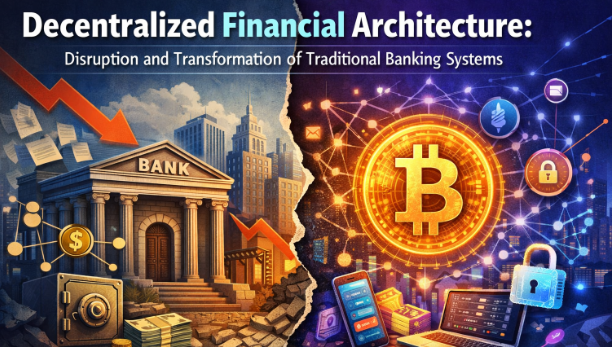
Decentralized Finance, commonly referred to as DeFi, represents a transformative approach to financial services, fundamentally altering the way individuals interact with money and banking systems. At its core, DeFi is an ecosystem of financial applications built on blockchain technology, allowing for peer-to-peer transactions without the need for traditional intermediaries such as banks. This innovation enables anyone with an internet connection to access a wide range of financial services, from lending and borrowing to trading and investing, in a more open and efficient manner.
One of the primary principles behind DeFi is transparency, as all transactions are recorded on a public ledger, making the system more accountable. This transparency helps to eliminate issues of trust that often arise in conventional banking. Users can independently verify transactions and protocols, fostering confidence in the financial services being provided. Additionally, DeFi aims to create a permissionless environment where all participants have equal access to financial tools, thus democratizing finance.
The technology that powers DeFi primarily includes smart contracts, which are self-executing agreements with the agreement terms directly written into code. These contracts automatically execute transactions when predefined conditions are met, significantly reducing the need for manual oversight. Moreover, the use of decentralized autonomous organizations (DAOs) allows the community to govern protocols and make decisions collectively, further decentralizing power away from traditional financial institutions.
In essence, DeFi endeavors to create a financial ecosystem where users have full control over their assets and financial transactions without the limitations and restrictions often imposed by traditional banking systems. This radical shift in financial architecture opens up new possibilities for innovation, inclusivity, and efficiency in financial services.
The Evolution of Traditional Banking Systems
Traditional banking systems have undergone significant transformations throughout history, shaping the modern financial landscape. The roots of banking can be traced back to ancient civilizations, where the first banking systems emerged around 2000 BC in Mesopotamia. These early banks facilitated trade and safeguarded grain and valuables, laying the groundwork for subsequent financial institutions.
By the Middle Ages, banking evolved further with the establishment of Italian city-states, which introduced more sophisticated financial instruments and practices. The Medici family, for instance, played a pivotal role in banking innovation, developing techniques such as double-entry bookkeeping and credit instruments. This period marked a transition from barter-based economies to monetized systems, enabling trade expansion across Europe.
In the 17th century, the formation of central banks began to formalize the banking sector. The Bank of England was established in 1694, serving as a model for other central banks around the world. These institutions were designed to regulate currency, manage national debt, and foster economic stability. Traditional banks, by this time, took on several essential functions, including accepting deposits, issuing loans, and facilitating payment systems.
In the 20th century, banks began adopting advanced technologies, further transforming their services and operations. The introduction of computers enabled banks to enhance transactional efficiency and expand their range of services. Moreover, the globalization of finance gave rise to multinational banking institutions, connecting economies and facilitating cross-border transactions.
Currently, traditional banking systems continue to evolve, adapting to the rapid advancements in technology and changing consumer preferences. With the introduction of digital banking, traditional banks are now leveraging online platforms to improve customer experiences and streamline operations. Despite these changes, the fundamental principles of traditional banking remain crucial to the functioning of modern financial systems.
Key Components of Decentralized Financial Architecture
Decentralized Financial Architecture, commonly referred to as DeFi, is reshaping the landscape of traditional banking systems through its innovative components. These essential elements include smart contracts, decentralized applications (dApps), and stablecoins, each contributing significantly to the functionality and appeal of DeFi solutions.
Smart contracts are self-executing contracts with the agreement directly written into code. They automate processes and enforce obligations without the need for intermediaries, significantly reducing transaction costs and processing time. By relying on blockchain technology, smart contracts enhance transparency and security, making them a cornerstone of decentralized finance. This automation allows users to engage in various financial activities, from lending and borrowing to trading and investment.
Decentralized applications (dApps) operate on blockchain networks, which ensures that they function without a centralized authority. These applications leverage smart contracts to offer services such as decentralized exchanges (DEXs), lending platforms, and yield aggregators, thus providing users with various financial services outside the confines of traditional banks. The open-source nature of dApps promotes innovation, as developers can build on existing platforms, creating a rich ecosystem of financial tools that empower users worldwide.
Stablecoins are another critical element of decentralized finance, offering stability amid the volatility typically associated with cryptocurrencies. These digital currencies are pegged to stable assets, like the US dollar or gold, thus providing a reliable medium of exchange and store of value within the DeFi ecosystem. As users engage with various DeFi applications, stablecoins facilitate seamless transactions, reduce risks, and enhance user confidence in digital currencies.
In summary, the integration of smart contracts, dApps, and stablecoins forms the backbone of decentralized finance, revolutionizing traditional banking systems by promoting efficiency, transparency, and accessibility.
Disruption of Traditional Banking by DeFi
Decentralized finance (DeFi) represents a groundbreaking shift in the financial landscape, challenging the conventional operations of traditional banking. One of the primary ways in which DeFi disrupts existing banking systems is through significantly lower transaction costs. By eliminating intermediaries and utilizing blockchain technology, DeFi protocols enable peer-to-peer transactions that reduce fees. This cost-effectiveness has the potential to attract users who are seeking more affordable financial services, effectively undermining the profit margins of traditional banks.
Another significant challenge that DeFi presents is enhanced privacy for users. Traditional banks often require extensive personal information to create accounts, which raises privacy concerns among consumers. In contrast, DeFi platforms tend to offer more anonymity, allowing users to engage in financial activities without compromising their personal data. This improvement in privacy can appeal to a broader audience, particularly those who are cautious about data security, thus posing a threat to conventional banking practices.
Accessibility is yet another critical factor contributing to the disruption caused by DeFi. Many individuals worldwide remain unbanked or underbanked due to geographical limitations or strict requirements imposed by traditional banks. DeFi platforms, with their borderless nature and minimal entry barriers, provide financial services to a wider population. Users can access lending, borrowing, and investing opportunities without the need for a physical bank or extensive documentation, thereby democratizing finance and challenging the traditional banking model.
Through lower costs, enhanced privacy, and greater accessibility, DeFi not only disrupts existing banking practices but also prompts a broader reconsideration of fundamental banking principles. The rise of decentralized finance signifies not only a transformation in how financial transactions occur but also in how society views and interacts with financial institutions.
Benefits of Decentralized Finance
Decentralized Finance (DeFi) is heralded as a transformative force within the realm of finance, offering significant advantages over traditional banking systems. One of the primary benefits of DeFi is its increased transparency. Transactions conducted on decentralized platforms are recorded on public blockchains, ensuring that all data is easily accessible and verifiable by anyone. This level of transparency not only fosters trust among users but also minimizes the chances of fraud and manipulation, which can be prevalent in centralized banks.
Another notable advantage of DeFi is the financial inclusion it offers, particularly for unbanked populations. Traditional banking institutions often impose stringent requirements for account creation and access to financial services. In contrast, DeFi platforms require little more than an internet connection and a compatible device, enabling individuals from diverse backgrounds to participate in the global economy. Consequently, millions of people who have been previously excluded from formal banking systems can now access essential financial services such as savings, loans, and insurance through decentralized applications.
Moreover, DeFi presents investors with the potential for higher yields compared to traditional savings accounts and investment vehicles. Due to the elimination of intermediaries, DeFi can offer more competitive interest rates, allowing users to benefit from their assets in ways that traditional banks cannot match. Yield farming and liquidity provision are prime examples of how individuals can leverage their crypto assets to generate passive income. This capacity for higher returns significantly enhances the appeal of DeFi solutions, especially in a low-interest-rate environment.
In conclusion, the advantages of decentralized finance, including enhanced transparency, financial inclusion, and the potential for higher yields, illustrate the transformative impact it can have on the traditional banking landscape. As these decentralized solutions continue to evolve, they present a compelling alternative to conventional financial systems.
Risks and Challenges of Decentralized Finance
Decentralized Finance (DeFi) has emerged as a transformative force in the financial landscape, yet it is essential to acknowledge the inherent risks and challenges associated with its adoption. One prominent concern is the security vulnerabilities that plague many DeFi protocols. Smart contracts, which underpin DeFi applications, are susceptible to coding errors and bugs that can be exploited by malicious actors. High-profile hacks and exploits have previously led to significant financial losses, drawing attention to the need for rigorous security audits and robust governance frameworks within DeFi ecosystems.
In addition to security concerns, regulatory challenges pose a significant barrier to the widespread adoption of decentralized finance. As DeFi operates outside traditional banking frameworks, it often falls into a gray area in terms of regulatory compliance. Governments and regulatory bodies are grappling with how to approach this rapidly evolving sector, leading to uncertainty and potential legal ramifications for projects. This lack of clarity can deter institutional investors and mainstream users, who may seek assurances regarding the legality and safety of their DeFi engagements.
Market volatility is another critical issue that cannot be overlooked in the discussion of DeFi risks. The cryptocurrency markets, often integral to DeFi applications, are notoriously volatile, leading to dramatic fluctuations in asset values. Such volatility can undermine the stability and reliability that users expect from financial systems, resulting in significant financial exposure. The prospect of sudden price swings may discourage participation from risk-averse individuals and institutional stakeholders.
The interplay of these risks calls for a balanced approach to embracing DeFi. While the innovation it brings to financial services is undeniable, stakeholders must remain vigilant and informed about the potential drawbacks. A comprehensive understanding of these challenges is vital to successfully navigating the decentralized finance landscape.
The Future of Banking in a DeFi World
The advent of decentralized finance (DeFi) is poised to transform the landscape of traditional banking systems. DeFi leverages blockchain technology to offer financial services that are more accessible, faster, and often cheaper than those provided by conventional banks. As this paradigm shift unfolds, predictions indicate a future where the roles of banks may radically change, rather than disappear altogether.
One significant trend anticipated is the ongoing integration of DeFi solutions with traditional banking offerings. Banks are recognizing the value of tokenization, smart contracts, and decentralized applications. Rather than viewing DeFi as a competitor, many financial institutions are exploring ways to incorporate these innovations into their service portfolios. This move may lead to hybrid models where banks provide traditional services while allowing customers to access DeFi benefits.
Furthermore, as millennials and younger generations begin to dominate the consumer base, the demand for transparent and user-friendly financial solutions is expected to rise. Traditional banks have begun investing heavily in technology and innovation, often forming partnerships with fintech firms to enhance their service offerings and compete with agile DeFi platforms. Security and compliance remain at the forefront, as banks strive to ensure that these new integrations align with regulatory frameworks.
In addition, the potential for collaboration between DeFi platforms and banks may lead to improved risk management and investment strategies. By combining the innovative features of decentralized systems with the stability and reliability of established financial institutions, a more robust financial ecosystem can emerge. Thus, rather than being a threat, the growth of DeFi can foster a creative transformation within the banking sector, leading to a more inclusive and efficient financial landscape.
Case Studies: Successful DeFi Platforms
Decentralized Finance (DeFi) has emerged as a transformative force in the financial landscape, offering innovative solutions that stand in stark contrast to traditional banking services. Among these platforms, Uniswap, Aave, and Compound serve as exemplary case studies that illustrate the potential and practicality of DeFi.
Uniswap is a decentralized exchange (DEX) that enables users to swap various cryptocurrencies without the need for intermediaries. By utilizing an automated liquidity protocol, Uniswap allows users to provide liquidity in exchange for transaction fees. This model has attracted significant user engagement, as it removes the barriers associated with conventional exchanges, such as lengthy KYC processes and high trading fees, thereby increasing accessibility to digital asset trading.
Another noteworthy platform is Aave, a decentralized lending protocol that allows users to borrow and lend cryptocurrencies without dealing with traditional banks. Users can earn interest on deposits while maintaining complete control of their assets. The platform employs innovative features such as flash loans, enabling users to access instant loans without collateral, as long as they repay within a single transaction block. This flexibility has attracted a diverse pool of users, from casual investors to institutional players, demonstrating the appeal of a system that prioritizes user autonomy and efficiency.
Compound further illustrates the strengths of DeFi by providing an algorithmic money market that allows users to deposit cryptocurrencies and earn interest. Users can borrow against their cryptocurrency holdings, with interest rates dynamically adjusted based on market supply and demand. This responsive approach not only enhances liquidity but also empowers users to manage their financial assets in a decentralized manner, circumventing traditional banking restrictions.
Through these case studies, it becomes evident that DeFi platforms like Uniswap, Aave, and Compound are not just alternatives to traditional banking; they represent a fundamental shift in how individuals interact with financial systems. This transformation is characterized by enhanced accessibility, user autonomy, and innovative financial products that cater to the needs of a rapidly evolving digital economy.
Conclusion: Embracing Change in Financial Systems
The advent of decentralized finance (DeFi) represents a significant paradigm shift in the landscape of financial systems, challenging the traditional banking framework that has long dominated the industry. Throughout this discussion, we have explored various facets of DeFi, highlighting its potential to democratize access to financial services, enhance transparency, and reduce costs associated with traditional banking. By eliminating intermediaries and allowing peer-to-peer transactions, decentralized financial architecture not only redefines how individuals interact with money but also introduces innovative tools that redefine investment and saving strategies.
Moreover, the benefits of decentralized finance extend beyond individual users, impacting businesses and entire economies. Small and medium-sized enterprises can now access funding through DeFi platforms without the burdensome regulations imposed by traditional banks. With broader access to capital markets, these entities can thrive, promoting economic growth and innovation. Additionally, the integration of smart contracts has the potential to streamline transactions and enhance security, reducing instances of fraud and ensuring greater trust in the financial ecosystem.
However, as we embrace these changes brought forth by DeFi, it is crucial to remain aware of the associated risks and implications. Regulatory frameworks are still evolving, and the volatility common in many cryptocurrencies poses questions about the stability and reliability of decentralized financial systems. Therefore, it is essential for individuals and businesses alike to approach DeFi with informed caution, thoroughly researching the platforms and opportunities available.
In conclusion, the rise of decentralized financial architecture marks a transformative moment in the evolution of finance. By recognizing the significance of DeFi, stakeholders can prepare for a future that is increasingly reliant on innovative financial solutions. Whether for personal finance or business operations, embracing the changes wrought by decentralized finance may lead to enhanced financial freedom and new opportunities in an interconnected world.