




Introduction to Blockchain Technology
Blockchain technology represents a transformative advancement in how digital transactions and data management systems operate. At its core, blockchain is a decentralized ledger that allows for secure and transparent recording of transactions across various entities. Unlike traditional databases managed by a central authority, a blockchain involves multiple participants, enabling a more trustworthy and efficient system.
One of the key features of blockchain technology is decentralization. This aspect ensures that no single party maintains full control over the data; instead, information is distributed across a network of computers, known as nodes. This minimizes the risk of manipulation or single points of failure, fostering greater confidence among users. Additionally, the transparency inherent to blockchain systems allows all involved parties to view transaction histories, making it easier to track and verify the authenticity of data.
Another significant characteristic is immutability, which means that once data has been recorded on the blockchain, it cannot be altered retroactively. This feature is particularly appealing for sectors that require high levels of data integrity and security, as it mitigates the risk of fraud and error. The combination of decentralization, transparency, and immutability has made blockchain an attractive option for numerous industries, including finance, supply chain, healthcare, and more.
The roots of blockchain technology can be traced back to the publication of a white paper in 2008 by an anonymous individual or group using the pseudonym Satoshi Nakamoto. This paper introduced Bitcoin, the first cryptocurrency, which utilized blockchain as its underlying technology. Since then, the development of blockchain has evolved, expanding beyond cryptocurrencies to encompass various applications offering potential benefits through process optimization and enhanced security measures.
Current Global Adoption Rates and Statistics
The current state of blockchain adoption worldwide has shown significant growth in recent years, with various sectors embracing this transformative technology. As of 2023, there are over 12,000 active blockchain projects reported globally, spanning industries such as finance, healthcare, supply chain, and public services. Each of these projects showcases the diverse applications of blockchain, reflecting its adaptability to meet varying needs across sectors.
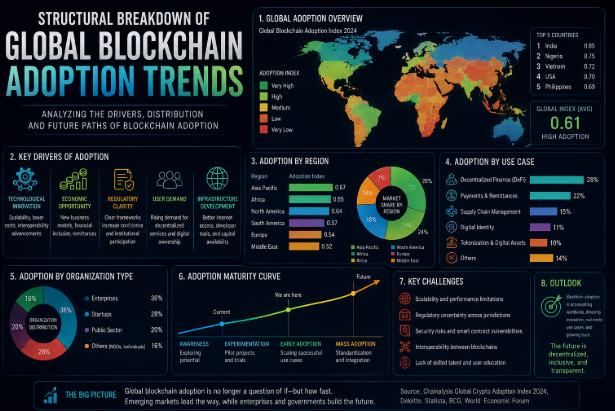
When examining adoption rates by industry, the financial services sector stands out, accounting for approximately 30% of all blockchain initiatives. This includes applications in digital payments, remittances, and smart contracts. Following closely, the supply chain and logistics industry makes up around 25% of blockchain projects, utilizing the technology to enhance transparency and traceability of goods. Other sectors, such as healthcare and real estate, have also started implementing blockchain solutions, with adoption rates of about 15% and 10% respectively, highlighting the technology’s potential beyond traditional markets.
Geographically, North America remains a dominant player in blockchain development, hosting nearly 40% of the total blockchain initiatives. The United States, in particular, leads as the hotspot for innovation and investment in blockchain technology. However, Europe and Asia are quickly emerging as competitive regions, with countries like Germany, Switzerland, Singapore, and China spearheading various blockchain projects aimed at fostering technological advancements and regulatory frameworks conducive to growth.
Overall, these statistics underscore the accelerating pace of blockchain adoption across different sectors and regions, painting a clear picture of a global movement toward recognizing the transformative benefits of this technology. The ongoing evolution of blockchain applications is expected to enhance operational efficiencies and drive innovation in unprecedented ways.
Factors Driving Blockchain Adoption
Blockchain technology has witnessed a remarkable rise in global adoption, driven by several key factors that interlink technological advancements with societal and regulatory changes. One of the most prominent catalysts is the rapid evolution of technology itself. Innovations such as distributed ledger technology (DLT) have improved security and efficiency, encouraging organizations to integrate blockchain into their operational frameworks. The enhanced features of blockchain, including immutability, transparency, and decentralized control, facilitate a trustless environment, which is increasingly crucial in contemporary digital transactions.
Moreover, regulatory developments play a significant role in shaping the landscape for blockchain adoption. As lawmakers worldwide begin to understand the implications of blockchain, many regions are formulating regulations that promote cryptocurrency usage and blockchain initiatives. Clear regulatory frameworks not only mitigate risks associated with technology but also inspire confidence among businesses and investors. For instance, countries that establish favorable legal environments for blockchain are witnessing increased interest from startups and established companies alike, further contributing to the global adoption rate.
Another driving force behind the growth of blockchain technology is the changing business needs of modern enterprises. Organizations are continually seeking ways to enhance efficiency, reduce operational costs, and improve customer engagement. Blockchain presents innovative solutions that address these requirements effectively. By streamlining supply chains, facilitating secure transactions, and enabling real-time data sharing, blockchain technology meets the increasing demand for transparency and accountability in business processes.
Lastly, societal shifts towards higher digital literacy and a greater demand for privacy and security in transactions contribute significantly to blockchain’s expansion. In an era where data breaches and privacy concerns are prevalent, individuals and organizations are more inclined to explore blockchain for secure data handling. As a result, these factors collectively drive the surge in blockchain adoption across various sectors, highlighting its potential to transform the global economic landscape.
Barriers to Blockchain Adoption
Despite the increasing interest and potential of blockchain technology, several barriers hinder its widespread adoption across various industries. One primary challenge is scalability. As blockchain networks grow, they often face difficulty handling a large volume of transactions efficiently. This limitation can lead to increased transaction times and higher fees, ultimately deterring businesses from integrating blockchain solutions into their operations.
Another significant barrier is regulatory uncertainty. Governments around the world are still in the process of defining the legal and regulatory frameworks surrounding blockchain and cryptocurrencies. This ambiguity creates hesitation among potential users and stakeholders, as many are concerned about the legal ramifications of adopting a technology that may not yet be fully defined within existing laws. Consequently, businesses may delay implementing blockchain solutions until clearer regulatory guidelines are established.
High implementation costs also represent a considerable obstacle. The transition to blockchain technology requires substantial investment in infrastructure, training, and ongoing maintenance. For small to medium enterprises, these expenses can be prohibitively high. In many cases, organizations may struggle to justify the expenditure against the uncertain return on investment associated with blockchain adoption.
Lastly, a lack of understanding among potential users contributes to the slow uptake of blockchain technology. Many individuals and organizations remain unfamiliar with how blockchain works, its benefits, and its limitations. This knowledge gap can lead to skepticism or resistance to adopting innovative technologies, making education and awareness essential for overcoming this barrier. The adoption of blockchain technology is contingent on addressing these challenges effectively, thereby facilitating a smoother transition into an era of decentralization and enhanced digital transactions.
Case Studies of Successful Blockchain Adoption
Blockchain technology has made a significant impact in various sectors, showcasing its potential for enhancing transparency, efficiency, and security. Among the many organizations and governments that have embraced this innovation, a few notable case studies stand out.
One prominent example is the supply chain management initiative undertaken by Walmart. The retail giant implemented a blockchain solution to track food products from farm to store. This technology enables real-time tracking, helping to improve food safety and reduce the time required to trace products in the event of a contamination issue. By reducing traceability time from days to mere seconds, Walmart aims to enhance consumer safety and trust, while also optimizing supply chain operations.
Another significant case is the use of blockchain by Estonia for e-governance. The Estonian government adopted blockchain technology to secure sensitive data and streamline public services. By utilizing blockchain, Estonia provides its citizens with secure access to their personal data, allowing them to manage their digital identities and engage with government services efficiently. This initiative has transformed how citizens interact with the government, offering a model for digital innovation worldwide.
Additionally, the adoption of blockchain in the financial sector can be exemplified by Ripple, a digital payment protocol that aims to facilitate cross-border transactions. Ripple’s technology provides secure, instantaneous, and low-cost international transfers, making it an appealing alternative to traditional banking systems. By leveraging blockchain, Ripple addresses the inefficiencies of conventional payment methods, thereby enhancing the overall financial transaction experience.
These case studies illustrate that successful blockchain adoption extends beyond the financial industry. Industries such as retail and government are effectively harnessing the technology to achieve their objectives. Each example highlights the versatility of blockchain, showcasing its ability to improve processes and outcomes across diverse sectors.
Future Trends in Blockchain Adoption
As we analyze the trajectory of blockchain technology, it becomes evident that its future holds remarkable potential shaped by various trends currently defining the landscape. One of the most pivotal areas of growth is decentralized finance (DeFi). This innovative sector is rapidly transforming traditional financial systems by providing open and permissionless access to financial services such as lending, borrowing, and trading, without the need for intermediaries. The DeFi ecosystem has exploded in popularity, inviting a diverse range of participants and creating a competitive marketplace that challenges conventional banking practices.
Another significant trend influencing blockchain adoption is the rise of non-fungible tokens (NFTs). Initially popularized through digital art and collectibles, NFTs have transcended these boundaries, gaining traction across various industries, including gaming, music, and real estate. The unique property of NFTs enables artists and creators to have complete ownership of their digital assets while providing an unprecedented level of authenticity and provenance. As industries explore innovative applications for NFTs, we can expect the technology to foster new monetization models, thereby driving further interest in blockchain solutions.
Additionally, governments worldwide are increasingly recognizing the transformative potential of blockchain technology for enhancing public services. Initiatives may include leveraging blockchain for identity management, vote integrity, and securing land registries. By adopting blockchain solutions, public institutions may improve transparency, reduce bureaucratic inefficiencies, and foster increased citizen trust in government processes. This adoption at the governmental level could herald a new era of digital governance, amplifying the legitimacy and efficacy of public service delivery.
In light of these trends, it is clear that the future of blockchain is ripe with opportunities. Advancements in DeFi, the rise of NFTs, and governmental integration of blockchain technology are set to redefine not only the financial landscape but also the way societal structures function in a digital age. The continuous evolution of emerging technologies, such as artificial intelligence and the Internet of Things, could further enhance the capabilities of blockchain, leading to broader and more innovative applications.
Impact of Blockchain on Various Industries
The advent of blockchain technology has heralded significant changes across various sectors, enhancing processes and introducing efficiencies that were previously unattainable. In the finance industry, blockchain is redefining transactions through the introduction of cryptocurrencies and decentralized finance (DeFi). Traditional banking systems, notorious for their latency and high fees, are being challenged by blockchain’s ability to facilitate faster and more secure transactions. Financial institutions are increasingly leveraging smart contracts to automate routine processes, thereby minimizing the potential for human error and reducing operational costs.
In the supply chain sector, blockchain provides a transparent and immutable ledger that tracks the movement of goods from origin to endpoint. This visibility fosters trust among stakeholders, as all participants can access real-time data regarding inventory levels, transit status, and product authenticity. Companies like Walmart have embraced this technology for traceability, allowing them to quickly detect and address issues, such as food safety concerns, thereby ensuring compliance with regulatory standards.
Healthcare is another industry experiencing transformation through blockchain adoption. Patient data, traditionally siloed across disparate systems, can be securely stored and shared using blockchain, enhancing interoperability among providers while ensuring data privacy. This capability not only streamlines administrative processes but also enables more comprehensive patient care by allowing health professionals easy access to complete medical histories. Furthermore, supply chain applications in pharmaceuticals can combat counterfeit drugs, ensuring that only legitimate products reach consumers.
These are just a few examples of how blockchain is reshaping industries. The technology’s inherent characteristics of decentralization, security, and transparency are paving the way for more efficient operations and a reduction in inefficiencies that plagued traditional processes. As more sectors begin to explore the potential of blockchain technology, its impact on the global economy is expected to grow substantially.
Role of Regulations in Blockchain Adoption
Regulatory frameworks play a pivotal role in shaping the landscape of blockchain adoption across various countries. The stability and clarity provided by these regulations can either encourage innovation or deter it, depending on how they are constructed and enforced. Countries that have embraced blockchain technology through forward-thinking regulations tend to attract increased investment and entrepreneurial activities in the sector.
For instance, nations such as Switzerland and Singapore have established themselves as leaders in blockchain acceptance by creating regulatory environments that clarify the legal status of digital assets and Initial Coin Offerings (ICOs). These jurisdictions have implemented comprehensive guidelines that facilitate a clear path for businesses to operate legally while ensuring consumer protection and financial integrity. The positive influence of these regulatory measures can be seen through increased blockchain startups and collaborations, reinforcing these countries’ positions as global hubs for blockchain technology.
Conversely, some countries have opted for a more cautious or restrictive approach, often citing concerns over fraud, consumer protection, and financial stability. For example, nations that have enacted blanket bans on cryptocurrencies and blockchain initiatives or those that impose heavy compliance burdens may hinder the growth of this innovative sector. Such regulations can stifle creativity and deter potential investors, leading to a loss of competitive advantage in the rapidly evolving global blockchain market.
In analyzing the global landscape, it becomes evident that effective regulation must strike a balance between fostering innovation and safeguarding users. Policymakers are tasked with developing frameworks that provide clarity and promote healthy industry growth without compromising the underlying principles of blockchain technology, such as decentralization and transparency. Thus, regulations significantly impact how blockchain technologies can flourish in different jurisdictions.
Conclusion and Call to Action
As we have explored throughout this blog post, the landscape of global blockchain adoption is evolving rapidly, characterized by a diverse array of applications across various industries. From finance to supply chain management, blockchain technology is proving indispensable in enhancing transparency, security, and efficiency. The overwhelming consensus among industry experts indicates that integrating blockchain solutions is not just beneficial but essential for competitive advantage in today’s digital economy.
The insights presented illustrate the pivotal role that blockchain can play in reshaping conventional business practices. For instance, its decentralized nature can mitigate risks associated with fraud and enhance trust among stakeholders. Furthermore, the growing investment in blockchain initiatives signifies a robust belief in the technology’s transformative potential. Organizations that embrace these trends stands to gain not only from operational improvements but also from unprecedented opportunities in innovation and collaboration.
As we conclude, we encourage all stakeholders—business leaders, policymakers, and technology enthusiasts—to consider how blockchain might be leveraged within their own sectors. Whether through pilot projects or strategic partnerships, the potential benefits are too significant to overlook. Engaging with experts in the field, sharing knowledge and insights, and fostering a community dialogue about blockchain’s possibilities will be crucial in driving this technology forward.
Moving towards a future where blockchain is seamlessly integrated into mainstream practices requires collective effort and continuous discussion. Stay informed, participate in events, and contribute to forums aimed at enhancing understanding of blockchain technology. Your active participation can significantly influence the trajectory of this exciting technological revolution.