




Introduction to Ethereum and Its Alternatives
Ethereum, a blockchain-based platform, revolutionized the digital landscape by introducing smart contracts and decentralized applications (dApps). Launched in 2015, Ethereum established itself as a significant player in the blockchain ecosystem, providing developers with the tools needed to create and deploy a wide array of applications. Its ability to enable programmable transactions has facilitated various use cases, ranging from finance and supply chain management to gaming and digital identity.
Despite its prominence, users may seek alternatives to Ethereum for several reasons. Scalability issues have plagued Ethereum, particularly during peak usage periods, leading to congestion and high transaction fees. Although upgrades like Ethereum 2.0 aim to address these challenges, some users prefer to explore other options that offer lower costs and faster processing times. Additionally, the rapid evolution of the blockchain sector has introduced numerous platforms designed to compete with or complement Ethereum’s capabilities.
Alternatives such as Binance Smart Chain, Polkadot, and Solana have gained traction by providing unique features, enhanced scalability, or specialized ecosystems for certain applications. These platforms not only pose a more cost-effective solution for transactions but also embrace innovative consensus mechanisms that enhance their performance and reliability. As the blockchain landscape continues to evolve, understanding the alternatives to Ethereum becomes essential for developers and users alike to navigate the digital frontier effectively.
In the upcoming sections, we will delve deeper into some of the best Ethereum alternatives available in 2026, assessing their strengths and weaknesses, and exploring how they can meet the growing needs of users seeking efficient blockchain solutions.
Criteria for Evaluating Ethereum Alternatives
When assessing alternatives to Ethereum, several critical factors must be considered to determine the viability and effectiveness of other blockchain platforms. Each of these criteria plays a significant role in distinguishing the potential of blockchain networks and impacts their usability in various applications.
One primary criterion is scalability, which refers to a blockchain’s ability to handle an increasing number of transactions efficiently. As the demand for decentralized applications grows, a platform’s capacity to scale up without compromising performance becomes crucial. Evaluating how each alternative handles scalability will provide insight into its long-term sustainability.
Additionally, transaction costs are paramount when considering Ethereum alternatives. High fees can deter users and developers from utilizing a blockchain, affecting its adoption rates and overall ecosystem. Potential users should compare how costs fluctuate during peak and off-peak times and how they can impact the usability of a given platform.
Speed also plays a vital role in a blockchain’s operational efficiency. The time it takes for a transaction to be confirmed can greatly affect user experience, particularly in time-sensitive applications. Analyzing the average transaction times and throughput of alternative platforms can lend valuable insights into their speed capabilities.
Moreover, the developer community support surrounding a blockchain project is essential for fostering innovation and addressing potential issues. A robust developer community encourages continuous improvement and supports the growth of decentralized applications. Investigating forums, GitHub activity, and developer engagement can help gauge the health of a platform’s ecosystem.
Finally, evaluating unique features of alternative blockchains can uncover advantages that may not be present in Ethereum. These features could range from advanced security protocols to novel consensus mechanisms or distinctive governance structures. By thoroughly examining these attributes, potential users can make informed decisions about the best Ethereum alternatives available.
Top Ethereum Alternatives in 2026 (Overview)
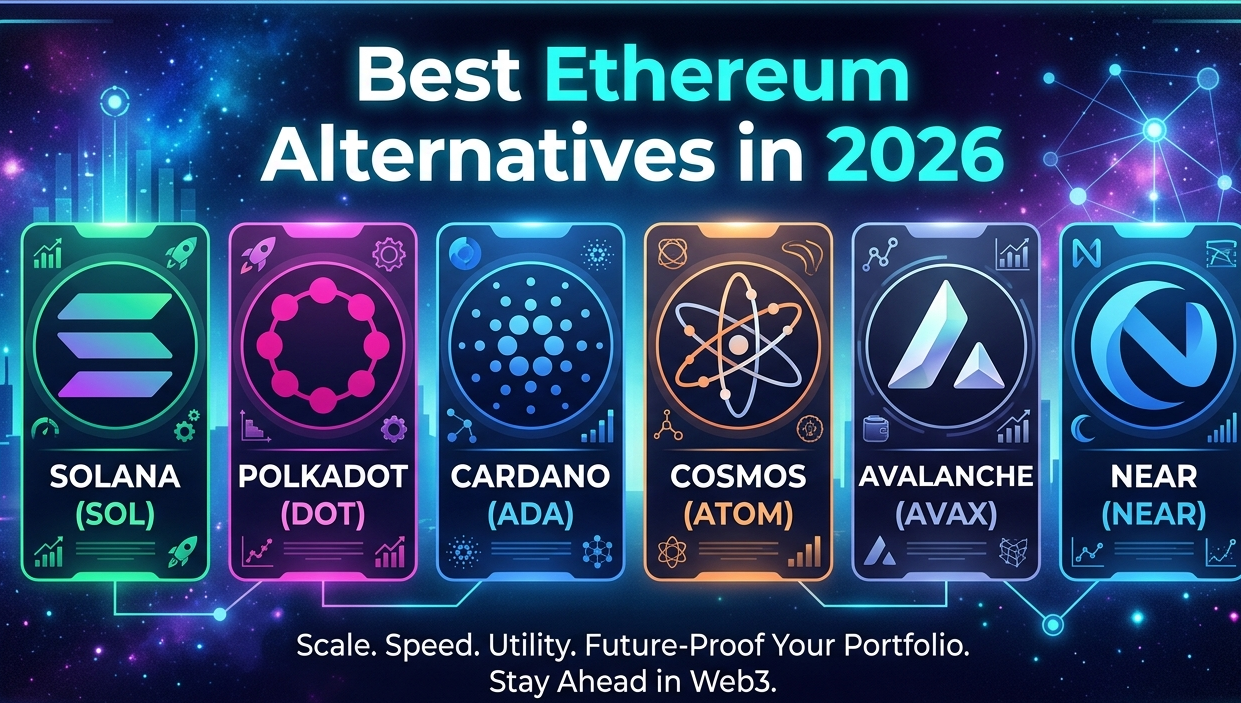
As the blockchain landscape evolves, a myriad of alternatives to Ethereum has emerged, each catering to specific use cases and industry demands. In 2026, the need for scalable, efficient, and secure blockchain platforms remains more crucial than ever, prompting developers to seek out innovative solutions. This overview highlights some of the most promising Ethereum alternatives, discussing their unique selling propositions (USPs) and market positions.
First on the list is Polkadot, a multi-chain network allowing diverse blockchains to interoperate. Its unique architecture fosters scalability and enables developers to create tailored solutions while enjoying the benefits of shared security. This makes Polkadot an attractive choice for projects prioritizing flexibility and integration.
Next, we have Cardano, renowned for its scientific approach and peer-reviewed development. Cardano’s tiered architecture ensures scalability and sustainability, while its emphasis on formal verification enhances security. As it continues to expand its ecosystem, Cardano remains a strong contender for those seeking a long-term investment with community-driven governance.
Solana has also garnered significant attention thanks to its high-throughput capabilities, supporting thousands of transactions per second with minimal fees. This allows developers to build complex applications without being hindered by costly gas prices, making Solana a go-to for decentralized applications (dApps) and finance solutions.
Avalanche stands out with its innovative consensus mechanism, allowing near-instant transaction finality and unmatched scalability. Developers appreciate the flexibility of deploying custom blockchain networks while leveraging the overall security of the Avalanche ecosystem.
Lastly, Tezos distinguishes itself through its self-amending blockchain, enabling seamless upgrades without requiring hard forks. This offers stability alongside adaptability, appealing to enterprises prioritizing comfortable transitions and longevity in their blockchain solutions.
Layer 1 Blockchains: A Deeper Look
As the cryptocurrency ecosystem evolves, Layer 1 blockchains are gaining traction as viable alternatives to Ethereum. These platforms operate independently with their own consensus mechanisms, offering unique architectures to attract users and developers alike. Notable contenders include Solana, Binance Smart Chain, Polkadot, and Avalanche, each characterized by distinct features and capabilities.
Solana is renowned for its high throughput and low transaction costs, which are achieved through a combination of proof-of-history and a unique consensus algorithm. This allows developers to build scalable decentralized applications, making it a popular choice for DeFi projects and NFT marketplaces. However, challenges such as network outages and centralization concerns have been noted.
Binance Smart Chain (BSC), created by the leading cryptocurrency exchange Binance, focuses on enabling fast transaction speeds and low fees. BSC utilizes a delegated proof-of-stake mechanism to maintain network security while enhancing accessibility for users. Although it has attracted a vast array of decentralized applications (dApps), critics often highlight potential centralization risks due to the influence of Binance itself.
Polkadot stands out with its multi-chain architecture, allowing various blockchains to interoperate seamlessly. By utilizing parachains, which can be optimized for different use cases, Polkadot fosters a robust ecosystem for innovation. Its unique approach to governance and scalability has earned it recognition, although complexities around its auction process for parachain slots can create barriers for new participants.
Avalanche, another significant player, boasts a consensus protocol aimed at achieving high scalability, quick finality, and security. Its architecture supports the creation of subnets, offering developers a flexible framework for launching customized blockchains tailored to specific applications. While Avalanche presents exciting potential for cross-chain interactions, it remains relatively newer compared to more established networks, and its long-term sustainability is yet to be fully assessed.
Layer 2 Solutions and Their Role
Layer 2 solutions are innovative technologies designed to enhance the scalability of blockchain networks, particularly Ethereum. These solutions operate atop the main blockchain (Layer 1) to handle transactions more efficiently, alleviating congestion, and reducing fees. As Ethereum continues to face challenges associated with scalability, Layer 2 solutions have emerged as crucial components in addressing these issues.
One prominent example of a Layer 2 solution is Polygon. Polygon, previously known as Matic Network, provides a framework for building and connecting Ethereum-compatible blockchain networks. By utilizing sidechains and advanced frameworks such as zk-Rollups, Polygon increases transaction throughput, thereby enabling rapid and cost-effective transactions. This functionality is essential in supporting decentralized applications (dApps), which may suffer performance bottlenecks on the Ethereum mainnet.
Another notable Layer 2 solution is Optimism. This project makes use of optimistic rollups, allowing transactions to be executed off the main Ethereum chain while still providing security guarantees through the main blockchain’s validity. Optimism significantly reduces latency and lowers gas fees while maintaining the decentralized ethos that underpins Ethereum’s ecosystem. By enhancing transaction speeds and decreasing costs, Optimism plays a vital role in making Ethereum applications more viable for everyday users.
As Ethereum evolves, the significance of Layer 2 solutions becomes increasingly apparent. They not only offer alternatives to the scaling challenges faced by Ethereum but also contribute to a healthier blockchain environment overall. This evolution further paves the way for broader adoption of decentralized technologies in various sectors, thus reaffirming the importance of these solutions in the ongoing development of blockchain infrastructure.
NFT Marketplaces and Diversity
The emergence of NFT marketplaces operating on alternative blockchains has contributed significantly to the diversification of the non-fungible token landscape. While Ethereum has been the dominant player in the NFT space, several alternative platforms have gained traction by offering unique features and advantages that cater to distinct user needs. This section discusses how these marketplaces are thriving and the diverse offerings they provide.
One prominent alternative is the Tezos blockchain, known for its energy-efficient proof-of-stake consensus mechanism. This eco-friendly approach attracts artists and collectors who are increasingly conscious of environmental impacts. Marketplaces such as Hic et Nunc provide artists with low-cost minting options, and the community-driven nature fosters a creative ecosystem where diverse art forms can flourish.
Additionally, the Flow blockchain, designed specifically for digital assets and NFTs, powers well-known platforms such as NBA Top Shot. This blockchain’s high throughput capacity allows for a seamless user experience, accommodating a large audience without congestion issues. The focus on mainstream appeal and usability allows Flow-based marketplaces to carve out a niche that complements Ethereum’s marketplace ecosystem.
Another contender is the Solana blockchain, which has witnessed a rapid rise thanks to its high transaction speeds and low fees. Marketplaces like Magic Eden have become hotspots for users seeking quick and cost-effective transactions. This accessibility has propelled Solana as a viable alternative for artists and collectors who desire a more efficient trading experience.
In summary, the emergence of NFT marketplaces on alternative blockchains not only provides competition to Ethereum but also fosters diversity within the NFT space. By uniquely addressing issues such as environmental concerns, transaction speed, and costs, these platforms are reshaping the market dynamics and enhancing the overall experience for users.
Decentralized Finance (DeFi) Trends and Alternatives
As the Decentralized Finance (DeFi) space continues to evolve, it is essential to explore viable alternatives to Ethereum that are gaining traction in 2026. Among these alternatives, Terra and Tezos have emerged as notable contenders, each offering distinctive features and governance models that appeal to users and developers alike.
Terra is a blockchain platform that focuses on stablecoins pegged to multiple fiat currencies, facilitating seamless transactions without the volatility often associated with cryptocurrencies. The platform supports a thriving ecosystem of decentralized applications (dApps), including lending and borrowing protocols that allow users to leverage their assets efficiently. Terra’s liquidity pools are designed to accommodate a broad range of assets, enhancing accessibility for users and promoting the overall attractiveness of its DeFi offerings.
In contrast, Tezos adopts a self-amending governance model, empowering stakeholders to vote on protocol upgrades and modifications. This governance framework fosters a robust and adaptable DeFi environment where users can play an active role in shaping the future of the platform. Tezos also boasts an efficient smart contract functionality, enabling developers to create diverse financial products and services. Its liquidity pools and decentralized lending platforms are steadily gaining popularity, further establishing Tezos as a significant player in the DeFi ecosystem.
Both Terra and Tezos exemplify the ongoing innovation in the DeFi sector beyond Ethereum. Their unique governance structures and user-centric features reflect a growing trend toward democratization in finance, attracting a user base that is eager for alternatives that prioritize stability and community involvement. As the DeFi landscape continues to mature, these platforms will likely play critical roles in the broader adoption of decentralized financial services.
Future Predictions for Ethereum and Its Competitors
The future landscape of blockchain technology is continuously evolving, influenced by advancements in technology, regulatory changes, and shifting market dynamics. Ethereum, long regarded as a pioneer in the decentralized application space, faces potential competition from emerging platforms offering unique functionalities and faster transaction capabilities.
As we look ahead to 2026, ETF (Ethereum Future) predictions suggest that Ethereum will continue to develop its network to enhance scalability and efficiency, particularly through initiatives like Ethereum 2.0. This transition to a proof-of-stake consensus mechanism may significantly improve the network’s environmental footprint while facilitating increased transaction throughput. However, the extent of Ethereum’s dominance could be challenged by several formidable competitors, such as Solana, Cardano, and Polkadot, which are also refining their offerings to cater to specific market segments.
Solana, for instance, has gained significant traction due to its high-speed processing capabilities, allowing for thousands of transactions per second. This positioning may attract developers seeking to deploy high-performance decentralized applications and could provide a viable alternative to the Ethereum network. Meanwhile, Cardano continues to make strides with its rigorous academic approach to blockchain development, focusing on interoperability and sustainability as key pillars.
Moreover, the rise of decentralized finance (DeFi) and non-fungible tokens (NFTs) will likely shape the strategic directions of these platforms. With more users exploring various blockchain options, the competition will intensify, driving innovation across the industry. Industry analysts predict that as decentralized ecosystems evolve, the emphasis on user experience and transaction fees will become pivotal factors in determining which platform prevails.
In light of these developments, while Ethereum is well-positioned for growth, its future may hinge on its ability to maintain leadership amid increasing competition. Staying abreast of trends in user behavior, regulatory landscapes, and competing technologies will be crucial for Ethereum and its alternatives as the blockchain space continues to mature.
Conclusion: Choosing the Right Ethereum Alternative
As the cryptocurrency landscape continues to evolve, identifying the best Ethereum alternatives in 2026 becomes increasingly vital for investors and developers alike. Factors such as scalability, security, and transaction speed play significant roles in the selection process. With a variety of options available, including notable contenders like Binance Smart Chain, Cardano, and Solana, it is essential to align personal goals with the unique features each platform offers.
One critical consideration is the type of applications or projects you intend to pursue. If decentralized finance (DeFi) is your area of focus, platforms boasting robust DeFi ecosystems should be prioritized. For those interested in NFTs or gaming, exploring blockchains that excel in these particular niches may yield better results. Performance metrics, such as transaction times and fees, should also influence your decision, as they directly impact user experience and operational efficiency.
Moreover, understanding the underlying technology of these alternatives is crucial. Each blockchain solution may employ different consensus mechanisms, such as proof of stake or delegated proof of stake, influencing their long-term viability and sustainability. Engaging with community forums, white papers, and expert analyses can provide further insights into each platform’s potential.
Ultimately, making an informed choice requires thorough research and reflection on your specific needs within the blockchain ecosystem. As the market matures and new developments arise, staying updated on these alternatives will enhance your strategic approach. Therefore, it is advisable to conduct further research before committing to any investment in blockchain technologies, ensuring that your chosen platform aligns perfectly with your goals and expectations.