




Introduction to Altcoins
Altcoins, a term derived from “alternative coins,” refer to all cryptocurrencies other than Bitcoin. They encompass a wide range of digital currencies that were developed to enhance the functionality or offer alternatives to Bitcoin. Although Bitcoin remains the most recognized and valuable cryptocurrency, altcoins play an essential role in the overall cryptocurrency market, introducing new features and addressing various limitations associated with Bitcoin.
One of the primary distinctions between altcoins and Bitcoin is their underlying technology and intended use. Bitcoin was primarily designed as a decentralized digital currency, aiming to facilitate peer-to-peer transactions without intermediaries. On the other hand, many altcoins introduce innovative technological advancements, such as smart contracts, enhanced privacy features, or faster transaction times. For instance, Ethereum, one of the leading altcoins, enables developers to build decentralized applications (dApps) on its blockchain, expanding the use cases far beyond what Bitcoin offers.
Investors and traders often explore altcoins for diversification purposes. The variety within the altcoin market can offer unique advantages, such as the potential for higher returns, exposure to emerging technologies, and various investment strategies. Investing in altcoins can be particularly appealing during periods of volatility in the Bitcoin market, as some altcoins may not be as severely impacted by Bitcoin’s price fluctuations. Moreover, the altcoin market can provide opportunities for profit among those who conduct thorough research and remain updated on market trends.
Ultimately, understanding the role of altcoins in the cryptocurrency ecosystem is vital for investors and traders. By examining their features and the technological innovations they offer, individuals can make informed decisions when considering adding altcoins to their investment portfolio.
Researching Altcoins
Researching altcoins is essential for any investor looking to diversify their cryptocurrency portfolio. The first step in the research process involves evaluating the project’s whitepaper. A whitepaper typically outlines the coin’s purpose, technology, roadmap, and the problem it aims to solve. Investors should scrutinize the whitepaper to ensure it is comprehensive and transparent, detailing both the strengths and weaknesses of the proposed project. An effective whitepaper should also offer insights into the technical specifications and innovations that differentiate the altcoin from others in the market.
In addition to the whitepaper, understanding the underlying technology is crucial. Many altcoins are built on blockchain technology, but the specific implementation can vary significantly. Analyzing the nature of the technology, such as whether it employs proof of work, proof of stake, or other consensus mechanisms, can provide insights into its efficiency and scalability. Investors should also consider the maturity of the technology and its potential for real-world application.
Checking the team behind the altcoin is another critical component of research. A credible team with a strong track record in technology development or entrepreneurship can significantly influence the project’s success. Investors are encouraged to research team members’ backgrounds, professional experience, and previous projects to ascertain their credibility and capability to execute the outlined vision.
Lastly, analyzing the use case and market potential of the altcoin is vital. Understanding the specific issue the altcoin addresses and its target market can shed light on its value proposition. Grasping the market landscape, including competitors and potential adoption hurdles, can help investors gauge the overall potential of the altcoin within the broader cryptocurrency ecosystem.
Choosing a Cryptocurrency Exchange
When venturing into the world of altcoins, selecting the right cryptocurrency exchange is paramount. The exchange serves as the primary platform through which you will buy, sell, and trade your digital assets, so it is essential to consider various factors before making your choice.
First and foremost, the reputation of the exchange should be a top priority. Look for platforms that have been operational for several years and have garnered positive feedback from users. Checking reviews and ratings on independent platforms can provide insights into the exchange’s reliability and customer service. Reputable exchanges often have measures in place to protect users, making them a safer option for trading altcoins.
The range of supported altcoins is another critical aspect. Not all exchanges offer the same selection of cryptocurrencies, so it is beneficial to choose one that lists the altcoins you are interested in purchasing. Exchanges with a broader variety often provide better opportunities for investment and diversification, allowing you to explore different projects within the crypto space.
Fees charged by the exchange can significantly impact your trading experience. These may include trading fees, withdrawal fees, and deposit fees. Take the time to compare the fee structures of different exchanges to ensure you choose a platform that is economical for your trading habits. Some exchanges offer competitive rates or promotional discounts, which can save you money in the long term.
Security is another critical consideration. Reputable exchanges will employ robust security measures, including two-factor authentication (2FA), cold storage wallets, and encryption protocols to safeguard user assets. It is advisable to research the security track record of exchanges to avoid platforms that have previously experienced significant breaches.
Finally, the user interface of the exchange should enhance your overall trading experience. A well-designed, intuitive platform can make the process of buying altcoins more straightforward and efficient, particularly if you are a beginner in the cryptocurrency market. Check if the exchange provides educational resources and customer support to assist you in navigating their services effectively.
Setting Up Your Account
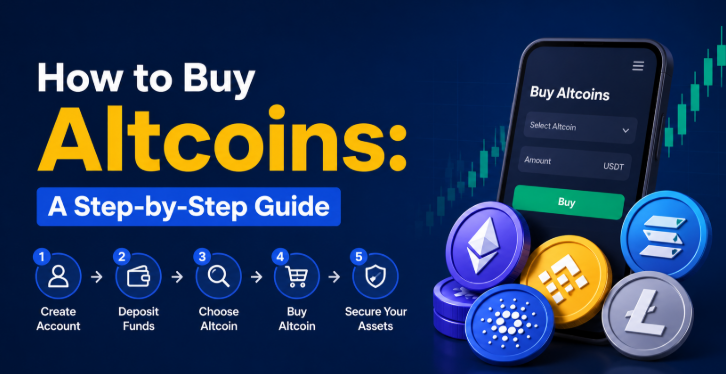
To begin your journey in buying altcoins, the first step involves setting up an account on a cryptocurrency exchange. The choice of exchange is crucial, as it should align with your trading needs in terms of user experience, security, and the variety of altcoins offered. Once you have selected an exchange, you can initiate the sign-up process.
The sign-up process typically requires you to provide basic personal information, including your name, email address, and a secure password. It is advisable to create a strong password that incorporates a mix of letters, numbers, and symbols to enhance security. After completing the initial registration form, you will usually receive an email to verify your account. This email confirmation is essential for activating your account.
Next, most exchanges will require you to verify your identity, a process known as KYC (Know Your Customer). This step is mandatory to comply with financial regulations, and you may need to submit a government-issued ID and other documentation to prove your identity and address. In some cases, a selfie may also be required to confirm your identity against the submitted document.
Once your identity has been verified, it is imperative to secure your account. One recommended practice is to enable two-factor authentication (2FA), which adds an additional layer of security by requiring a second form of verification—such as a code sent to your mobile device—when logging in or executing transactions. Furthermore, you should enable any other security features offered by the exchange, such as withdrawal whitelist and account recovery options. Adopting these security measures will help safeguard your funds against potential threats.
Funding Your Account
When venturing into the world of altcoins, the first step is to fund your cryptocurrency exchange account. This funding is crucial as it enables you to purchase various altcoins available on the platform. There are several methods to deposit funds into your account, each with its own benefits and limitations.
The most common method is bank transfers, which allow users to deposit large sums securely. Most exchanges provide direct bank account details for this purpose. It is important to note that while bank transfers are typically low in fees, they may take a few days to process. This delay can affect your ability to make timely trades, particularly in the volatile altcoin market.
Credit and debit cards present another popular option for funding your account. They offer a fast and convenient means to deposit money instantly. However, this method often incurs higher fees compared to bank transfers. Additionally, not all exchanges accept credit or debit cards, and the limits on the amounts you can deposit may be lower than those for direct bank transfers.
Some exchanges also accept other cryptocurrencies as a form of funding. By transferring Bitcoin, Ethereum, or other crypto assets directly into your exchange wallet, you can bypass traditional banking methods altogether. This can be a particularly appealing option for those who already own cryptocurrency and wish to invest in altcoins quickly. Do keep in mind that fees may vary based on the blockchain network’s congestion.
Before choosing a funding method, consider factors such as fees, processing times, and security. Understanding these aspects will help in making informed decisions that align with your investment strategy in the altcoin landscape.
Buying Altcoins
Once your account is funded with the chosen cryptocurrency, you are ready to embark on your journey of buying altcoins. This process involves several key steps that ensure the transaction is executed smoothly and efficiently.
The first step is to identify the altcoin you wish to purchase. Most cryptocurrency exchanges will provide a comprehensive list of available altcoins. You can utilize the search functionality on the platform to locate your desired coin. It is wise to do some research beforehand to ascertain the legitimacy and potential of the altcoin in question. Check the market data and trading volume to ensure it meets your investment criteria.
After selecting the altcoin, you will need to place an order. There are generally two types of orders you can use: market orders and limit orders. A market order is executed immediately at the current market price, making it suitable for swift transactions. Conversely, a limit order allows you to specify the price at which you wish to purchase the altcoin. This order will only be fulfilled when the market reaches your designated price, providing better control over your investment but possibly delaying the execution.
It is also essential to understand trading pairs when buying altcoins. Most exchanges do not allow direct fiat-to-altcoin transactions; instead, you will be using a trading pair, usually involving Bitcoin (BTC) or Ethereum (ETH). For example, if you want to buy the altcoin XYZ, you would look for the XYZ/BTC pair. This means you will be using Bitcoin to purchase XYZ. Always double-check the trading pair selected before finalizing your transaction to ensure accuracy.
In conclusion, buying altcoins involves selecting the right coin, placing an appropriate order, and understanding trading pairs. By following these steps, you can navigate the process of purchasing altcoins with confidence.
Storing Your Altcoins Safely
When it comes to purchasing altcoins, securing your investment is crucial. With an increasing number of digital assets being compromised, selecting the right storage method is paramount. Various options are available to investors, and each comes with its own benefits and drawbacks. Understanding these can help ensure the safety of your altcoin holdings.
One of the common methods for storing altcoins is through exchanges. Crypto exchanges provide wallets that facilitate the buying, selling, and transferring of assets. However, while this method offers convenience and ease of access, it is inherently risky. Since exchanges are often targeted by hackers, keeping altcoins on an exchange could expose them to theft. Thus, it is generally advisable to transfer your altcoins from exchanges to a more secure form of storage once the purchase is complete.
Hot wallets represent another, albeit riskier, option for storage. These wallets are connected to the internet, allowing for quick access and transactions. Hot wallets can be software-based applications or even web wallets. While they are convenient for frequent trading, they are more vulnerable to online attacks. Therefore, users must exercise caution and possibly limit the amount stored in hot wallets to minimize potential losses.
In contrast, cold wallets provide a higher level of security by storing your altcoins offline. Hardware wallets, which resemble USB drives, and paper wallets, which are printed and stored physically, fall into this category. By keeping the storage offline, the exposure to hacks is significantly reduced. However, cold wallets are less convenient for quick trades, and users must ensure they securely store their devices or documents to avoid permanent loss.
Ultimately, the choice of storage method for your altcoins depends on your trading habits and risk tolerance. Assessing the trade-offs between convenience and security is essential for safeguarding your digital assets.
Monitoring Your Investment
Monitoring altcoin investments is a crucial aspect of cryptocurrency trading that can significantly influence your overall return. As the cryptocurrency market can be highly volatile, staying informed about price movements and market trends is essential for making timely and sound investment decisions. One of the primary tools for tracking your altcoin investments is utilizing reliable market data platforms such as CoinMarketCap or CoinGecko. These platforms provide real-time price alerts, market cap data, and trading volume, which are essential metrics for any investor.
In addition to market data platforms, employing technical analysis tools can enhance your tracking capabilities. Charting tools like TradingView allow investors to visualize historical price patterns and indicators, helping them identify potential entry and exit points for their altcoin positions. It is recommended to understand basic charting techniques, such as support and resistance levels, moving averages, and relative strength indices (RSI), to better comprehend the market trends that influence altcoin prices.
Furthermore, social sentiment analysis can serve as a valuable method for monitoring altcoins. Analyzing social media and news platforms, such as Twitter and Reddit, can offer additional insights into public perceptions and market sentiment regarding specific altcoins. This information can guide your investment decisions by allowing you to gauge community interest and potential market reactions to news or events involving a particular altcoin.
When it comes to knowing precisely when to sell, setting clear investment goals and incorporating stop-loss orders can be beneficial strategies. A stop-loss order automatically sells your altcoin once it reaches a predetermined price, safeguarding your investment from excessive losses during unfavorable market conditions. By routinely monitoring your altcoin investments using these tools and strategies, you can better navigate the complexities of the cryptocurrency market and enhance your overall investment approach.
Conclusion and Next Steps
As we conclude this guide on how to buy altcoins, it is essential to reflect on the key points that have been discussed. First and foremost, the importance of conducting thorough research before making any investment cannot be overstated. The altcoin market is broad and diverse, offering numerous opportunities for investors; however, it also comes with its own set of risks. Understanding the underlying technology, use case, and market potential of any altcoin you consider is critical.
Next, selecting a reputable exchange is paramount. The exchange facilitates the buying and selling of altcoins, and ensuring it has a solid track record and robust security measures is crucial for protecting your investments. Additionally, familiarize yourself with the platform’s trading fees and processes to avoid any surprises.
As you venture into altcoin investments, it is advisable to develop a well-rounded strategy that takes into consideration your financial goals, risk tolerance, and the volatility inherent in the cryptocurrency market. Diversification of your portfolio may also mitigate risks associated with altcoin trading.
For those eager to delve deeper, consider keeping abreast of market trends and community sentiment. Engaging with forums, social media, and cryptocurrency news platforms can provide valuable insights into emerging altcoins and market dynamics.
In summary, investing in altcoins requires meticulous examination and a strategic approach. By following the steps outlined in this guide and remaining vigilant in your research, you can position yourself to make informed decisions and potentially benefit from the exciting opportunities that the altcoin market presents.