




Understanding Bitcoin
Bitcoin is a form of digital currency, invented in 2008 by an individual or group under the pseudonym Satoshi Nakamoto, and has since gained significant recognition as a decentralized monetary system. Unlike traditional currencies, which are issued and regulated by central authorities like governments or banks, Bitcoin operates without any central authority or intermediary. This fundamental characteristic is a pivotal aspect of its appeal, as it offers a degree of autonomy in financial transactions.
The technology that underpins Bitcoin is known as blockchain; this is a distributed ledger that records all transactions made using the currency. Each transaction is verified by network nodes through cryptography and added to a chain of previous transactions, hence the name “blockchain.” This decentralized and transparent record-keeping mechanism not only enhances security but also ensures that no single entity can manipulate or control the currency. Each Bitcoin transaction is public, fostering a transparent environment for users.
One of the notable differences between Bitcoin and traditional currencies lies in its limited supply. While governments can print more money at will, the total supply of Bitcoin is capped at 21 million coins, which induces scarcity and can influence its value. Bitcoins can be divided into smaller units, making it practical for everyday transactions regardless of their size. Furthermore, the global nature of Bitcoin transcends geographical boundaries, allowing for instantaneous and often minimal-cost transactions anywhere in the world. This feature positions Bitcoin as a viable alternative for online payments, representing an emerging shift in the digital economy.
Setting Up a Bitcoin Wallet
To engage in Bitcoin transactions, the first crucial step is to set up a Bitcoin wallet. A Bitcoin wallet allows users to store and manage their Bitcoin securely. There are several types of wallets to consider, each with its benefits and use cases.
1. **Hardware Wallets**: These are physical devices that securely store your Bitcoin offline, making them less vulnerable to hacking. Hardware wallets are suitable for users who prioritize security and store large amounts of Bitcoin. Examples include Trezor and Ledger.
2. **Software Wallets**: These wallets are applications you install on your computer or smartphone. Software wallets can be further divided into desktop wallets for computers and mobile wallets for phones. They are user-friendly and ideal for everyday transactions, but they also require careful security practices. Popular options include Exodus and Electrum.
3. **Mobile Wallets**: Designed specifically for mobile devices, these wallets offer convenience and accessibility for on-the-go transactions. Mobile wallets, such as Mycelium and Trust Wallet, typically come with integrated features like QR code scanning for easy payment.
4. **Web Wallets**: Accessible through internet browsers, web wallets allow users to manage their Bitcoin from any device connected to the internet. While they offer convenience, web wallets can be less secure since they are hosted on third-party servers. Well-known providers include Coinbase and Blockchain.com.
When choosing a wallet, consider factors such as security features, user interface, and the frequency of your Bitcoin transactions. Once you have selected a type of wallet that aligns with your needs, creating one typically involves visiting the official website or downloading the application, and following the setup process, which usually entails generating a public and private key and securing your wallet with a password. With your Bitcoin wallet in place, you will be well-equipped to conduct online transactions using Bitcoin.
Buying Bitcoin: A Step-by-Step Guide
Purchasing Bitcoin can seem daunting at first, but by following a clear process, anyone can acquire this digital currency effectively. The first step in buying Bitcoin is selecting a reputable cryptocurrency exchange. Popular exchanges, such as Coinbase, Binance, or Kraken, allow users to buy Bitcoin using various payment methods like bank transfers, credit cards, or even PayPal. It is crucial to evaluate the exchange’s reputation, transaction fees, and user interface to ensure a smooth trading experience.
Once an exchange has been chosen, the next step is to create an account. This process typically involves providing a valid email address, creating a password, and agreeing to the exchange’s terms and conditions. Following account creation, users must complete a verification process that might require them to submit identification documents to comply with regulatory standards. This verification ensures the security of transactions and prevents fraud.
After successfully passing the verification stage, users can fund their trading account. Most exchanges offer several funding options, such as linking a bank account or using a credit card. It is recommended to select a funding method that suits one’s financial situation, considering the transaction fees associated with each option. Once the account is funded, users can navigate to the Bitcoin trading section of the exchange.
To execute the first Bitcoin purchase, users simply need to input the amount of Bitcoin they wish to buy and confirm the transaction. Some exchanges may also offer options to set market or limit orders to control the price at which Bitcoin is purchased. Upon completion, the purchased Bitcoin will be credited to the user’s exchange wallet. From there, they can decide whether to keep their Bitcoin on the exchange or transfer it to a personal wallet for added security.
Making Online Payments with Bitcoin
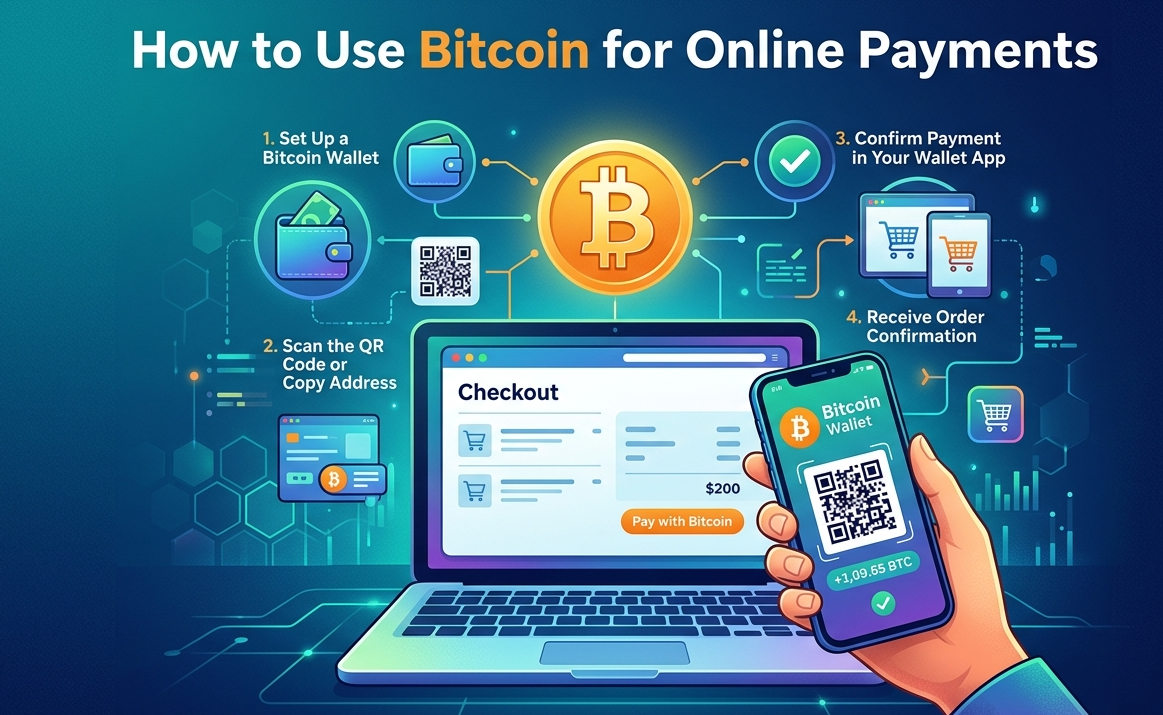
Using Bitcoin for online payments has become an increasingly popular option due to its decentralized nature and the advantages it offers over traditional payment methods. To facilitate transactions using Bitcoin, users typically start by acquiring some BTC through exchanges or digital wallets. Once you have acquired Bitcoin, the process of sending and receiving payments is straightforward.
To make a payment, the payer needs the recipient’s Bitcoin address, which is a unique string of alphanumeric characters. This address serves as the destination for the transaction. Users can also receive payments by sharing their Bitcoin address or by generating a QR code that represents this address. QR codes simplify the payment process, allowing senders to scan the code with their mobile devices instead of typing the address manually, which reduces the risk of error.
When making a transaction, the sender should log into their digital wallet and enter the recipient’s Bitcoin address, along with the amount to be sent. It is important to double-check the address and the amount to ensure the transaction is executed correctly. Once the details are confirmed, users will initiate the transaction, which will then be broadcasted to the Bitcoin network. The transaction will be verified by miners, who confirm its legitimacy and add it to the blockchain.
For receiving payments, one can create an invoice within their wallet that includes their Bitcoin address or QR code. The sender will then complete the transaction using either of these methods. Typically, transactions are processed within a short timeframe, varying based on network congestion. Overall, Bitcoin offers a unique way to conduct online payments, prioritizing user autonomy and security.
Understanding Transaction Fees and Confirmation Times
When utilizing Bitcoin for online payments, it is crucial to understand the mechanics of transaction fees and confirmation times. Bitcoin operates on a decentralized network, where transactions are verified through a process known as mining. Miners, who validate the transactions, are rewarded with Bitcoin, but they require fees to prioritize the inclusion of transactions in the blockchain.
Transaction fees in the Bitcoin network can vary significantly based on network congestion. During periods of higher demand, fees may increase as users compete to have their transactions processed promptly. It is advisable for users to monitor blockchain conditions before initiating a payment. Standard wallets often provide an option to set transaction fees manually, allowing users to choose between speed and cost. Lower fees may result in longer waiting periods for confirmation, thereby impacting the immediacy of the payment.
Confirmation times refer to how long it takes for a transaction to be fully verified by the network. Typically, a single confirmation can take anywhere from 10 minutes to several hours, depending on various factors such as network load and fee paid. Most merchants require multiple confirmations (usually around six) before considering a Bitcoin transaction final, which can further prolong the time before a payment is accepted.
These factors—the fluctuation in transaction fees and the time required for confirmations—are essential considerations for users engaging in online payments with Bitcoin. Understanding them can lead to more informed decisions, enhancing the efficiency of conducting transactions while mitigating potential issues such as payment delays.
Security Best Practices for Bitcoin Transactions
When engaging in Bitcoin transactions, security is a paramount concern. Since Bitcoin operates on a decentralized network, ensuring the safety of your funds requires proactive measures. One of the primary practices includes safeguarding your wallet keys. Wallet keys are critical to accessing and controlling your Bitcoin holdings. It is essential to store these keys securely, preferably in hardware wallets or through secure software wallets that provide encryption. Never share your private keys with anyone, as possession of these keys grants complete control over your Bitcoin assets.
Furthermore, enabling two-factor authentication (2FA) on your Bitcoin wallet or exchange account adds an additional layer of security. 2FA often requires a secondary form of verification, such as a one-time code sent to your mobile device. This makes it significantly more challenging for unauthorized users to access your account, even if they manage to obtain your password. Utilizing 2FA is a simple yet effective way to prevent potential breaches.
Another critical aspect of Bitcoin transaction security is vigilance against phishing attacks and scams. These deceitful tactics can manifest as emails, messages, or websites pretending to be legitimate services. Users may be tricked into revealing their wallet credentials or private keys. To protect against these threats, it is advisable to always check the URLs of the websites you visit, ensuring they are legitimate and secure. Additionally, be wary of unsolicited communication requesting personal information or prompting you to click on unfamiliar links.
In conclusion, implementing these security best practices — safeguarding wallet keys, enabling two-factor authentication, and recognizing potential scams — can significantly enhance the safety of your Bitcoin transactions. By taking these measures seriously, users can enjoy peace of mind while navigating the world of Bitcoin payments.
Pros and Cons of Using Bitcoin for Online Payments
Using Bitcoin as a method for online payments presents several advantages and disadvantages that potential users should consider. One of the primary benefits is enhanced privacy. Transactions made with Bitcoin do not include personal information, enabling users to maintain a certain level of anonymity. This feature is particularly appealing for those who prioritize data privacy or wish to keep their financial activities discreet.
Furthermore, Bitcoin transactions often incur lower fees compared to traditional banking systems or credit card processing fees. This can result in substantial cost savings, particularly for businesses that process a large volume of payments. Additionally, international transactions can be more streamlined using Bitcoin, as they bypass the complexities and fees of currency conversion.
However, these advantages are tempered by notable drawbacks. The volatility of Bitcoin’s price poses a significant risk. The value of Bitcoin can fluctuate dramatically over short periods, which can be troublesome for both consumers and merchants. A product priced in Bitcoin can quickly lose value, leading to potential financial losses for businesses that do not convert immediately to fiat currencies.
Moreover, the technology behind Bitcoin—a decentralized blockchain system—can be challenging for some users. The learning curve associated with acquiring, storing, and using Bitcoin may deter potential adopters who are accustomed to conventional payment methods. Additionally, the limited acceptance of Bitcoin by merchants can hinder its practical use as a widespread payment option.
In summary, the pros and cons of using Bitcoin for online payments need to be carefully weighed. Its benefits, including privacy and lower fees, must be balanced against the inherent risks of price volatility and the challenges of integration into everyday transactions.
Case Studies: Businesses Accepting Bitcoin
Over recent years, numerous businesses have adopted Bitcoin as a payment method, highlighting its growing acceptance in various sectors. One notable example is Overstock.com, an online retailer that began accepting Bitcoin in 2014. Overstock viewed Bitcoin as a way to reach international customers without the complexities and costs associated with traditional banking systems. The company reported a significant increase in sales attributed to Bitcoin transactions, asserting that the cryptocurrency provided a competitive edge in the online retail market.
Another instance can be observed in the travel industry, particularly with Travala.com, a platform that allows users to book travel accommodations using Bitcoin and other cryptocurrencies. By integrating Bitcoin into their payment options, Travala has attracted a niche market of tech-savvy travelers who appreciate the benefits of a decentralized currency. Customers have noted greater freedom in making transactions, particularly those from countries with restrictive banking practices. This adaptation has not only broadened Travala’s customer base but has also cemented its reputation as an innovator in the travel sector.
Furthermore, the restaurant industry is also experiencing a shift toward accepting Bitcoin. A noteworthy example is PizzaForCoins, a service that allows customers to order pizza using Bitcoin. This venture showcases how even traditional businesses can tap into cryptocurrency markets. The founder reported that offering Bitcoin as a payment option has helped attract younger demographics who prefer the digital currency over conventional payment methods. This case emphasizes the potential for Bitcoin to enhance customer relationships and loyalty by aligning with their values and preferences in financial transactions.
These examples illustrate a broader trend of businesses embracing Bitcoin, not merely as a payment method but as a strategic tool to enhance customer experience and expand market reach. The positive outcomes reported by these companies underline the benefits of integrating Bitcoin into their operations.
Future of Bitcoin in Online Transactions
The future of Bitcoin in online transactions is characterized by continuous evolution and adaptation. As digital currency gains prominence, cryptocurrency exchanges and wallets are developing more user-friendly platforms, facilitating broader adoption. The advancements in technology and increasing ease of use are reshaping consumer behavior regarding online payments. More businesses are starting to accept Bitcoin, which could further accelerate mainstream acceptance.
One of the most important factors influencing the future of Bitcoin is regulatory frameworks being established worldwide. Regulators are crafting legislation to address potential compliance, anti-money laundering (AML), and taxation concerns. As governments work toward creating a balanced regulatory environment, it is likely that institutional investors will gain more confidence in Bitcoin, potentially unlocking significant capital flow into the Bitcoin ecosystem. Understanding these regulatory landscapes will be pivotal for entrepreneurs and businesses looking to integrate Bitcoin into their financial strategies.
Moreover, the development of Layer 2 solutions, such as the Lightning Network, aims to address scalability and transaction speed challenges that Bitcoin currently faces. By enabling faster and cheaper transactions, these innovations could make Bitcoin a more viable option for everyday online purchases, positioning it as a dominant online payment method alongside traditional options. As more users embrace the idea of digital currency, it is expected that the acceptance of Bitcoin across various sectors will expand, driven by a growing community of advocates and evolving business models.
Ultimately, as Bitcoin technology matures and regulatory clarification emerges, the trajectory of Bitcoin in online transactions presents numerous opportunities. Businesses that proactively adopt Bitcoin not only stand to benefit from an innovative payment solution but may also find themselves at the forefront of a financial revolution.