





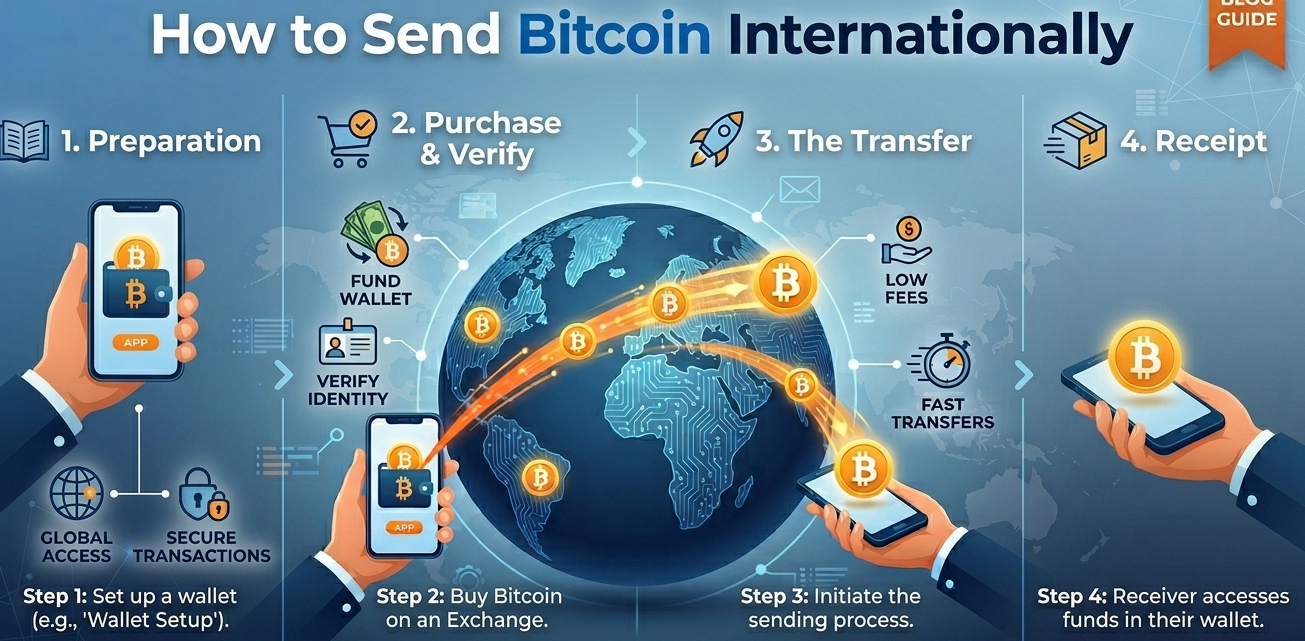
Introduction to Bitcoin International Transfers
Bitcoin is a decentralized digital currency that enables individuals to conduct transactions on a global scale without the need for traditional banking systems. As one of the most prominent cryptocurrencies, Bitcoin has gained significant traction as a viable method for sending money internationally. The ability to transfer funds across borders instantly and securely is one of the main features that sets Bitcoin apart from conventional monetary systems.
International money transfers traditionally involve lengthy processing times, high fees, and the potential for currency exchange complications. In stark contrast, using Bitcoin for international transfers often results in faster transaction times and substantially lower fees. Transactions are recorded on a blockchain, which is a public ledger allowing for transparency and security while enabling users to maintain control over their assets.
The growing popularity of cryptocurrency has prompted more people to consider Bitcoin as an alternative to standard banking channels for international remittances. Factors such as inflation and the unpredictability of local currencies drive individuals to seek stable storage of value and efficient methods for transferring money. With Bitcoin, users can send funds to anyone around the world with an internet connection, thereby overcoming many limitations imposed by traditional financial institutions.
Moreover, the use of Bitcoin transcends borders, reducing the barriers traditionally associated with international money transfers. The absence of intermediaries not only speeds up the transfer process but also democratizes financial services, thereby catering to unbanked populations in various regions. As cryptocurrency continues to evolve, its role in facilitating international transfers will likely expand, providing users with an efficient alternative tailored to the demands of a connected world.
Understanding Bitcoin Wallets
Bitcoin wallets are essential tools for anyone looking to send or receive Bitcoin, especially in international transactions. These wallets come in various forms, each with unique features that cater to different user needs. Primarily, Bitcoin wallets can be categorized into two main types: hot wallets and cold wallets.
Hot wallets remain connected to the internet, making them convenient for quick transactions. Examples include mobile wallets and web wallets. Mobile wallets, which are applications installed on smartphones, allow easy access and portability. However, they may pose security risks, particularly if the device is compromised. On the other hand, web wallets are accessible through browsers, offering convenience but exposing users to potential phishing attacks.
Cold wallets, in contrast, store Bitcoin offline, making them a more secure option for long-term storage. This category includes hardware wallets and paper wallets. Hardware wallets are specialized devices designed to safeguard private keys, while paper wallets entail printing out the keys on paper. Although cold wallets provide enhanced security against online threats, they are less convenient for frequent transactions. Such wallets are ideal for individuals holding significant amounts of Bitcoin, as they minimize risks associated with hacks and online theft.
When selecting a wallet for international Bitcoin transfers, users should consider factors such as security, ease of use, and transaction fees. A user-friendly interface may be beneficial for those new to cryptocurrency, while experienced users might prioritize enhanced security features. Additionally, some wallets may support multiple cryptocurrencies, which is advantageous for individuals diversifying their digital asset portfolios.
Selecting a Cryptocurrency Exchange
When venturing into the realm of sending Bitcoin internationally, selecting the right cryptocurrency exchange serves as a pivotal first step. The exchange acts as a platform for buying, selling, and transferring Bitcoin, making the decision crucial for ensuring a seamless transaction experience.
The reputation of an exchange is a fundamental consideration. Conduct thorough research to determine how long the exchange has been operating and its standing within the cryptocurrency community. Reviews and feedback from other users can provide insights into its reliability and customer service quality. Look for exchanges that have demonstrated reliability over time to minimize risks associated with less established platforms.
Another critical factor is security. The chosen exchange should incorporate robust security measures to protect user information and funds. Features such as two-factor authentication (2FA), cold storage for digital assets, and regular security audits are indicators of a secure platform. Ensure that the exchange complies with regulatory standards, as this can reflect its commitment to safeguarding users’ interests.
Fees also play an essential role in selecting a cryptocurrency exchange. Different exchanges have varying fee structures, including transaction fees, deposit fees, and withdrawal fees. Familiarize yourself with these charges to ensure that your overall transaction costs remain manageable, particularly if you plan to send Bitcoin internationally frequently. Some exchanges offer fee discounts for high-volume trades, which could be beneficial for regular users of the platform.
Lastly, evaluate how user-friendly the exchange interface is. A straightforward and intuitive design contributes to a smoother experience, especially for those who may be new to cryptocurrency. Easy navigation through the buying, selling, and transferring processes can directly impact your efficiency when sending Bitcoin across borders.
Steps to Send Bitcoin Internationally
Sending Bitcoin internationally requires a systematic approach to ensure your transactions are smooth and secure. Here is a detailed guide to assist you in this process.
Firstly, you need to acquire the recipient’s Bitcoin address. This address is a unique alphanumeric string that allows for the secure transfer of Bitcoin. It is critical that you obtain this address accurately to prevent sending funds to the wrong destination. The recipient can generate a Bitcoin address through their wallet, typically by clicking a ‘Receive’ button, which will display the address for you to copy.
Once you have the recipient’s Bitcoin address, the next step is to initiate the transaction through your Bitcoin wallet. Open your wallet application and select the option to send Bitcoin. You will be prompted to enter the recipient’s address and specify the amount of Bitcoin you wish to send. It is essential to double-check both the address and the amount to avoid any costly mistakes.
After entering the transaction details, review the information thoroughly. Most wallets will offer a summary of the transaction, including fees associated with the transfer. Take note of these fees, as they can vary based on network traffic and wallet provider.
Once you have verified all information is correct, you can proceed to confirm the transfer. Some wallets might require you to authenticate the transaction using a password or a two-factor authentication method. It is important to follow these security measures to protect your funds.
Lastly, after submitting the transaction, you may want to monitor its status through the blockchain explorer. This allows you to track the transaction and verify that the recipient has received the Bitcoin. It is advisable to be cautious and maintain records of your transactions for future reference.
Transaction Fees and Exchange Rates
When sending Bitcoin internationally, understanding transaction fees and exchange rates is crucial for managing costs effectively. Transaction fees refer to the charges incurred for processing a Bitcoin transaction on the blockchain. These fees can fluctuate based on network congestion, the urgency of the transaction, and the amount of data being processed. Typically, during times of high demand, such as market spikes or significant events in the cryptocurrency landscape, fees tend to increase. Therefore, users should evaluate the network status to optimize the timing of their transactions.
Exchange rates, on the other hand, refer to the value of Bitcoin relative to the local currency of the recipient. This rate can vary widely across different exchanges and platforms due to market conditions, liquidity, and regional demand. It is also essential to note that exchange rates can fluctuate rapidly, potentially leading to differences in the amount of Bitcoin sent and received if transactions are not executed promptly.
To calculate the total cost of sending Bitcoin internationally, it is important to account for both the transaction fee and the applicable exchange rate. For example, if you send a specified amount of Bitcoin but the exchange rate shifts unfavorably, the recipient may receive less value in their local currency than anticipated. Therefore, it is advisable to check reliable cryptocurrency exchange platforms and consider using tools that provide real-time exchange rate information. This practice can help ensure that both sender and recipient are aware of the current market conditions, facilitating a smoother transaction process.
In conclusion, awareness of transaction fees and real-time exchange rates is essential to ensure that sending Bitcoin internationally is both effective and cost-efficient. By staying informed and selecting optimal transaction timing, users can enhance their international cryptocurrency transactions.
Understanding Blockchain Technology
Blockchain technology serves as the foundational architecture for Bitcoin and other cryptocurrencies, enabling secure and transparent transactions across the globe. At its core, blockchain is a distributed ledger that records all transactions in a manner that is immutable and verifiable. Each transaction is grouped into a “block,” which is then linked to the previous block, forming a continuous chain that is stored across a network of computers, known as nodes.
When a new transaction is initiated, it is broadcast to the network, where it awaits confirmation by miners. These miners engage in a process known as proof-of-work, where they solve complex mathematical problems to validate the transaction. Once confirmed, the transaction is added to a block and subsequently to the blockchain. This process not only ensures the accuracy of the data but also enhances the security of the blockchain, making it resistant to tampering and fraud. Moreover, once a block is added to the blockchain, the information contained within it cannot be altered without the consensus of the network, ensuring a high level of transparency.
The implications of blockchain technology for international remittances are significant. Traditional methods often involve delays and high fees, primarily due to intermediaries such as banks and money transfer services. However, using Bitcoin and blockchain allows for direct peer-to-peer transactions, which significantly reduces transaction times and costs. Moreover, the transparent nature of blockchain minimizes the risk of fraud, while its decentralized design provides easier access to financial services for individuals in underbanked regions.
In essence, the understanding of blockchain technology elucidates how Bitcoin facilitates international transactions in a secure, efficient, and cost-effective manner, position it as a growing alternative in the realm of global remittances.
Security Best Practices for Sending Bitcoin
When sending Bitcoin internationally, ensuring the highest level of security is crucial. The decentralized nature of Bitcoin adds a layer of complexity to transactions, making it imperative for users to adopt robust security measures. One of the primary recommendations is to utilize two-factor authentication (2FA) on your Bitcoin wallets. This additional layer of security significantly reduces the risk of unauthorized access to your wallet, as it requires a second form of verification beyond simply entering a password.
Furthermore, being vigilant against phishing attempts is essential. Cybercriminals often use deceptive tactics to lure individuals into revealing their private keys or access credentials. Always verify the URLs of websites and ensure they are genuine before entering any sensitive information. A common practice is to access your wallet directly through the browser rather than clicking on links from emails or messages, which can often be compromised.
Private keys act as a password to your Bitcoin wallet and should be treated with the utmost care. Users must never disclose their private keys to anyone and should refrain from storing them in digital formats that can be intercepted. Instead, consider using a hardware wallet, which stores private keys offline, thereby minimizing the risk of cyber theft.
Regularly updating your wallet software is another vital aspect of enhancing security. Software updates often contain important security patches that protect against the latest vulnerabilities. By keeping your wallet software up to date, you help safeguard your Bitcoin against potential attacks. In summary, adopting these practices will significantly improve security when sending Bitcoin internationally, ensuring that your transactions remain safe and your assets secure.
Legal Considerations and Regulations
When engaging in international Bitcoin transactions, it is crucial to be aware of the various legal frameworks and regulations that govern the transfer of cryptocurrencies. The legal landscape surrounding Bitcoin is continuously evolving, and different jurisdictions impose distinct requirements that senders and receivers must comply with to avoid legal repercussions.
One of the primary regulatory concerns in the context of international Bitcoin transfers is the implementation of Anti-Money Laundering (AML) policies. Many countries have established strict AML regulations that require cryptocurrency exchanges and service providers to implement measures aimed at preventing money laundering and illicit activities. This includes conducting thorough due diligence processes, identifying clients, and monitoring transactions for suspicious activity. Failure to adhere to these regulations can lead to severe penalties, including fines and restrictions on operations.
In addition to AML considerations, Know Your Customer (KYC) policies play a vital role in the legal handling of Bitcoin transactions. KYC regulations mandate that financial institutions verify the identities of their clients, ensuring that they are not engaging in fraudulent or illegal activities. For international transactions, this may require users to provide personal identification documents and other relevant information to comply with the regulations of both the sending and receiving jurisdictions.
It is also important to consider the tax implications associated with sending Bitcoin internationally, as many countries classify cryptocurrencies as taxable assets. Tax regulations may vary, necessitating individuals to report transfers and pay taxes on any capital gains realized during the transaction. Therefore, consulting with a legal or financial expert familiar with the regulations in the relevant jurisdictions is advisable to ensure compliance and avoid potential legal issues.
Conclusion and Future of Bitcoin Transactions
In conclusion, the process of sending Bitcoin internationally presents numerous advantages, such as lower fees and faster transaction times, compared to traditional banking methods. As more people recognize Bitcoin’s potential as a versatile and accessible financial tool, the global landscape of cryptocurrency transactions continues to evolve. The decentralized nature of Bitcoin allows individuals to engage in cross-border transfers without the need for intermediaries, enabling peer-to-peer interactions that can significantly reduce costs and improve efficiency.
The future of Bitcoin transactions is shaped by ongoing trends and innovations within the cryptocurrency ecosystem. Advancements in blockchain technology are paving the way for enhanced security and scalability, addressing some of the concerns associated with Bitcoin transfers. Additionally, the rise of Layer 2 solutions, such as the Lightning Network, is set to facilitate rapid and cheap transactions, making Bitcoin even more practical for everyday use.
However, regulatory developments remain a crucial factor influencing the landscape of Bitcoin international transfers. Governments around the world are beginning to implement new frameworks aimed at providing clarity regarding the legal status of cryptocurrencies. Striking a balance between regulatory oversight and innovation will be vital in fostering a secure environment in which Bitcoin can thrive as a medium of exchange.
As we look to the future, the integration of Bitcoin into mainstream financial systems and consumer behavior is anticipated to grow. Enhanced acceptance of Bitcoin for remittances, payments, and investment options could lead to even greater normalization of cryptocurrency transactions in daily life. Consequently, individuals seeking to send Bitcoin internationally should stay informed about these developments as they navigate the ever-changing world of digital currencies.