





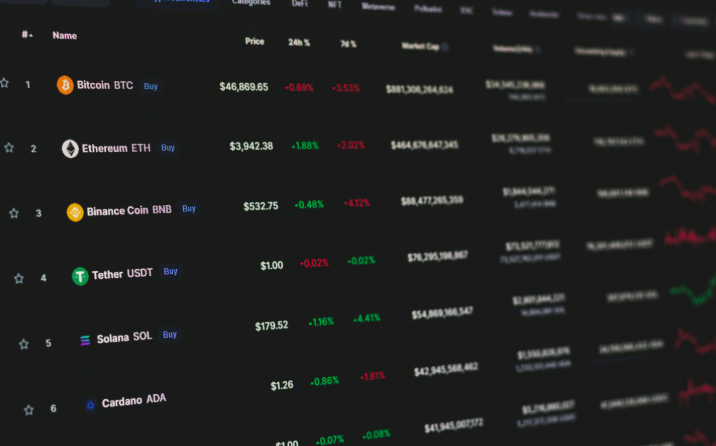
Introduction to Bitcoin Dominance
Bitcoin dominance is a term that describes the percentage of the total cryptocurrency market capitalization that is attributable to Bitcoin, the first and most well-known cryptocurrency. This metric serves as an important indicator of Bitcoin’s relative strength in the market compared to other cryptocurrencies, commonly referred to as altcoins. As of now, Bitcoin remains dominant, often accounting for a significant portion of the total market cap. Understanding Bitcoin dominance not only reflects investor confidence in Bitcoin, but it also provides insights into the overall health and trends within the cryptocurrency ecosystem.
Bitcoin’s market capitalization is paramount because it sets a benchmark for other digital assets. When Bitcoin experiences significant price fluctuations, the entire cryptocurrency market tends to react, resulting in a correlation among various altcoins. Therefore, the degree of Bitcoin dominance can impact investor sentiment and decision-making when it comes to trading or investing in altcoins.
Historically, Bitcoin dominance has fluctuated considerably, influenced by various factors ranging from market speculation to technological advancements within competing cryptocurrencies. During periods when Bitcoin dominance increases, it often suggests that investors are preferring Bitcoin over altcoins, potentially due to market uncertainty. Conversely, a declining Bitcoin dominance might indicate growing interest and investment in altcoins, reflecting a shift toward diverse digital assets.
The significance of Bitcoin dominance can thus be understood as both a reflection of Bitcoin’s established position and a lens through which to evaluate the dynamics of the altcoin market. It serves not only as a metric of relevance but also as a behavioral indicator of how traders and investors navigate the complexities of cryptocurrency investments.
The Role of Altcoins in the Cryptocurrency Ecosystem
Altcoins, short for alternative coins, are cryptocurrencies other than Bitcoin. They were introduced shortly after Bitcoin’s inception to address certain limitations of Bitcoin and to offer unique functionalities. The altcoin market is expansive, comprising thousands of different coins and tokens, each designed with specific purposes in mind. Ethereum, for instance, enables the creation of smart contracts and decentralized applications, while Litecoin offers faster transaction times compared to Bitcoin.
In the larger cryptocurrency ecosystem, altcoins play several critical roles. Firstly, they often introduce innovative technologies that improve upon or complement Bitcoin’s core features. For example, some altcoins focus on enhancing transaction privacy with sophisticated cryptographic techniques, thereby catering to users with specific needs for anonymity. Others aim to improve scalability, making transactions quicker and more efficient for everyday use.
Moreover, altcoins contribute to a richer and more diverse cryptocurrency market. Their existence fosters healthy competition, encouraging the development of new ideas and solutions geared toward various industries. Some altcoins operate within niche markets such as decentralized finance (DeFi), where they provide users access to financial services without conventional banking entities. Others are designed for gaming and digital collectibles, creating ecosystems that allow further exploration of blockchain technology.
The interaction between Bitcoin and altcoins is notable; while Bitcoin often dominates the market, the performance and acceptance of altcoins can significantly impact Bitcoin’s price and market behavior. Investors often observe the Bitcoin dominance index, which reflects Bitcoin’s market capitalization in relation to the combined capital of all cryptocurrencies, including altcoins. Fluctuations in this index can indicate market trends and investor sentiment, further illustrating the interconnectedness of altcoins with Bitcoin.
Understanding Market Capitalization
Market capitalization, commonly referred to as market cap, is a critical financial metric for evaluating the size and value of cryptocurrencies, including Bitcoin and altcoins. It is calculated by multiplying the current price of a cryptocurrency by its circulating supply. For example, if Bitcoin is priced at $40,000 and there are 18 million Bitcoins in circulation, the market capitalization would be 40,000 x 18,000,000, resulting in $720 billion. This figure illustrates not only the total value of that cryptocurrency but also its significance in the broader market.
The importance of market cap extends beyond simple valuation; it serves as a barometer for investor interest and perceptions of value. A higher market capitalization typically indicates greater public interest, liquidity, and stability. Investors often regard significant market cap cryptocurrencies such as Bitcoin as safer investments compared to smaller altcoins, which may exhibit high volatility and risk. As such, understanding market capitalization is essential for anyone involved in cryptocurrency trading, whether they are seasoned experts or newcomers.
In the context of Bitcoin dominance, market capitalization plays a pivotal role. Bitcoin, often regarded as the flagship cryptocurrency, historically commands a significant share of the overall market cap for all cryptocurrencies combined. This dominance affects the accessibility and appeal of altcoins, influencing investor behavior and strategy. When Bitcoin’s market cap rises, it can attract more attention and investment toward Bitcoin at the expense of altcoins, which may lead to decreased liquidity and reduced perceived value in those alternative assets.
Understanding market capitalization thus provides essential insight into the dynamics between Bitcoin and altcoins. In a rapidly evolving cryptocurrency landscape, recognizing how market cap influences perceived value can be critical for investment strategy and market assessment.
Analyzing Bitcoin Dominance Trends
Bitcoin dominance, the percentage of the total cryptocurrency market capitalization that Bitcoin represents, serves as a crucial indicator of market health and investor sentiment. Over the years, Bitcoin dominance has exhibited considerable fluctuations, influenced by various market events, regulatory developments, and technological advancements. Historically, Bitcoin’s dominance reached its peak in late 2017, when it accounted for around 85% of the total crypto market capitalization. This surge coincided with the onset of the initial coin offering (ICO) boom, which dramatically increased the number of altcoins entering the market.
Following this period, however, the dominance of Bitcoin began to decline significantly, particularly from 2018 onwards, as new projects gained popularity and investments flowed into altcoins like Ethereum, Binance Coin, and many others. Events such as the DeFi boom in 2020 propelled multiple altcoins forward, further diluting Bitcoin’s market share. Analysts suggest that Bitcoin’s declining dominance during this period indicates a maturing market where diverse investment opportunities exist beyond the original cryptocurrency.
The implications of these trends for traders and investors are profound. A declining Bitcoin dominance often signifies a bullish altcoin market, prompting investors to shift their portfolios towards these alternative assets. Conversely, when Bitcoin dominance trends upward, it may indicate a flight to safety, with traders opting for Bitcoin in times of market uncertainty. Monitoring Bitcoin’s dominance is crucial for those looking to capitalize on price movements, as changes in dominance can predict market cycles and inform trading strategies.
In conclusion, understanding historical Bitcoin dominance trends provides insights into the broader cryptocurrency market dynamics. Investors and traders can leverage these insights to make more informed decisions, adjusting their strategies based on market sentiment and trends observed over time.
The Correlation Between Bitcoin and Altcoin Prices
The relationship between Bitcoin prices and altcoin prices is a focal point in cryptocurrency market studies. Bitcoin, often regarded as the flagship cryptocurrency, has a significant impact on the overall market dynamics, primarily due to its market capitalization and adoption levels. Numerous studies and analyses have illustrated that price movements in Bitcoin frequently precede or predict variations in altcoin prices.
Historically, when Bitcoin experiences a substantial price increase, altcoins often follow suit, although the scale of movement may vary. This phenomenon, sometimes referred to as a “Bitcoin effect,” stems from Bitcoin’s role as a market leader. For instance, in early 2021, Bitcoin saw a dramatic rise, climbing past $40,000. During this phase, many altcoins, including Ethereum and Cardano, also surged in value, indicating a direct correlation with Bitcoin’s performance.
The correlations can fluctuate based on various external factors, including market sentiment, regulatory news, and technological advancements within the cryptocurrency space. For example, during periods of market optimism, altcoins can outperform Bitcoin, exhibiting higher volatility and more pronounced price increases. Conversely, in bearish markets, altcoins often demarcate greater downturns compared to Bitcoin, demonstrating a pronounced sensitivity to market trends. A notable incident occurred in May 2021 when Bitcoin faced a significant drop, leading to a sharp decline in altcoin values, with many falling by over 30% in just a few days.
This dependency on Bitcoin brings both risks and opportunities for altcoin investors. Understanding this interplay is crucial for cryptocurrency enthusiasts and investors when strategizing their portfolios. A sound approach involves monitoring Bitcoin price fluctuations closely while maintaining a diversified portfolio that leverages the unique potential of various altcoins. Just as Bitcoin influences altcoin dynamics, shifts within the altcoin market can, at times, create feedback loops affecting Bitcoin prices as well.
The Impact of Market Sentiment
Market sentiment plays a crucial role in shaping the dynamics of Bitcoin dominance and the performance of altcoins. As the cryptocurrency sector is often driven by speculative activities, investor sentiment can lead to notable fluctuations in market valuations and trading volumes. A surge in optimism, spurred by positive news or developments in the crypto space, can trigger a bullish market, favoring not only Bitcoin but also various altcoins. Conversely, negative sentiment typically leads to decreases in valuations across the board, resulting in diminished investor confidence and subsequently affecting Bitcoin’s market dominance.
One of the significant factors influencing market sentiment is media coverage. News stories regarding regulatory changes, technological advancements, or major mining operations can rapidly shift public perception. For instance, if a large corporation announces adopting Bitcoin as a payment method, it may lead to increased interest in the cryptocurrency, thereby boosting its dominance. In contrast, news of significant hacks or regulatory crackdowns may prompt a flight to safety, where investors gravitate towards Bitcoin as a perceived ‘safer asset’ compared to altcoins.
Hype cycles are another element contributing to market sentiment fluctuations. These cycles often lead to speculative bubbles where altcoins gain visibility and interest, sometimes independently of Bitcoin’s performance. Investor psychology must also be considered; fear of missing out (FOMO) can lead to frantic buying, while fear and uncertainty can drive selling pressure. These intertwined elements of sentiment demonstrate how market participants react not only to concrete data but also to perceived emotions and trends within the community, ultimately impacting Bitcoin’s dominance relative to altcoins.
Strategies for Altcoin Investment
Investing in altcoins presents a unique opportunity for diversification within a cryptocurrency portfolio, particularly in the context of Bitcoin dominance. One primary strategy is to assess the market conditions of both Bitcoin and altcoins before making any investment decisions. Since Bitcoin often leads market trends, understanding its performance can provide insights into the potential movements of altcoins.
It is essential for investors to conduct thorough research on individual altcoins. This includes analyzing their fundamentals, such as the technology behind the coin, the team involved in its development, and its use case within the broader market ecosystem. Additionally, keeping abreast of community sentiment and developments can offer valuable foresight into price movements, serving as a basis for investment strategies.
Another effective strategy is to employ a risk management approach when investing in altcoins. Given the high volatility often associated with these assets, it is prudent to allocate only a portion of the total investment portfolio to altcoins. Diversifying within this subset—by investing in a range of altcoins rather than concentrating on a few—can also mitigate risks significantly.
Furthermore, utilizing technical analysis can aid in making informed decisions regarding entry and exit points. By analyzing price charts and recognizing trading patterns, investors can develop a systematic approach to altcoin trading. Establishing stop-loss orders and profit-taking strategies can also promote financial discipline in this inherently volatile market.
Moreover, being mindful of the overall cryptocurrency market trends, including Bitcoin’s dominance, will inform investment timings and help optimize returns. In this way, a well-rounded and informed investment strategy that considers both risk and potential return can enhance the likelihood of success in altcoin investments.
Future Predictions and Scenarios
The landscape of cryptocurrency is constantly evolving, with Bitcoin dominance and altcoin performance being pivotal elements influencing market dynamics. As we explore potential future scenarios, it is important to consider a variety of factors affecting these cryptocurrencies, including regulatory developments, technological advancements, and market sentiment.
One of the prevailing predictions suggests that Bitcoin may maintain or even increase its dominance in the near future. This scenario is bolstered by Bitcoin’s established reputation as the first and most prominent cryptocurrency, often viewed as a digital gold. Moreover, as institutional adoption continues to grow, Bitcoin’s role as a store of value could strengthen its supremacy in the market.
Conversely, the altcoin market could see a surge in performance as new technologies emerge and decentralized finance (DeFi) applications gain traction. Specific altcoins, particularly those that focus on niche solutions or innovative use cases, may experience heightened interest, leading to increased investment and trading activity. The market’s fascination with unique value propositions provided by these alternative coins might enhance their standing relative to Bitcoin.
Additionally, the potential for Bitcoin to eventually become intertwined with various altcoins through interoperable protocols cannot be ignored. If successful, these developments could diminish Bitcoin’s dominance, leading to a more balanced market where multiple cryptocurrencies coexist and thrive alongside one another.
Experts in the field suggest that the timing and scale of such shifts will depend heavily on macroeconomic conditions, advancements in blockchain technology, and public perception of both Bitcoin and altcoins. Overall, while Bitcoin dominance may face challenges, the altcoin market could likewise present opportunities for growth and diversification.
Conclusion and Key Takeaways
Throughout this article, we have examined the intricate relationship between Bitcoin dominance and altcoin markets. Understanding Bitcoin dominance is crucial for investors seeking to navigate the complexities of the cryptocurrency landscape. Bitcoin, often referred to as digital gold, has set the foundation for the entire market, influencing the price movements and trends of many altcoins. This market behavior emphasizes the importance of monitoring Bitcoin’s market share as it often dictates the overall direction of crypto investments.
Key takeaways include the observation that Bitcoin dominance not only reflects the market’s confidence in Bitcoin but also serves as a critical indicator for altcoin performance. When Bitcoin dominance rises, it typically signals a bullish trend for Bitcoin itself while indicating potential consolidation or decline in altcoin valuations. Conversely, a decrease in Bitcoin dominance can often suggest an influx of capital into altcoins, driving their prices higher in relation to Bitcoin.
Investors must also remain cognizant of various factors influencing both Bitcoin and altcoin markets, such as market sentiment, regulatory news, and technological advancements. By understanding these influences, investors can make informed decisions regarding their portfolios, balancing their investments between Bitcoin and various altcoins. Continuous learning and staying updated with market trends will enable investors to adapt their strategies effectively.
In conclusion, grasping the concept of Bitcoin dominance is vital for anyone looking to invest in cryptocurrencies. The dynamic between Bitcoin and altcoins serves as a blueprint for investment strategies. As the cryptocurrency market evolves, we encourage further exploration into these relationships to capitalize on the opportunities they present. By fostering a comprehensive understanding of Bitcoin’s role within the market, investors can better position themselves for success in the ever-changing landscape of cryptocurrency.