





Introduction to Bitcoin Dominance
Bitcoin dominance refers to the ratio of Bitcoin’s market capitalization to the total market capitalization of all cryptocurrencies in existence. This metric is crucial in understanding the overall landscape of the cryptocurrency market, as it highlights Bitcoin’s leading position among other digital currencies, commonly known as altcoins. The percentage calculated indicates how much Bitcoin dominates the crypto market in terms of value. For instance, if the total market cap of all cryptocurrencies is $1 trillion and Bitcoin’s market cap is $600 billion, Bitcoin’s dominance would be 60%.
The calculation of Bitcoin dominance involves dividing the market capitalization of Bitcoin by the total market capitalization of the cryptocurrency market. This figure fluctuates with the rise and fall of Bitcoin’s value and that of altcoins. It serves multiple purposes, allowing investors to gauge Bitcoin’s strength relative to competing cryptocurrencies. Traditionally, a higher Bitcoin dominance percentage suggests that investors have a stronger preference for Bitcoin over altcoins, often leading to lower trading volumes and price fluctuations among the latter.
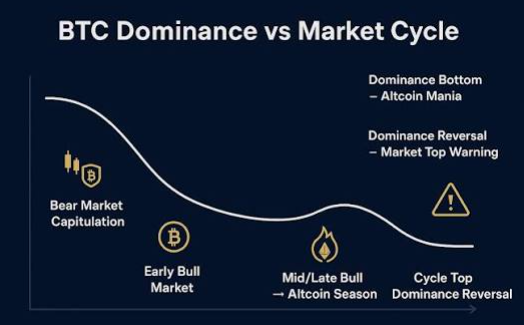
The significance of Bitcoin dominance extends beyond mere market metrics. It plays a pivotal role in the trading strategies of many investors and traders. During bullish market conditions, altcoins typically thrive, leading to a reduction in Bitcoin’s dominance. Conversely, during bearish trends, Bitcoin often remains stable or diminishes at a slower rate, reinforcing its position as a safe haven in the cryptocurrency market. Thus, understanding the dynamics of Bitcoin dominance is essential for anyone involved in crypto trading, as it provides insights into market sentiment and potential investment opportunities.
The Relationship Between Bitcoin and Altcoins
Bitcoin, as the first cryptocurrency, has played a pivotal role in shaping the digital asset market. It often serves as a benchmark for other cryptocurrencies, commonly referred to as altcoins. The performance of altcoins is frequently influenced by movements in Bitcoin’s price and market sentiment. When Bitcoin experiences significant gains or losses, altcoins tend to follow suit, either amplifying gains or expanding losses.
The historical performance of altcoins reveals a consistent pattern where they are generally more volatile than Bitcoin. During bullish phases in which Bitcoin’s dominance increases, many altcoins tend to rise in value, sometimes outperforming Bitcoin itself. Conversely, during bearish trends, altcoins can decline more sharply, resulting in substantial losses for investors. This trend highlights the interconnectedness of Bitcoin’s price movements with the altcoin market.
Throughout various market cycles, Bitcoin’s dominance has served as an indicator of altcoin performance. For instance, during the 2017 bull run, Bitcoin reached unprecedented levels, significantly enhancing investor interest in altcoins. Many cryptocurrencies achieved notable gains, largely driven by the upward trend set by Bitcoin. However, the subsequent market corrections often led to dramatic declines in altcoin values, showcasing their speculative nature.
Moreover, the relationship between Bitcoin and altcoins is not only influenced by price dynamics but also by market sentiment and investor psychology. During periods of strong Bitcoin performance, altcoin investors may exhibit optimism, leading to increased trading volumes and market participation. In contrast, uncertainty surrounding Bitcoin can lead to reduced confidence in altcoins, often resulting in rapid sell-offs.
Understanding this relationship is crucial for investors and traders in the cryptocurrency space. By closely monitoring Bitcoin’s performance, one can gain insights into potential fluctuations in the altcoin market. Ultimately, recognizing how Bitcoin sets the trend for the cryptocurrency landscape can aid in making informed investment decisions.
Factors Influencing Bitcoin Dominance
Bitcoin dominance refers to the percentage of the total cryptocurrency market capitalization that is accounted for by Bitcoin. Several factors can significantly influence this metric, affecting not only Bitcoin’s market standing but also the performance of altcoins. Understanding these factors is crucial for investors and traders in the cryptocurrency landscape.
One of the primary influences on Bitcoin dominance is market sentiment. When investors are optimistic about Bitcoin’s performance, they tend to allocate more funds to it, thus increasing its dominance. Conversely, negative sentiment can lead investors to seek opportunities in alternative cryptocurrencies, which may decrease Bitcoin’s share of the total market. For instance, during periods of bullish trends, Bitcoin often captures more investment, leading to increased dominance.
Regulatory news is another critical factor. Announcements or developments in cryptocurrency regulation can significantly sway investor confidence. Positive regulatory news regarding Bitcoin can enhance its market position, while regulatory crackdowns can lead to decreased confidence in Bitcoin and a subsequent shift to altcoins. For example, favorable legislation can lead to increased institutional investment in Bitcoin, impacting its relative market strength.
Technological advancements also play a vital role in influencing Bitcoin’s dominance. The launch of new technologies or improvements within the Bitcoin network can enhance its usability and attractiveness as a store of value compared to altcoins. Similarly, altcoins introducing innovative features or applications may divert attention and investment away from Bitcoin, affecting its market share.
Lastly, investor behavior, driven by trends and market psychology, can create fluctuations in Bitcoin dominance. Periods of speculation lead to heavy investments in altcoins, temporarily reducing Bitcoin’s dominance. Conversely, when investors seek stability and security, Bitcoin often becomes the preferred choice, reinforcing its leading position.
How Bitcoin Dominance Affects Altcoin Prices
Bitcoin dominance refers to the ratio of Bitcoin’s market capitalization to the total market capitalization of all cryptocurrencies. This metric is an important indicator for traders and investors, as it provides insights into the relative strength of Bitcoin compared to altcoins. A high Bitcoin dominance level typically indicates that Bitcoin is holding a significant share of the market, which can have a profound impact on altcoin prices.
The correlation between Bitcoin dominance and altcoin prices is especially evident during periods of market fluctuations. When Bitcoin experiences price increases, it often leads to a corresponding rise in altcoin prices. However, this phenomenon is not uniform across the entire altcoin market. Some altcoins may see substantial gains, while others may remain stagnant or even decline, illustrating the relationship between Bitcoin’s performance and altcoin market behavior. Conversely, when Bitcoin’s dominance decreases, altcoins often benefit from increased investment, resulting in price surges commonly referred to as “alt season.”
Moreover, the shifts in Bitcoin’s market dominance can create volatility in altcoin trading. Investors tend to follow Bitcoin’s lead, and significant price movements can trigger rapid buying or selling within the altcoin sector. For instance, if Bitcoin’s price surges, many investors may opt to shift their assets into altcoins, anticipating higher returns. This behavior can create a domino effect, causing dramatic price fluctuations in various altcoins, often leading to a speculative trading environment.
Ultimately, understanding Bitcoin dominance is crucial for anyone engaged in altcoin trading. By monitoring Bitcoin’s market performance and its dominance percentage, traders can better anticipate market movements and adjust their strategies accordingly. The interplay between Bitcoin and altcoins remains intricate and dynamic, shaped by various economic factors and trader sentiments.
Technical Analysis of Bitcoin versus Altcoins
In the realm of cryptocurrency trading, the relationship between Bitcoin and altcoins is integral to understanding market dynamics. Bitcoin dominance refers to the percentage of the total cryptocurrency market capitalization that is held by Bitcoin. This metric is pivotal as traders analyze its fluctuations to forecast potential movements within the altcoin markets. Various technical indicators and analysis methods can be employed to interpret these changes effectively.
One crucial aspect of technical analysis in this context is the use of chart patterns. For instance, when Bitcoin dominance rises, it often signifies that investors are favoring Bitcoin over altcoins, which may lead to bearish trends for many alternative cryptocurrencies. Conversely, a decline in Bitcoin dominance might indicate an influx of capital into altcoins, suggesting a bullish sentiment within those markets. Recognizing these patterns can provide traders with insights into potential entry and exit points.
Additionally, key metrics such as the Relative Strength Index (RSI) and Moving Averages (MA) can help in assessing market conditions. The RSI, for example, can indicate whether Bitcoin is overbought or oversold compared to altcoins, thus guiding traders in making informed decisions. Moving averages, on the other hand, can smooth out price fluctuations and help highlight overall trends. By monitoring moving averages of Bitcoin dominance alongside altcoin performance, traders can deduce where market sentiment might shift.
Volume analysis also plays a crucial role in understanding the relationship between Bitcoin and altcoins. Increased trading volume in Bitcoin usually shows heightened interest and can be indicative of future price movements in altcoins, especially if Bitcoin begins a correction. Analyzing the interplay of these technical indicators allows traders to formulate strategies that align with the flux in Bitcoin dominance.
Ultimately, comprehending the technical analysis of Bitcoin versus altcoins is essential for traders seeking to navigate the volatile landscape of cryptocurrency markets. Employing these indicators and keeping an eye on market sentiment can greatly enhance trading strategies and outcomes.
The Role of Market Sentiment in Altcoin Trading
Market sentiment plays a crucial role in the trading of altcoins, particularly as it relates to Bitcoin dominance. As Bitcoin often serves as a benchmark in the cryptocurrency market, fluctuations in its value can significantly influence the perceptions and behaviors of traders invested in alternative cryptocurrencies. Market sentiment essentially refers to the overall attitude of investors towards a specific market or asset, and understanding it can help traders make informed decisions.
In altcoin trading, market sentiment is often gauged through a variety of indicators and analysis methods. Traders frequently use quantitative data, such as trading volumes, price movements, and volatility, to assess the sentiment around both Bitcoin and altcoins. Additionally, qualitative factors such as news events, social media discussions, and expert opinions contribute to shaping traders’ perceptions. For instance, positive developments surrounding Bitcoin can lead to increased interest in altcoins, while negative news can dampen enthusiasm across the board.
The impact of Bitcoin dominance on altcoin trading strategies cannot be overstated. High Bitcoin dominance, for instance, can signal a market that is cautious or risk-averse, leading traders to overlook altcoins in favor of the perceived stability offered by Bitcoin. Conversely, a declining Bitcoin dominance may embolden traders to explore altcoins, potentially enhancing their trading strategies and risk profiles. As a result, understanding how to read market sentiment is essential for successful altcoin trading.
Moreover, traders often apply sentiment analysis tools to further refine their trading decisions. By incorporating elements such as market psychology into their strategies, traders can identify potential entry and exit points based on shifts in sentiment. Keeping abreast of market trends allows traders to adapt quickly to changing conditions, ultimately enhancing their trading outcomes.
Case Studies: Historical Trends and Events
The concept of Bitcoin dominance plays a crucial role in understanding the dynamics of the cryptocurrency market, particularly concerning altcoin trading. Historical trends reveal intriguing patterns that have a significant impact on altcoin prices and overall market sentiment. One notable event occurred in early 2018 when Bitcoin experienced a substantial price correction after reaching an all-time high of nearly $20,000. During this period, Bitcoin dominance surged as investor confidence waned in alternative cryptocurrencies, leading to a sharp decline in altcoin values.
Another important event to consider is the DeFi boom of mid-2020. The rise in decentralized finance projects catalyzed a various surge in altcoin investment, which temporarily reduced Bitcoin’s dominance from over 70% to approximately 60%. This shift was characterized by investors reallocating funds to emerging altcoins that promised innovative solutions in finance and technology. Such situations demonstrate how developments in specific sectors can influence market behavior, highlighting the necessity for traders to observe Bitcoin’s trajectory when making altcoin investments.
A later instance occurred during the last quarter of 2021, where Bitcoin reached new heights, pushing the overall cryptocurrency market capitalization to unprecedented levels. However, it was observed that as Bitcoin’s price surged, many altcoins lagged behind, resulting in an increased Bitcoin dominance. This trend implied that while Bitcoin continued to attract significant investments, altcoins struggled to maintain their momentum. Market participants usually interpret shifts in Bitcoin dominance as signals, providing insights into potential trading strategies for altcoins.
These case studies illustrate the intricate relationship between Bitcoin and altcoins. Traders must remain vigilant, assessing historical market events and trends, to effectively navigate the volatile nature of cryptocurrency trading. Such analysis not only equips traders with necessary insights but also prepares them for prospective market movements influenced by Bitcoin dominance.
Predictions for the Future of Bitcoin Dominance and Altcoins
As the cryptocurrency market continues to evolve, Bitcoin’s dominance remains a critical factor in shaping the landscape for altcoin trading. Current trends suggest that Bitcoin dominance, characterized by its market capitalization relative to other cryptocurrencies, could experience fluctuations influenced by various economic, technological, and regulatory factors.
Expert opinions indicate that while Bitcoin will likely maintain a significant share of the overall market, altcoins are expected to gain traction in certain segments. Several analysts highlight the importance of innovations in blockchain technology, which could pave the way for altcoins with unique value propositions to thrive. For instance, advancements in decentralized finance (DeFi) and non-fungible tokens (NFTs) may rally specific altcoins, thus challenging Bitcoin’s prevailing position.
Market forecasts point to a potential increase in Bitcoin dominance during bear markets, as investors often turn to Bitcoin as a safe haven asset. Conversely, during bullish phases, the opportunity for altcoins to capitalize on increased market sentiment could diminish Bitcoin’s share temporarily. Hence, the relationship between Bitcoin and altcoins is dynamic and driven by market conditions.
Particularly noteworthy is the growing interest from institutional investors in diverse cryptocurrencies. This influx of capital could further influence Bitcoin dominance ratios and alter trading behaviors within the altcoin markets. The potential for mainstream adoption in sectors like gaming and finance is encouraging for various altcoins, strengthening the argument for their individual merits.
In conclusion, while predictions about Bitcoin dominance suggest resilience, the evolving nature of altcoins and their potential markets indicates a more diversified future for cryptocurrency trading. Observers should remain vigilant about both Bitcoin’s performance and altcoin developments to make informed trading decisions.
Conclusion and Key Takeaways
In conclusion, understanding Bitcoin dominance is crucial for traders navigating the complexities of altcoin investing. Bitcoin, as the leading cryptocurrency by market capitalization, often dictates market trends that significantly impact altcoin performance. Throughout this blog post, we have explored the nuances of Bitcoin’s influence on the altcoin market, emphasizing the importance of monitoring Bitcoin dominance to make informed trading decisions.
One key takeaway is that periods of high Bitcoin dominance typically correlate with lower altcoin performance. In such phases, traders may find it beneficial to adopt a more cautious approach regarding altcoin investments. Conversely, when Bitcoin dominance diminishes, it often signals a favorable environment for altcoins, presenting potential opportunities for traders. Understanding these market dynamics allows for more strategic positions in a trader’s portfolio.
Furthermore, traders should consider diversifying their investments across a range of altcoins, rather than concentrating solely on Bitcoin. This strategy can help mitigate risks and capitalize on the sporadic surges in altcoin values that may arise during periods of changing Bitcoin dominance. It is also wise for investors to stay informed about market trends, technological advances, and regulatory developments affecting the cryptocurrency landscape.
Ultimately, while Bitcoin remains a foundational element of the cryptocurrency ecosystem, the potential for altcoin trading should not be overlooked. By leveraging insights into Bitcoin dominance and maintaining a proactive approach, traders can better navigate the cryptocurrency market and enhance their trading strategies.