





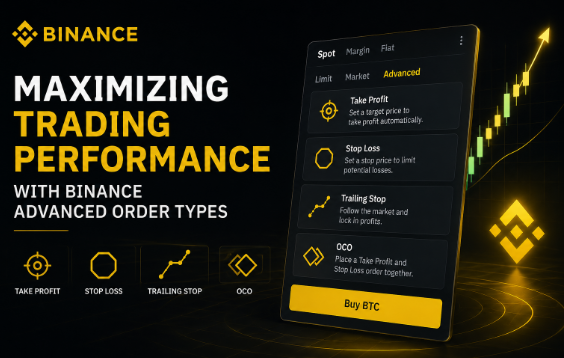
Introduction to Advanced Order Types
In the realm of cryptocurrency trading, the execution of precise trading strategies is crucial for maximizing profitability and minimizing risks. Advanced order types on Binance serve as essential tools for traders seeking to optimize their trading performance beyond what basic order types offer. While basic orders typically include market and limit orders, advanced order types encompass a wider range of options that can be tailored to individual trading strategies.
The rationale behind using advanced order types lies in their ability to provide more control over trade executions. For instance, market orders execute at the best available price instantly, whereas limit orders allow traders to set a specific price for buying or selling assets. Advanced order types such as stop-limit, OCO (one cancels other), and trailing stops increase the flexibility available to traders. These order types are designed to enhance risk management and profit-taking mechanisms, thus supporting complex trading strategies.
One of the key distinctions between basic and advanced order types is the additional functionality that advanced orders offer. For example, a stop-limit order combines elements of both stop and limit orders, which allows traders to specify both the trigger price and the limit price for their trades. This strategic position can help mitigate potential losses while ensuring trades can execute once certain market conditions are met. Moreover, OCO orders enable a trader to place a limit order and a stop order simultaneously, offering a way to protect profits or cut losses while defining a clear exit strategy.
The sheer importance of advanced order types cannot be overstated. By integrating these sophisticated tools into their trading arsenal, traders can adapt to market volatility more effectively, execute their strategies with precision, and ultimately enhance their trading performance on the Binance platform.
Market Orders: Fundamentals and Use Cases
Market orders represent one of the most fundamental types of orders in trading. Designed for simplicity and speed, a market order is executed immediately at the best available market price. Traders typically utilize this order type when they are looking to enter or exit a position swiftly, often in a volatile market where the price may change rapidly.
When a trader places a market order on a platform like Binance, the order will be filled at the current market price without delay. This execution speed can be crucial during significant market events or when a specific price action warrants immediate buying or selling. For instance, if a trader wants to capitalize on a sharp upward movement in cryptocurrency prices, a market order allows them to ensure that they acquire assets without hesitation.
It is essential to recognize, however, that a market order does not guarantee the execution price. In highly liquid markets, the price might slightly differ from what is displayed when the order is placed due to slippage, especially in fast-moving trades. Therefore, while market orders are advantageous for their quick execution, traders should be aware of the potential risks associated with price discrepancies.
Market orders are particularly beneficial in certain situations, such as reacting to breaking news, participating in pump and dump schemes, or when traders believe the market will trend directionally. They can also be helpful for new traders still learning the ropes, as they do not require extensive knowledge of price levels or sophisticated strategies. In conclusion, while market orders are practical tools for immediate transactions, understanding their dynamics and implications can enhance a trader’s overall performance in the volatile cryptocurrency markets.
Limit Orders: Precision in Trading
Limit orders are a fundamental component of trading strategies on platforms such as Binance. They allow traders to specify the exact price at which they are willing to buy or sell an asset. Unlike market orders, which execute immediately at the current market price, limit orders provide greater precision and control over transaction costs.
When placing a limit order, a trader identifies the maximum price they are willing to pay when buying or the minimum price they are willing to accept when selling. This approach is particularly useful in volatile markets where prices can fluctuate significantly within a short period. By setting a limit, traders can avoid unfavorable price movements that might occur with a market order.
One significant advantage of limit orders is the ability to maintain control over execution price. For instance, if a trader wants to purchase Bitcoin and believes that the price will drop, they can set a limit order below the current market price. This strategy minimizes the risk of buying at inflated prices and optimizes entry points.
Moreover, limit orders are beneficial in situations where market liquidity is low. In such instances, market orders can lead to slippage, where a trade executes at a less favorable price due to insufficient order volume. Limit orders help mitigate this risk by ensuring trades happen only at the desired price.
However, it is essential to recognize that while limit orders offer precision, they may not always guarantee execution. If the market does not reach the specified limit price, the order will remain open until it is either filled or canceled. Therefore, traders should assess market conditions and their specific trading objectives to determine when to utilize limit orders effectively.
Stop-Loss and Take-Profit Orders: Risk Management Tools
In the dynamic world of trading, effective risk management is crucial for preserving capital and enhancing performance. Among the various tools available, stop-loss and take-profit orders stand out as fundamental strategies employed by traders using platforms like Binance. These predefined exit points not only protect investments but also contribute to a more disciplined trading approach.
A stop-loss order is designed to limit an investor’s loss on a position. By setting a specific price at which the asset will be sold if the market moves unfavorably, traders can mitigate potential losses. This automatic execution of orders helps in removing emotions from trading decisions, ensuring that losses are contained within a predetermined level. For instance, if a trader purchases a cryptocurrency at $100, they might set a stop-loss order at $90. If the market price falls to $90, the position will automatically be sold, thereby preventing further losses.
On the other hand, take-profit orders enable traders to secure profits once an asset reaches a desired price. This order automatically sells the asset at the specified price to capitalize on gains, thereby locking in profits before market fluctuations can erode them. For example, if the same cryptocurrency reaches $120, a trader might set a take-profit order at that level, ensuring that gains are realized without the risk of reversal in price.
Utilizing stop-loss and take-profit orders not only enhances discipline amidst the often volatile nature of the cryptocurrency market but also allows traders to focus on their strategies without being consumed by constant price monitoring. These risk management tools are essential for traders on Binance, helping to create a balanced approach that not only prioritizes profit but also safeguards capital against unforeseen market movements.
Conditional Orders: Customizing Trade Strategies
Conditional orders are a sophisticated trading tool that significantly enhance a trader’s ability to execute strategies tailored to specific market conditions. Unlike standard market or limit orders, which are executed based solely on price levels, conditional orders enable traders to set predefined rules that dictate when a trade should be executed. This flexibility allows for a more nuanced approach to trading, catering to diverse market scenarios.
With conditional orders, traders can engage in complex strategies that include automated triggers, which can take the emotion out of trading decisions. For instance, a common conditional order is the Stop-Loss order, which automatically sells a security when its price falls to a specific level. This mechanism protects traders from significant losses, particularly in volatile markets. Similarly, a Take-Profit order enables traders to secure gains by exiting a trade once it reaches a predetermined profit target.
Moreover, Binance offers advanced conditional order types such as One-Cancels-Other (OCO) and If-Done orders. An OCO order combines limit and stop orders, allowing traders to set a price where the order should either execute or cancel the other. This is particularly advantageous in fluctuations when traders want to sell if the price moves in their favor while also protecting themselves against adverse price movements. The If-Done order requires one order to be executed before another is activated; this ensures that the execution of one trade is contingent upon another, facilitating more complex trading strategies.
In summary, conditional orders provide traders with the tools necessary to customize their trading strategies effectively. By incorporating these advanced order types into their trading plans, traders can enhance their performance, manage risk better, and capitalize on market opportunities more effectively. Utilizing these advanced features on Binance can significantly contribute to achieving specific trading goals according to market dynamics.
Trailing Stop Orders: Dynamic Exit Strategies
Tailing stop orders represent a crucial component of advanced trading strategies that enable traders to lock in profits while allowing for further potential appreciation in the price of assets. Unlike traditional stop orders, which execute at a fixed price, trailing stop orders adapt dynamically as the price of the asset moves in a favorable direction. Upon implementing a trailing stop order, traders can specify a certain distance, known as the trailing distance, from the highest price reached since the order’s placement. This feature allows for a strategic exit, adjusting with rising asset prices but remaining static if the price declines, hence protecting profits.
The primary appeal of trailing stop orders lies in their ability to enhance trading performance in volatile markets. When asset prices oscillate, traders can avoid the emotional distress often associated with decision-making by utilizing this automated mechanism. For instance, if a trader sets a trailing stop at 5% below the current price of a cryptocurrency, the order will move upward as the price ascends. However, if the price starts to drop, the order remains intact, ensuring that the trader sells at a predetermined level should the market turn. This functionality effectively combines risk management with profit maximization.
Moreover, trailing stop orders can be tailored to different trading styles, whether the focus is on short-term gains or long-term investments. For traders leveraging Binance’s trading platform, implementing trailing stops can significantly enhance their operational efficiency amid fluctuating market conditions. Consequently, they remain an indispensable tool for contemporary traders who aspire to maximize their performance while minimizing risk exposure.
Futures and Margin Trading: Advanced Order Types in Action
In the realm of trading, futures and margin trading are essential components that allow participants to leverage their positions for greater market exposure. Advanced order types play a pivotal role in these trading strategies, enabling traders to manage risk, lock in profits, and position themselves strategically in volatile markets. These order types include limit orders, stop-limit orders, and take profit orders, each designed to fulfill specific trading objectives.
Limit orders are particularly beneficial in futures trading as they allow traders to set a price at which they wish to buy or sell an asset. This gives them the advantage of entering or exiting positions at favorable prices without constantly monitoring the market. For instance, if a trader anticipates a price decline, placing a limit order below the current market price may enable them to capitalize on potential drops without risking higher costs.
Stop-limit orders further enhance trading efficiency by combining the features of stop orders and limit orders. Such orders are executed only when a specified price is reached, preventing unnecessary losses in fluctuating markets. This feature is particularly useful in margin trading, where price swings can dramatically impact leveraged positions. By using stop-limit orders, traders can minimize risk exposure while maintaining their market strategy.
Additionally, take profit orders are instrumental for locking in gains. When a trader sets a take profit order, they specify the price point at which they want their positions to be closed in profit. This mechanism not only secures earnings but also automates the exit strategy, removing emotions from trading decisions.
Utilizing these advanced order types effectively can significantly elevate trading performance in the futures and margin trading sectors. By understanding and implementing them, traders can navigate the complexities of leveraged trading, maximizing their potential outcomes in dynamic markets.
Best Practices for Using Advanced Order Types
Implementing advanced order types on Binance can significantly enhance trading performance when approached with best practices. A critical first step is to understand the various order types available, such as limit orders, stop-loss orders, and trailing stop orders. Each type serves a distinct purpose and can help traders meet specific financial objectives depending on market conditions.
One of the essential best practices is to set appropriate parameters when placing advanced orders. Traders should meticulously decide the price levels and conditions under which these orders will execute. For instance, when setting limit orders, it is advisable to choose a price that reflects market sentiment while still providing a favorable entry point. Similarly, while employing stop-loss orders, traders must consider volatility. A stop-loss set too tightly may trigger premature exits, while one set too broadly may incur excessive losses. Regularly reviewing and adjusting these parameters can also help maintain alignment with market changes.
Assessing market conditions is another vital aspect of utilizing advanced order types effectively. Utilizing technical analysis, traders should evaluate trends, support and resistance levels, and overall market sentiment before making decisions. Understanding the timing of placing orders can also play a critical role; for instance, avoiding significant market events—such as earnings reports or economic forecasts—may prevent unexpected volatility that could trigger your orders unfavorably.
Lastly, avoiding common mistakes is essential for maximizing outcomes with advanced orders. These may include over-reliance on automated trading strategies without personal oversight or ignoring market news that affects price movement. Continuous learning from both victories and setbacks can lead to thoughtful strategies that promote consistent trading success.
Conclusion: Enhancing Trading Efficiency with Advanced Orders
Advanced order types offered by Binance are pivotal tools for traders seeking to refine their trading strategies and enhance overall performance. By utilizing features such as stop-limit orders, trailing stop orders, and OCO (One Cancels Other) orders, traders can execute their trades with greater precision and control.
The implementation of these advanced order types allows for a more strategic approach to trading, providing users with the ability to manage risk effectively and protect their investments. These orders enable traders to establish specific entry and exit points, thereby facilitating a more disciplined trading practice. By setting predetermined conditions for trades, users are less likely to make impulsive decisions driven by emotion, which can often lead to inconsistent trading results.
Furthermore, these advanced features can contribute to maximizing profitability by enabling traders to capture optimal market conditions without the need for constant monitoring. For instance, a trailing stop order can allow for profits to be locked in as a trade becomes profitable, while still allowing the potential for further gains. This dynamic creates a balanced strategy that not only helps in reducing losses but also capitalizes on favorable market movements.
Incorporating these advanced order types into a trading repertoire is a wise decision for anyone serious about improving their trading performance on Binance. By embracing these strategies, traders can better navigate the complexities of the market, ultimately leading to enhanced efficiency and more favorable trading outcomes. The ability to leverage advanced orders is not just an advantage; it is becoming increasingly essential in a competitive trading landscape.