





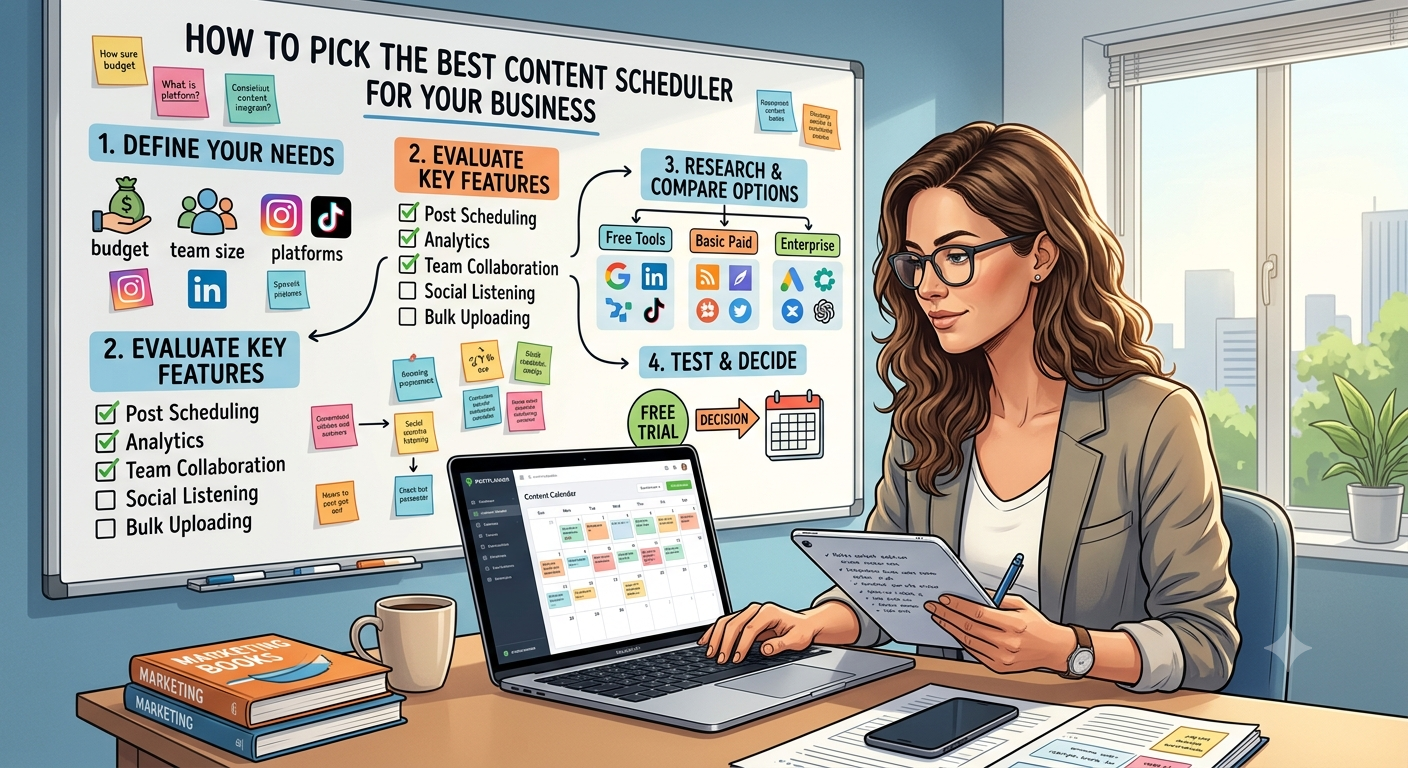
One of the keys to successful content marketing in today’s fast-paced digital world is consistency. However, producing a consistent flow of content on various websites and channels can seem like a steep climb for many businesses and marketing teams. This is where a Content Scheduler can be of great help. A Content Scheduler is not only an automation tool, but it’s a strategic platform that will enable you to plan, organize and distribute your content effectively without burdening your team and make sure your brand stays visible and engaging. There’re multiple reasons why it can be confusing to choose the best Content Scheduler in 2026, from the basic social media planner to the full-fledged enterprise-level marketing suite. It could make your life easy and make your job more effective, or it could cause you frustration and waste your resources.
It will help you understand a systematic way in which you can select the most suitable Content Scheduler for your specific business needs so that you don’t end up wasting money in an ineffective solution.
Knowing what a Content Scheduler does is key
However, before going on to the selection criteria, it is important to learn the extent of the capability of a modern Content Scheduler. By its essence, a Content Scheduler enables you to compose posts and set their release dates for various platforms so that they’ll be published automatically. This basic feature saves you a ton of time as you don’t have to log in into all the social networks to press the “publish” button. The best tools go beyond just scheduling to becoming the one place you can control your entire content operation. They eliminate inefficient, siloed processes, ensure content is consistent, and bring teams together and performance data to real business results. A powerful Content Scheduler allows you to manage, collaborate and analyse all your content, including social content, in one place.
This overall perspective makes a list of to-dos into a streamlined posting schedule, so you can concentrate on the big picture and community engagement, and not the final minute details of administration.
Understanding business needs and objectives
The first step towards finding the best Content Scheduler is to take a self-assessment. One size doesn’t fit all and the first thing to do is to identify your particular needs. How many social media sites would you say that you actively manage? You’re just interested in social media platforms like Instagram, LinkedIn, TikTok and want to coordinate blog posts, email newsletters, and video content or are you only interested in social? If you’re the only individual in your organization responsible for managing social media channels, you might be able to get by with a social media calendar template. When you’re managing content across multiple channels, however, a wider content calendar tool will provide you with visibility and control to ensure all your content is aligned.
Assess Core Features: Non-Negotiables
By knowing what you’re looking for, you can start comparing the key characteristics of various schedulers. Any good Content Scheduler must have a certain level of features, which are vital to the management of content. It is fair to say that a visual content calendar is one of the most essential aspects. This drag ‘n drop calendar offers you a top-view of all your appointments and permits you to effortlessly move or trade posts. It should give you a clear, visual overview of your content pipeline, and help you identify any missing pieces and ensure a good variety of content types.
Understanding the value of Analytics and Reporting
Digital marketing is a data-driven world and a guess is not a strategy. The advanced Content Scheduler should have analytics built-in to monitor engagement, reach, and other metrics and give you visibility of how your posts are doing on each platform. This is crucial to know what content to make more of to better understand your audience and make that strategy more effective. Find tools that provide detailed reports and dashboards to be able to track ROI on your content. The ideal platforms will also deliver actionable data like best posting time and performance of content types.
With 81% of marketing tech leaders piloting or using AI agents to support their operations, modern analytics are becoming more sophisticated to make data-driven decisions that can help you grow.
Emphasizing Team Collaboration & Workflow
Team work is essential to take collaboration features for granted. A decent Content Scheduler ought to expand with you, giving instruments, for example, various roles for team members and customizable approval workflows. These features are vital in ensuring quality control and consistency of content with your brand voice prior to it becoming live. Platforms such as Loomly and Planable are particularly good at this, and make collaboration a core part of the platform. Being able to send tasks, add comments to posts and route through an approved workflow process eliminates bottlenecks and streamlines the process. If you have many clients, white labeling and portals for clients are also great features to consider as well.
Considering Automation and AI Capabilities
Integration of Artificial Intelligence is a key factor shaping the future of content scheduling in 2026. Some of the most up-to-date schedulers today also have AI tools that can make recommendations for captions, hashtags, and even content ideas according to your niche and previous performance. These tools can save you a ton of manual effort and can aid you create high-quality content at a faster rate. Automation options such as content recycling are also priceless. With SocialBee, you can categorise posts and requeue evergreen content automatically, which helps to keep content consistent. This allows you to serve the right content to the right people, without having to manually work the content wheelbarrow all the time.
Some of the most simple automation or artificial intelligence tools can make incredible progress toward streamlining your work as well as enhance your efficiency.
Assessing the structures of budgets and pricing
As with any purchase, your budget will be a key factor in making a decision. Content Scheduler tools come in a wide range of pricing model, from free for start-ups to enterprise plans that may reach hundreds of dollars per month. The idea is to be able to pick the one that suits you best. Small business and solopreneurs can find it valuable to start with free plans. There are plenty of great free tools to help you schedule posts and access basic analytics – such as Buffer and Metricool. However, such plans have a restriction upon posts, accounts or users.
Testing and taking the final decision
Once you’ve reduced your pool of tools to a few, the next critical task is to test the short-listed tools. Most good ones have a free trial, and you can decide for yourself whether or not they’re easy to use based on their features. Pay attention to the user interface and user experience during the trial period. The tool needs to be easy to use and user-friendly, it should not be a hindrance to your work at all. Engage your team in the testing process to collect feedback about how the process works and is easy to use. This is a wonderful hands-on way to see whether this Content Scheduler works best with your processes or not and whether it can achieve the efficiency and results you’re after.
Conclusion
Choosing the right Content Scheduler for your business is a tactical decision that you need to make properly, taking into account your business targets, staffing and finances. There’s a solution for you that can make your content marketing more predictable and powerful, and one that will cut through the hype and focus on the core features that matter most, like a visual calendar, robust analytics, collaboration and automation.