





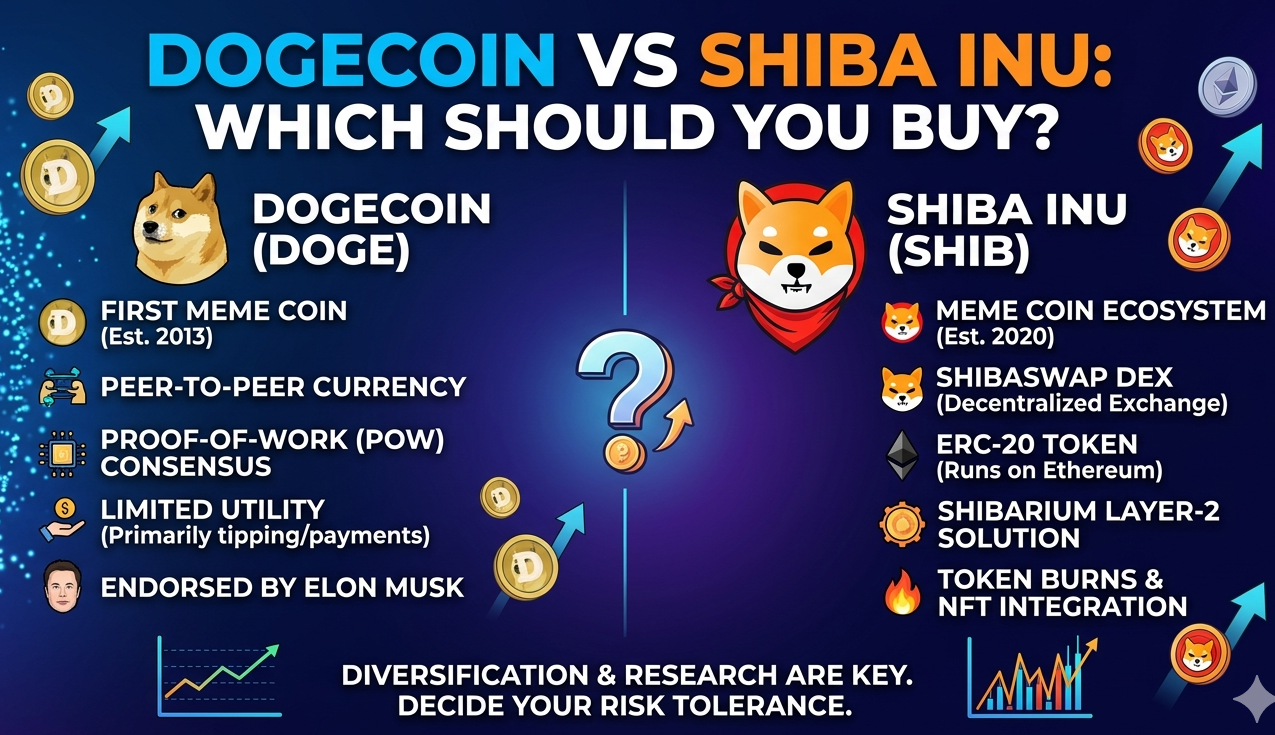
Introduction to Dogecoin and Shiba Inu
Dogecoin and Shiba Inu are two prominent cryptocurrencies that have carved a niche for themselves in the ever-evolving crypto landscape. Both coins, while originating from different contexts, have garnered significant popularity and cultural relevance within the cryptocurrency community.
Launched in December 2013, Dogecoin started as a lighthearted alternative to Bitcoin, drawing inspiration from the popular “Doge” meme featuring a Shiba Inu dog. Its initial purpose was to serve as a tipping system on social media platforms but quickly transformed into a robust cryptocurrency with a passionate community. Over time, Dogecoin evolved, becoming known for its charitable donations and community-driven projects. Its relatively low transaction fees and fast processing times further solidify its practical use as a medium of exchange.
Conversely, Shiba Inu emerged in August 2020 as a decentralized meme token, aiming to capitalize on the success of Dogecoin. Often dubbed the “Dogecoin killer,” Shiba Inu has positioned itself as a community-driven project, appealing to the grassroots support of its users. The coin’s creators implemented a unique strategy and leveraged social media to enhance its visibility, mirroring the viral growth of its predecessor. Despite being newer to the market, Shiba Inu has gained traction with a dedicated following and increasing market trends.
Both Dogecoin and Shiba Inu share more than just a mascot; they symbolize the growing interest in cryptocurrencies that prioritize community engagement along with cultural humor. As these coins continue to captivate the crypto world, their respective journeys reflect an intersection of technological innovation and the whims of digital culture.
Understanding Dogecoin: History and Development
Dogecoin was created in December 2013 by software engineers Billy Markus and Jackson Palmer as a lighthearted alternative to Bitcoin. The inception of Dogecoin was influenced by the popular Doge meme, which features a Shiba Inu dog accompanied by playful captions. This meme struck a chord with internet users, helping Dogecoin to gain instant popularity as a cryptocurrency.
Initially intended as a joke, Dogecoin quickly evolved due to its vibrant community and active participation. The developers introduced features such as a faster block time compared to Bitcoin, making transactions quicker and more efficient. This feature positioned Dogecoin as a practical option for microtransactions and tipping within the online community.
A significant milestone in the development of Dogecoin came in 2014 when the Dogecoin community raised over $30,000 to sponsor the Jamaican bobsled team for the Winter Olympics. This event showcased the potential of community-driven initiatives and the willingness of Dogecoin users to come together for a common cause. Through various charitable endeavors, including funding clean water projects in Kenya, the community further demonstrated its commitment to positive social impact.
The growth of Dogecoin continued with its entry into various partnerships. Notably, Dogecoin became an official sponsor of the Nascar driver Josh Wise in 2014, linking the cryptocurrency with mainstream sports. This partnership significantly contributed to Dogecoin’s profile and credibility within the cryptocurrency landscape.
As Dogecoin gained traction across different sectors, it differentiated itself from other cryptocurrencies through its emphasis on fun and community engagement rather than a strict focus on technology or financial returns. The coin’s endearing branding and accessible nature attracted a diverse audience, marking a new chapter in the evolution of cryptocurrency.
Understanding Shiba Inu: History and Development
Shiba Inu (SHIB) emerged in August 2020, conceived as a playful counterpoint to Dogecoin (DOGE). Inspired by the famous Shiba Inu dog meme, it was introduced by an anonymous creator known as “Ryoshi.” Initially launched as an experiment in community-driven cryptocurrency, Shiba Inu has rapidly evolved into a prominent Ethereum-based alternative to Dogecoin, capturing the attention of investors and enthusiasts alike.
The cryptocurrency began gaining traction through social media platforms, where it developed a significant following due to its meme-centric nature. Users embraced Shiba Inu, leading to a viral growth phenomenon, marking it as one of the most discussed cryptocurrencies on major forums. This growing interest translated into increased trading volumes and a larger market presence, allowing SHIB to establish itself as a noteworthy player in the crypto landscape.
A defining feature of Shiba Inu is its unique ecosystem, particularly the ShibaSwap platform. Launched in July 2021, ShibaSwap is a decentralized exchange that allows users to trade various tokens, stake their Shiba Inu holdings for rewards, and participate in yield farming. This functionality aims to enhance the utility of the Shiba Inu token and increase its adoption among users. Furthermore, Shiba Inu has sought to distinguish itself by adopting a “community-first” approach, wherein the community actively engages in decisions affecting the future of the cryptocurrency.
Shiba Inu envisions itself as more than just a meme coin; it aims to establish a long-term presence in the cryptocurrency market. Its engaged community continues to drive project developments and collaborations, aspiring for broader usage and recognition. As the digital currency space evolves, Shiba Inu’s journey reflects its ambitions to solidify its position alongside other established cryptocurrencies.
Market Performance and Current Trends
In recent years, both Dogecoin and Shiba Inu have attracted significant attention in the cryptocurrency space, with their market performance exhibiting notable trends. Dogecoin, initially created as a joke, has developed into a prominent player with a market capitalization that has often landed it within the top ten cryptocurrencies. As of October 2023, the price of Dogecoin has shown considerable volatility, often influenced by social media trends, celebrity endorsements, and overall market sentiment.
On the other hand, Shiba Inu, branded as a “Dogecoin killer,” emerged in 2020 and has rapidly gained momentum. Although it started with a much lower market cap than Dogecoin, Shiba Inu’s unique positioning gained it a dedicated community and substantial trading volume, particularly during speculative surges in the altcoin market. As of now, Shiba Inu has carved out its niche within the crypto ecosystem, marked by its soaring price during initial hype periods and subsequent stabilization as it gained broader attention.
Trading volumes for both cryptocurrencies have fluctuated widely, largely driven by factors such as investor sentiment, developments in the broader cryptocurrency market, and community engagement. For instance, Dogecoin’s price has surged in response to tweets from influential figures and its acceptance as a payment option by several commercial entities. Meanwhile, Shiba Inu has benefitted from the rise of decentralized finance (DeFi) applications and increased interest in meme-based cryptocurrencies.
Noteworthy fluctuations in the prices of both coins illustrate the speculative nature of the cryptocurrency market, where emotions and trends can dictate price movements. Tracking these trends is essential for potential investors contemplating which coin to include in their portfolios, providing insights into not only historical performance but also expected future behavior amidst ongoing developments in the crypto landscape.
Community and Support Behind Each Cryptocurrency
The communities supporting Dogecoin and Shiba Inu play a crucial role in defining the identity and success of these cryptocurrencies. Dogecoin, created as a lighthearted alternative to Bitcoin in 2013, has developed a robust community that actively engages in various initiatives. This coin has gained significant attention through its endorsement by notable public figures such as Elon Musk and Mark Cuban, whose social media presence has exponentially increased Dogecoin’s visibility. Furthermore, the Dogecoin community has a history of charitable initiatives, including fundraising for clean water projects in Kenya and sponsoring sports teams, which enhances its positive image and fosters community spirit.
On the other hand, Shiba Inu was launched in 2020 as part of the meme coin trend, inspired by Dogecoin. The Shiba Inu community, often referred to as the “Shiba Army,” has quickly grown into a vibrant collective with a strong sense of purpose. The community is characterized by its enthusiasm and commitment to the project, as seen in their frequent participation in forums and social media channels. Moreover, Shiba Inu has made headlines for its own charitable endeavors, including donations to various organizations, which draws further support from users who value socially responsible projects.
Both communities have demonstrated significant user engagement and participation in governance decision-making processes. The enthusiasm surrounding Shiba Inu has sparked the development of numerous community-driven projects, including decentralized exchanges and ecosystem utilities. As the engagement levels of both communities continue to rise, the competition between Dogecoin and Shiba Inu not only reflects the dynamic nature of the cryptocurrency market but also showcases the potential of community support in driving a coin’s success.
Use Cases and Adoption of Dogecoin vs Shiba Inu
The practical applications and adoption levels of cryptocurrencies play a crucial role in determining their long-term viability and investment potential. In this regard, Dogecoin (DOGE) and Shiba Inu (SHIB) offer unique contrasts in their use cases and the extent of their acceptance within various industries.
Dogecoin was initially established as a meme-inspired currency, but over the years it has garnered significant traction as a legitimate method for transactions. Its widespread adoption is evident through partnerships with various retail businesses and online platforms. For instance, numerous merchants accept Dogecoin for payment, and notable platforms such as Tesla and Dallas Mavericks have integrated it as a viable payment option. This acceptance not only reinforces Dogecoin’s practical use case but also enhances its credibility among investors as a form of currency that can facilitate both small-scale and large-scale transactions.
On the other hand, Shiba Inu has carved a niche for itself as a community-driven token, primarily gaining popularity through its active community and meme culture. While Shiba Inu has attracted attention for its rapid price gains and vibrant online community, its real-world use cases are somewhat limited in comparison to Dogecoin. Currently, the adoption of Shiba Inu for everyday transactions is growing but still pales in comparison to the level of acceptance that Dogecoin enjoys. A few online platforms have started to accept Shiba Inu, yet the number of retail partners remains modest.
Ultimately, the adoption trajectories for Dogecoin and Shiba Inu reflect their differing goals and community engagement. Dogecoin stands out with its established use cases within the retail and ecommerce sectors, while Shiba Inu continues to cultivate its reputation predominantly in the speculative and community-driven realms. Evaluating these factors is essential for potential investors when considering the long-term prospects of either cryptocurrency.
Investment Considerations: Risks and Rewards
When considering an investment in cryptocurrencies like Dogecoin and Shiba Inu, it is essential to analyze both the risks and rewards that these digital assets present. Both cryptocurrencies have garnered significant attention from retail investors, primarily due to their meme-based origins and community support. However, the inherent volatility in their markets raises concerns that potential investors must address.
The first crucial factor to consider is market volatility. Both Dogecoin and Shiba Inu have exhibited wild price fluctuations, susceptible to rapid changes in market sentiment, technological developments, and broader economic factors. Such volatility may present opportunities for quick gains; nevertheless, it equally poses a risk of significant losses. Investors must be prepared for the emotional rollercoaster that often accompanies these developments, remembering that prices can shift drastically in a matter of hours or even minutes.
Regulatory considerations represent another vital aspect of the investment landscape. As cryptocurrencies become more mainstream, regulatory bodies across the globe are establishing frameworks to govern their use and trading. This could impact the future growth potential of both Dogecoin and Shiba Inu. Regulatory changes may introduce stricter compliance requirements or even restrictions that could influence trading volumes and investor sentiment. Thus, keeping abreast of regulatory developments is essential for anyone looking to invest in these digital currencies.
Finally, potential for future growth or decline must be carefully weighed. While both Dogecoin and Shiba Inu have shown remarkable growth over the past few years, it is important to evaluate the sustainability of such trends. Factors like project development, community engagement, and adoption by businesses can determine the long-term viability of these cryptocurrencies. In conclusion, while investing in Dogecoin or Shiba Inu may present enticing opportunities, it is crucial for investors to thoroughly assess both the risks and rewards involved to make informed decisions.
Expert Opinions and Predictions for the Future
As the cryptocurrency market continues to evolve, insights from experts can provide valuable context for potential investors considering Dogecoin and Shiba Inu. Industry analysts suggest that both cryptocurrencies exhibit unique strengths and weaknesses that could shape their respective futures.
Dogecoin, once started as a meme, has gained substantial traction due to its strong community support and endorsement from influential figures such as Elon Musk. Experts predict that the continuing popularity of Dogecoin can lead to more widespread adoption, particularly as payment options among various online platforms grow. However, its inflationary nature—where an unlimited supply of coins is circulated—may hinder its long-term price stability compared to Bitcoin or other limited-supply cryptocurrencies.
In contrast, Shiba Inu, while often overshadowed by Dogecoin, is seen by some analysts as a potential contender in the meme coin sector. Its ecosystem is expanding, with the launch of ShibSwap and other projects that enhance functionality and utility. Experts highlight that these developments could foster a dedicated user base that drives price appreciation and market interest in the long run. Nevertheless, Shiba Inu’s reliance on hype and speculative trading remains a critical risk factor, making it vulnerable to sudden price fluctuations.
Furthermore, market trends suggest that community engagement and social media presence play significant roles in the valuation of both cryptocurrencies. As digital assets increasingly become driven by sentiment and trends, understanding the communities behind Dogecoin and Shiba Inu could provide investors with important information regarding their future trajectories. Thus, while both coins have their merits, differing factors such as community support, usage cases, and market trends will influence potential investment outcomes for both Dogecoin and Shiba Inu.
Conclusion: Which Cryptocurrency Should You Buy?
As we navigate the volatile waters of cryptocurrency investment, the decision between Dogecoin and Shiba Inu requires careful consideration of various factors. Both cryptocurrencies have made headlines and attracted significant attention, but they each possess distinct characteristics and market behaviors. Understanding these nuances is crucial for any potential investor.
Dogecoin, originally created as a joke, has evolved into a substantial player in the crypto market. Its strong community support and celebrity endorsements, particularly from figures like Elon Musk, have strengthened its position. The coin has demonstrated considerable resilience and has undergone periods of rapid growth. Additionally, its established infrastructure as a payment option has increased its utility.
On the other hand, Shiba Inu emerged in the wake of Dogecoin’s popularity, branding itself purposefully as “the Dogecoin killer.” Its vibrant community and innovations, such as the inclusion of decentralized exchange functionalities and the ShibaSwap platform, represent its ambition within the cryptocurrency ecosystem. However, Shiba Inu’s volatility and speculative nature may pose higher risks compared to more established coins.
When comparing these two cryptocurrencies, potential investors should evaluate their investment goals, risk tolerance, and market conditions. If one seeks stability and community backing, Dogecoin may be the preferable choice. Conversely, if an investor is looking for high-risk opportunities with potential for significant returns, Shiba Inu may be appealing.
Ultimately, neither Dogecoin nor Shiba Inu guarantees profit, and the market can change rapidly. Therefore, prospective buyers must conduct thorough research and possibly diversify their portfolios to mitigate risks. Engaging with community forums and staying informed about market trends can further assist in making a sound investment decision.