





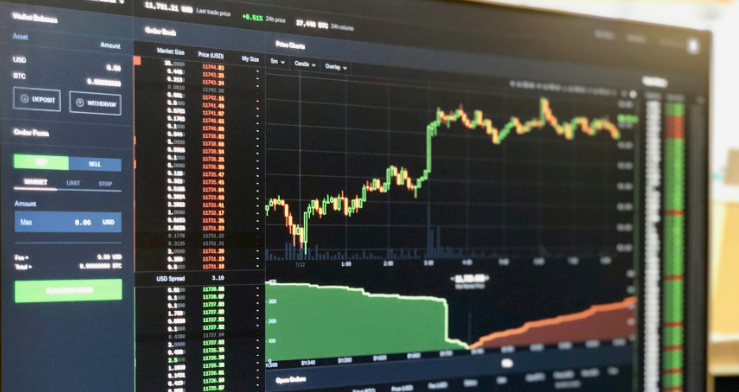
Introduction to Breakout Trading
Breakout trading is a popular strategy in the world of cryptocurrency trading, characterized by the practice of entering a position when the price breaks through a predetermined level of support or resistance. This approach capitalizes on the momentum that often follows such price movements. In the context of cryptocurrencies, where volatility can be significant, recognizing breakout opportunities has become a vital skill for traders seeking to maximize their profits.
Identifying key levels of support and resistance is essential in breakout trading. Support levels are price points where buying interest tends to overwhelm selling pressure, while resistance levels are where selling pressure typically surpasses buying interest. These levels can be identified using historical price data, trend lines, or indicators, such as the moving average or Bollinger Bands. When the price approaches these levels, traders closely monitor for signs of a breakout, looking for a decisive move that breaches these barriers.
The importance of breakout trading lies in its ability to signal potential trading opportunities. When a cryptocurrency’s price breaks above a resistance level, it implies that buyers are becoming more aggressive, which may lead to a significant price increase. Conversely, a price drop below a support level suggests increased selling pressure and may indicate a downtrend. Traders often harness these breakouts to enter positions, relying on the momentum that typically follows such movements.
In conclusion, breakout trading in the cryptocurrency market is a technique that hinges on understanding price dynamics and market behavior. By focusing on key levels of support and resistance, traders can better position themselves to capitalize on potential price movements, thus enhancing their trading strategies and overall success in the market.
Types of Breakouts in Cryptocurrency Trading
In cryptocurrency trading, breakouts are significant events that indicate a potential price movement either upwards or downwards. Therefore, understanding the different types of breakouts is essential for traders seeking to capitalize on market volatility. The two primary types of breakouts are bullish and bearish breakouts.
A bullish breakout occurs when the price of a cryptocurrency rises above a defined resistance level or pattern, often signaling an upward trend. Traders typically identify bullish breakouts through various price patterns such as ascending triangles, flags, and continuation patterns. These formations suggest that buyers are gaining control, and the increased demand may lead to higher prices. Confirming a bullish breakout often involves observing high trading volumes concurrent with the price exceeding resistance. This increase in volume supports the notion that the breakout is real and not a false signal.
Conversely, a bearish breakout takes place when the price falls below a significant support level, indicating a potential downward trend in the market. Traders can recognize bearish breakouts through patterns such as descending triangles or head and shoulders formations. In these scenarios, sellers are often dominant, and reduced demand may push the price downwards. Similar to bullish breakouts, a significant drop in price accompanied by increased volume is essential for confirming a bearish breakout’s legitimacy.
Additionally, traders employ technical indicators and analysis methods to enhance their ability to detect these breakouts. Tools like moving averages, Relative Strength Index (RSI), and Bollinger Bands offer insights into price momentum and potential reversal points. By integrating these analyses, traders can make more informed decisions about entering or exiting their positions in anticipation of these critical price movements.
Key Indicators for Breakout Trading
Breakout trading strategies are heavily reliant on various technical indicators that help traders identify potential opportunities within the cryptocurrency market. These indicators not only assist in spotting breakouts but also clarify market conditions, allowing traders to make informed decisions. Three essential indicators used in breakout trading are volume analysis, Moving Averages, and Bollinger Bands.
Volume analysis is a crucial component in breakout trading, as it reflects the number of shares or contracts traded in a specified period. A significant increase in volume often precedes a breakout, signaling that a price movement might be more sustainable. Traders typically look for volume spikes that accompany price movements near key levels of support or resistance. This indicates that large market participants are entering or exiting positions, thereby providing a confirmation signal for the breakout.
Moving Averages serve as another indispensable tool for traders engaging in breakout strategies. These indicators help smooth price fluctuations and provide a clearer picture of the trend. Simple Moving Averages (SMA) and Exponential Moving Averages (EMA) are the most common types. When the shorter-term moving average crosses above the longer-term moving average, it may signal a bullish breakout. Conversely, if the shorter moving average crosses below the longer one, it could signal a bearish breakout. This technique, often referred to as a “moving average crossover,” allows traders to identify shifts in momentum more effectively.
Lastly, Bollinger Bands are used to measure market volatility and identify potential breakout points. Comprising a middle band (SMA) and two outer bands set two standard deviations away from the SMA, these bands expand during high volatility and contract when the market is stable. Traders often look for price action that breaks above or below the bands. Such breakouts signal possible entry or exit points, as they suggest the start of a significant price movement in one direction or another.
In conclusion, utilizing volume analysis, Moving Averages, and Bollinger Bands can greatly enhance a trader’s ability to spot breakouts effectively. Recognizing these indicators and understanding their implications can lead to more successful trading strategies in the dynamic cryptocurrency market.
The Importance of Timing in Breakout Trades
Timing is a crucial element in successful breakout trading strategies. It involves knowing the precise moment to enter and exit the market, which can significantly impact your overall profitability. To understand the importance of timing, one must consider various factors, including market conditions, trading volume, and price movements.
When a cryptocurrency experiences a breakout, it means that its price has moved beyond a specified threshold, often accompanied by a surge in trading volume. Recognizing the right moment to initiate a trade can help investors capitalize on this upward momentum. Typically, successful traders look for breakouts that occur after a period of consolidation or range-bound movement, as these patterns often signal a significant shift in market sentiment.
The entry point for a breakout is typically identified just above the resistance level, with traders looking to confirm the breakout through increased volume and momentum. A delayed entry may result in missing out on potential profits, while an early entry might expose the trader to unnecessary risks due to false breakouts. Therefore, having well-defined entry criteria, such as waiting for a candle close above resistance or a specific volume threshold, is vital.
Once a trader has entered a position, establishing exit points becomes equally important. Effective exit strategies may involve setting stop-loss orders below the breakout point to minimize potential losses or implementing profit targets based on predetermined risk-reward ratios. Timing exits can also involve monitoring market indicators and price action closely to make informed decisions. Being agile and responsive to market changes helps in maximizing profits as the price moves in the desired direction.
In conclusion, the success of breakout trades is heavily dependent on the timing of entry and exit points. By refining these aspects of trading, investors can enhance their ability to navigate the volatile nature of the cryptocurrency market, ultimately safeguarding their investments while aiming for substantial returns.
Risk Management Strategies for Breakout Trading
Effective risk management is essential for success in breakout trading, where traders strive to capitalize on significant price movements following a breakout from established support or resistance levels. Traders should implement various strategies to mitigate potential losses and protect their capital during volatile market conditions.
One of the primary tools for risk management is the use of stop-loss orders. A stop-loss order is a predetermined price level at which the trader exits a losing position to prevent further losses. When setting a stop-loss, it is crucial for traders to consider the volatility of the asset and the specific breakout levels they are targeting. Placing the stop-loss too close to the market price may result in premature exit, while setting it too far away increases the risk of substantial loss. A common approach is to position the stop-loss just below the breakout level for a long position or above it for a short position. This allows traders to remain in the trade while minimizing potential losses.
In addition to stop-loss orders, position sizing is a vital aspect of risk management in breakout trading. Position sizing refers to determining the amount of capital to allocate to a particular trade based on the trader’s overall account size and risk tolerance. A general rule of thumb is to risk only a small percentage of the total capital on a single trade, often recommended at around 1-2%. This approach helps ensure that even a series of losses will not significantly deplete the trading account, allowing traders to survive and continue executing their strategies over the long term.
Moreover, traders should also consider diversifying their trades across different assets or markets. This can help spread risk and reduce the impact of a single adverse movement in one asset. By implementing effective risk management strategies, including stop-loss orders and disciplined position sizing, traders can enhance their resilience in navigating the complexities of breakout trading.
Common Mistakes to Avoid in Breakout Trading
Breakout trading can be a highly effective strategy in the dynamic world of cryptocurrency. However, traders often encounter various pitfalls that can undermine their trading performance. Awareness of these common mistakes is crucial for success.
One significant mistake is the lack of a clear trading plan. Many traders enter a trade impulsively, driven by fear of missing out (FOMO) on a potential breakout. To avoid this, it is essential to develop a well-defined trading strategy that includes entry and exit points, position sizing, and specific criteria for trade execution. By doing so, traders can make informed decisions rather than emotional ones.
Another common pitfall is failing to conduct proper market analysis before initiating a trade. Relying solely on hearsay or popular trends can lead to misguided decisions. Successful traders spend time analyzing price action, volume, and other technical indicators to determine the most favorable breakout points. Understanding market context and the implications of significant news events is also important in forming a robust trading strategy.
Traders may also neglect risk management, which is critical in mitigating losses. Setting stop-loss orders and adhering to them can protect against substantial losses during adverse market movements. Additionally, over-leveraging positions can increase the risk of a margin call, further jeopardizing trading success. It is advisable to only risk a small percentage of total capital on each trade.
Lastly, psychological factors such as impatience and greed can significantly impact a trader’s ability to execute breakout strategies effectively. It is vital to exercise discipline and remain patient, waiting for the right trading signals to emerge rather than succumbing to rash behaviors. Acknowledging the emotional aspect of trading can improve decision-making and overall success.
By recognizing these common mistakes and implementing effective strategies to avoid them, traders can enhance their breakout trading performance, paving the way for more profitable outcomes in the fast-paced cryptocurrency market.
Case Studies: Successful Breakout Trades
Breakout trading strategies have been pivotal in the world of cryptocurrency, allowing traders to capitalize on emerging market trends. In this section, we will analyze several real-world examples that illustrate how these strategies can lead to successful trades under specific conditions.
One notable case occurred in 2020 with Bitcoin, where the cryptocurrency was trading around the $10,000 mark. Traders identified a significant resistance level at this price point, established by multiple failed attempts to move above it. As Bitcoin began to rally, a breakout occurred when it surged past the $10,500 mark on substantial trading volume. This breakout not only indicated a shift in market sentiment but also attracted new buyers, propelling Bitcoin to reach an all-time high shortly thereafter. The conditions leading to this breakout included bullish macroeconomic factors, increased institutional interest, and a favorable market trend.
Another example can be seen with Ethereum in early 2021. Ethereum was experiencing a period of consolidation between $1,200 and $1,300 for several weeks. Traders closely monitored this range, and as the price finally broke above $1,350, it triggered a powerful upward movement. The breakout was supported by robust fundamental developments, including the growing adoption of decentralized finance (DeFi) applications and protocols built on the Ethereum network. This influx of positivity surrounding Ethereum allowed it to reach new price levels rapidly.
Hypothetically, consider a scenario where a lesser-known altcoin is approaching a resistance level after a period of accumulation. As traders observe an uptick in trading volume and bullish news surrounding the project, they may initiate long positions when the price breaks past pre-established resistance. This scenario emphasizes the importance of monitoring overall market conditions and news flow, as both can greatly influence the success of breakout strategies.
These case studies exemplify the effectiveness of breakout trading strategies in different contexts. By analyzing the market conditions leading to each significant price movement, traders can refine their approach and enhance their chances of successfully capitalizing on future breakouts.
Tools and Resources for Breakout Traders
Effective breakout trading strategies rely heavily on the utilization of various tools, software, and platforms designed to enhance a trader’s ability to identify profitable opportunities. The market landscape is replete with resources that cater to breakout traders, enabling them to make educated decisions based on real-time data and trend analyses.
One of the fundamental tools used in breakout trading is charting software. These platforms enable traders to visualize price movements and identify key levels of support and resistance. Popular charting tools, such as TradingView and Coinigy, provide advanced features like technical indicators, drawing tools, and customizable layouts to facilitate a thorough analysis of market trends. By employing these tools, traders can set clear entry and exit points based on identified breakouts.
Additionally, trading platforms that offer integration with multiple exchanges can be invaluable for breakout traders. Platforms like MetaTrader and Binance offer users the ability to easily switch between exchanges, access real-time price feeds, and execute trades swiftly. This is particularly crucial during breakout situations, where speed is often a determining factor in capturing the best price possible.
Moreover, various analytical tools are available that assist traders in forecasting potential breakouts. These tools utilize algorithms to analyze historical price movements and volume patterns, helping traders to detect anomalies that signify a possible breakout. Services like Coin Metrics and Glassnode provide on-chain analytics and market sentiments that can guide traders in their breakout strategies.
Lastly, educational resources such as webinars, online courses, and trading forums can play a significant part in developing a break-even breakout trading approach. Engaging with experienced traders through platforms like Reddit or specialized trading communities can provide insights and sharpen a trader’s skill set. By leveraging these tools and resources effectively, breakout traders can transform their strategies into a more systematic and successful endeavor.
Conclusion and Future Outlook
In this article, we explored various aspects of crypto breakout trading strategies, emphasizing their significance in the rapidly evolving cryptocurrency markets. The key points highlighted include the importance of identifying key support and resistance levels, the role of volume analysis in confirming breakouts, and the necessity of implementing risk management techniques to mitigate potential losses. These strategies allow traders to capitalize on price movements in cryptocurrencies effectively, especially during periods of heightened volatility.
Looking towards the future, it is essential to consider the potential trends that could shape the landscape of breakout trading strategies in the cryptocurrency sector. As trading technology advances, we anticipate the emergence of more refined algorithms and tools that can analyze market conditions in real-time. For instance, the rise of machine learning and artificial intelligence in trading systems could enable traders to execute strategies at unprecedented speeds, optimizing their responses to potential breakouts.
Moreover, the increasing interconnectivity of global markets and the advent of decentralized exchanges may influence breakout strategies significantly. Traders could benefit from greater access to liquidity and varied trading pairs, enhancing their ability to identify and act on breakout opportunities. Additionally, as market participants become more sophisticated, the strategies they employ to capitalize on breakouts will likely evolve, incorporating new insights and technologies.
Ultimately, while breakout trading remains a powerful tool for navigating the complexities of the cryptocurrency market, staying informed about emerging trends and innovations is crucial for ongoing success. Preparing for these changes will enable traders to adapt their strategies effectively and maintain a competitive edge in an ever-changing landscape.