





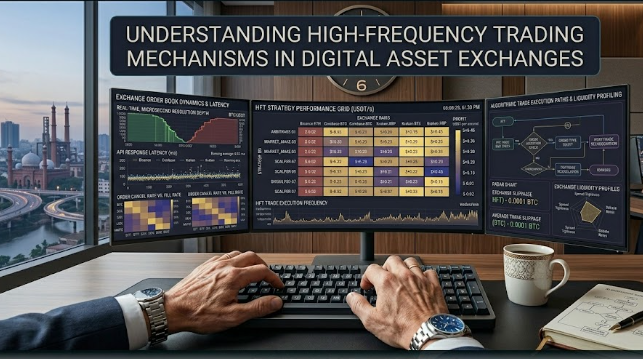
Introduction to High-Frequency Trading
High-frequency trading (HFT) is a sophisticated investment strategy characterized by extremely rapid trade execution, often in fractions of a second. Typically employed by quantitative hedge funds and proprietary trading firms, HFT leverages advanced algorithms and high-speed data networks to capitalize on minor price discrepancies across various exchanges. This trading method has gained widespread attention since its emergence in the early 2000s, fundamentally altering the landscape of financial markets.
The historical development of HFT can be traced back to technological advancements that enabled faster data transmission and improved computing power. Initially, trading was executed manually, which was considerably slower and labor-intensive. With the advent of electronic trading platforms, the industry saw the gradual transition towards algorithm-driven execution. By the late 1990s and early 2000s, regulatory changes, such as the decimalization of stock prices and the introduction of direct market access, further facilitated the rise of HFT, marking a shift in how trades are conducted.
The significance of high-frequency trading in modern financial markets is multifaceted. HFT contributes to market liquidity, as these firms execute numerous trades each day, effectively tightening bid-ask spreads. This improved liquidity often results in more efficient pricing. However, the impact of high-frequency trading is not solely positive. Critics argue that it can lead to increased market volatility and systemic risks, particularly during turbulent periods. Unlike traditional trading methods, which tend to rely on fundamental analysis and longer holding periods, HFT focuses on speed and volume, positioning itself as a key player in the evolving landscape of digital asset exchanges. The subsequent sections will delve deeper into the mechanics and implications of HFT in digital markets.
The Mechanisms Behind High-Frequency Trading
High-frequency trading (HFT) represents a sophisticated segment of finance that utilizes advanced algorithms to execute numerous orders at extremely high speeds. The crux of HFT lies in its reliance on algorithmic trading strategies, which are intricate sets of rules that direct trading activities based on predefined parameters. These algorithms scan vast amounts of market data to identify short-term trading opportunities, capitalizing on minute price discrepancies that may exist in various digital asset exchanges. By employing algorithms, HFT firms can analyze market conditions far more efficiently than human traders.
Another critical component of HFT is latency arbitrage, which exploits tiny delays in market data transmission. Traders engaging in latency arbitrage may take advantage of the difference in prices observed across distinct exchanges. For example, suppose a cryptocurrency is trading at a lower price on one exchange compared to another. In that case, a high-frequency trader can swiftly purchase the asset on the cheaper exchange and sell it on the more expensive one, thus profiting from the price differential. This practice underscores the value of speed in HFT, where milliseconds can significantly impact profitability.
Furthermore, the technological infrastructure underpinning high-frequency trading is paramount. Co-location services allow traders to place their servers in close proximity to the exchange’s data centers, minimizing latency and enhancing execution times. This strategic positioning provides traders with a competitive edge, as they can react to market changes far more rapidly than those operating remotely. Additionally, direct market access (DMA) facilitates immediate order execution, allowing traders to manage their positions in real-time. Collectively, these mechanisms form the backbone of high-frequency trading, driving its efficacy and profitability in the fast-paced world of digital asset exchanges.
Role of Algorithms in HFT
Algorithms are the backbone of high-frequency trading (HFT) within digital asset exchanges, providing traders with the speed, precision, and efficiency required to capitalize on fleeting market opportunities. These algorithms employ complex mathematical models and statistical techniques to analyze vast amounts of market data within fractions of a second, enabling them to execute trades much faster than human traders ever could. This characteristic of HFT is revolutionary, and its algorithms are meticulously designed to respond instantly to market conditions, thereby allowing firms to gain a competitive edge.
Among the various types of algorithms employed in high-frequency trading, two prominent ones are market-making algorithms and statistical arbitrage algorithms. Market-making algorithms operate by continuously placing buy and sell orders, profiting from the bid-ask spread. They facilitate liquidity in the markets and adjust their quotes based on real-time data to maintain a competitive edge. This adaptability is crucial in ensuring that these algorithms respond effectively to sudden price fluctuations or shifts in market sentiment.
On the other hand, statistical arbitrage algorithms leverage sophisticated data analysis to identify price discrepancies between correlated assets or markets. They exploit these discrepancies through a series of buy and sell transactions, aiming to secure profits as the market corrects itself. These algorithms heavily rely on historical data and statistical methods, including regression analysis, to forecast price movements and maximize returns.
Both types of algorithms play a critical role in determining the direction and volatility of the market. By filtering and synthesizing information at unprecedented speeds, they contribute to price discovery and ultimately enhance market efficiency. As trading technologies continue to advance, the sophistication of algorithms within high-frequency trading is expected to evolve, thus shaping the future of digital asset exchanges.
Market Impact of High-Frequency Trading
High-frequency trading (HFT) has become a pivotal component in modern digital asset exchanges, significantly impacting market dynamics. One of the primary influences of HFT is its effect on liquidity. By executing a vast number of trades in fractions of a second, high-frequency traders provide immediate buying and selling opportunities, thus enhancing market liquidity. This aspect is particularly beneficial in times of heightened trading activity, where users can enter and exit positions with minimal price slippage.
However, the liquidity provided by HFT can often be superficial. In markets experiencing stress or rapid downward movements, liquidity can vanish as high-frequency traders may withdraw their support to mitigate risk. This phenomenon was notably observed during the Flash Crash of 2010, where the absence of HFT liquidity contributed to extreme price swings, highlighting a potential negative impact of these trading strategies.
Another critical area affected by high-frequency trading is price discovery. HFT algorithms utilize complex models to analyze market data rapidly, allowing them to identify price discrepancies and capitalize on arbitrage opportunities. In theory, this should lead to more accurate pricing of digital assets over time. Nevertheless, such rapid adjustments can lead to greater short-term volatility, as observed during specific instances where algorithmic trading exacerbated price movements, triggering cascades of panic selling.
Furthermore, the increased volatility attributed to high-frequency trading may deter long-term investors who prefer stable conditions. Consequently, while HFT contributes to a more efficient and liquid marketplace, it also raises concerns about the sustainability of fair trading practices. As regulators and institutions grapple with these effects, it becomes increasingly crucial to balance the advantages of high-frequency trading against its potential risks and consequences for market participants.
Risks Associated with HFT in Digital Asset Exchanges
High-frequency trading (HFT) has significantly influenced trading strategies in digital asset exchanges, but it also brings a range of inherent risks that can affect market stability and integrity. One of the most notable concerns is the potential for flash crashes. These abrupt and seemingly irrational market declines can occur when numerous algorithms react to market events simultaneously. Such a scenario can lead to a rapid devaluation of cryptocurrencies, causing substantial financial losses for investors and unsettling market confidence.
Moreover, market manipulation is another serious risk tied to high-frequency trading. The algorithms used in HFT may enable certain traders to exploit minor price fluctuations and create artificial trading volumes. Practices such as spoofing, where traders place large orders with the intention of canceling them before execution, can mislead other market participants, creating an illusion of demand or supply. This manipulation damages fair market functionality and undermines trust among traders and investors alike.
Additionally, systemic risks are a considerable concern in the context of HFT in digital asset exchanges. The interconnected nature of trading platforms means that severe disruptions in one exchange can induce a cascading effect, affecting other exchanges and the broader financial ecosystem. Recent events in crypto markets have underlined this risk; instances of technical outages and liquidity crises—which can stem from HFT strategies—have resulted in increased volatility and erratic trading conditions.
Ultimately, while high-frequency trading can enhance market efficiency and provide liquidity, it also raises valid concerns regarding the sustainability and integrity of digital asset exchanges. As the landscape continues to evolve, it is crucial for market participants and regulators to implement measures that mitigate these risks while preserving the advantages that HFT can offer.
Regulatory Landscape for HFT
The regulatory landscape surrounding high-frequency trading (HFT) in digital asset exchanges is intricate and continually evolving. Various jurisdictions are adopting unique regulatory frameworks to oversee the activities inherent to HFT, aiming to ensure market integrity and investor protection. In the United States, for example, the Commodity Futures Trading Commission (CFTC) and the Securities and Exchange Commission (SEC) significantly influence the regulatory approach. They enforce rules that govern trading practices, focusing on transparency and accountability within the rapidly advancing digital asset ecosystem.
One of the major legislative efforts has been the implementation of the Markets in Financial Instruments Directive II (MiFID II) in the European Union. MiFID II enhances trading discipline by mandating stricter reporting and recordkeeping requirements, particularly for HFT firms. This regulation aims to reduce market manipulation and ensure that high-frequency traders adhere to ethical trading practices, thereby reinforcing the overall stability of financial markets.
Despite these measures, compliance presents significant challenges for companies engaged in HFT. The pace at which the technology and market conditions evolve complicates the alignment of trading strategies with existing and forthcoming regulations. This dynamic environment necessitates a robust compliance framework and constant monitoring of regulatory changes. Additionally, the dual role of regulatory bodies, which are tasked with both promoting innovation and maintaining market integrity, further exemplifies the delicate balance regulators must navigate. As cryptocurrency trading activities expand globally, effective regulation of high-frequency trading in digital asset exchanges will continue to be a topic of discussion and development, underscoring the need for adaptive regulatory practices.
Technological Backbone of High-Frequency Trading
The effectiveness of high-frequency trading (HFT) is intricately tied to the technology and infrastructure that supports it. At the heart of HFT operations are robust trading platforms designed to execute a myriad of transactions within a fraction of a second. These platforms are specifically built to process massive amounts of data and execute trades at lightning speeds, enabling traders to capitalize on minute market fluctuations.
Another critical element is algorithm development, wherein sophisticated algorithms are crafted to analyze market data and determine optimal trading strategies. These algorithms can cover various strategies, from arbitrage to market making, significantly enhancing the efficiency of trading operations. The role of quantitative analysts, commonly referred to as quants, is essential in this stage, as they leverage mathematical models to refine and optimize these algorithms, ensuring they remain competitive.
Data feeds are fundamental in HFT as well, providing real-time market information necessary for executing trades accurately. These feeds must be ultra-low latency, as even minor delays can adversely impact trading performance. HFT firms often employ multiple data sources to ensure redundancy and reliability, further maximizing their operational efficiency.
Finally, cybersecurity stands as a crucial component of HFT infrastructure. With the increasing prevalence of cyber threats, ensuring the integrity of trading systems is paramount. HFT firms invest heavily in cybersecurity measures to protect sensitive data, prevent unauthorized access, and maintain the overall reliability of their trading platforms. Robust security protocols and regular audits are fundamental practices aimed at safeguarding assets and maintaining trust within the trading community.
Future Trends in High-Frequency Trading
High-frequency trading (HFT) has evolved significantly over the past decade, and as digital asset exchanges gain traction, the trajectory of HFT continues to develop. One key trend is the increasing integration of machine learning technologies into trading strategies. These advanced algorithms can process vast amounts of data at unprecedented speeds, enabling traders to identify market patterns and make predictive analyses with greater accuracy. The application of machine learning in HFT allows for adaptive trading strategies that can adjust in real-time to changing market conditions, enhancing the overall effectiveness of trades in the digital asset sphere.
Similarly, artificial intelligence (AI) is playing a crucial role in the evolution of high-frequency trading mechanisms. AI algorithms can analyze market behaviors, monitor news sources, and evaluate the sentiment surrounding specific cryptocurrencies, thus providing traders with insights that were previously inaccessible. This intelligence can lead to more informed decision-making processes, allowing traders to execute highly strategic trades even in volatile market conditions. The symbiosis of AI and HFT is paving the way for a new era where automated systems outperform traditional trading methodologies.
Moreover, the continuous evolution of market dynamics, influenced by regulatory changes and increased participation from retail investors, will inevitably shape HFT strategies in the digital asset markets. As liquidity patterns shift and new trading venues emerge, high-frequency trading firms will need to adapt their approaches to stay competitive. The advent of decentralized exchanges, for instance, could disrupt established HFT practices by decentralizing liquidity and altering the speed at which information propagates through the market.
Consequently, it is imperative for traders and firms engaged in high-frequency trading to remain vigilant and responsive to these trends. By embracing machine learning and AI technologies while adapting to an evolving market landscape, HFT practitioners can harness the potential of digital assets, ultimately optimizing their trading strategies for success.
Conclusion and Key Takeaways
High-frequency trading (HFT) mechanisms play a significant role in the operations of digital asset exchanges, influencing market dynamics and liquidity. Throughout this discussion, we explored the foundations of HFT, including its reliance on sophisticated algorithms and high-speed data transmission. These technologies have allowed traders to execute a multitude of transactions in a fraction of a second, giving them a competitive edge in the constantly evolving financial landscape.
One of the primary advantages of HFT is enhanced liquidity, which leads to tighter spreads and more efficient markets. However, it also introduces complexities that can affect overall market stability. The speed at which trades occur can sometimes lead to erroneous transactions or flash crashes, prompting regulatory scrutiny and the need for oversight. As traders and market participants, understanding these mechanisms is crucial not only for individual success but also for promoting a healthier market environment.
Moreover, the impact of high-frequency trading extends beyond mere performance metrics; it has implications for market fairness and equity. The disparity between institutional traders employing HFT strategies and retail traders can create potential challenges. Educating oneself about these mechanisms is therefore essential for anyone looking to navigate the digital asset landscape effectively.
In summary, grasping the intricacies of high-frequency trading mechanisms in digital asset exchanges is vital for traders of all levels. By recognizing both the benefits and challenges associated with HFT, participants can better adapt their strategies and contribute to a more balanced trading ecosystem. As the digital finance space continues to evolve, the importance of understanding HFT will only grow, reinforcing the necessity for ongoing education and engagement with emerging technologies.