




Introduction to Decentralized Finance (DeFi)
Decentralized Finance, commonly referred to as DeFi, represents an innovative financial ecosystem that leverages blockchain technology to recreate and improve upon traditional financial systems. Unlike conventional finance, which relies on intermediaries such as banks and financial institutions, DeFi operates on a decentralized network, facilitating peer-to-peer interactions directly between users. This fundamental shift not only enhances accessibility but also reduces costs associated with financial transactions.
The tenets of DeFi are built around key principles such as transparency, accessibility, and control. Transparency is achieved through the use of open-source protocols, allowing anyone to audit the code underlying these platforms. Accessibility is one of DeFi’s most compelling attributes, as it enables anyone with an internet connection to participate in a global financial marketplace, regardless of background or location. Control is returned to users, who have sole ownership of their digital assets, eliminating the need for third-party custodians.
Historically, DeFi has evolved significantly over the past few years. Initially gaining traction with the advent of blockchain technologies such as Bitcoin, the movement expanded with Ethereum’s introduction of smart contracts, which enabled more complex financial operations. Projects such as decentralized exchanges, lending platforms, and yield farming protocols proliferated, marking a new era of innovation in financial services. The rise of DeFi is indicative of a broader trend towards democratizing finance, fostering an environment where financial products and services are available to a wider audience.
As the DeFi landscape continues to mature, it presents unique opportunities and challenges, pushing both individual and institutional actors to rethink their approaches to finance. The significance of decentralized finance in the context of modern economics cannot be overstated, as it represents a pivotal development that could redefine the future of financial interactions.
The Importance of Decentralization in Finance
Decentralization in finance represents a transformative shift in how financial transactions are conducted. Unlike traditional systems dominated by centralized authorities, decentralized financial ecosystems empower individuals by allowing direct peer-to-peer interactions. This critical aspect of decentralization fosters a greater sense of transparency within financial transactions. Every transaction is recorded on a public ledger, such as blockchain technology, enabling any participant to verify transactions independently. This transparency significantly reduces the potential for fraud and manipulation, ensuring that all acts within the system are open to scrutiny.
Moreover, decentralization reduces reliance on central authorities, such as banks and governments, which often control the flow of capital and impose substantial fees. In decentralized finance (DeFi), users maintain control over their funds, enabling them to transact freely without intermediaries. This autonomy not only enhances user satisfaction but also promotes financial inclusion for those who might not have access to conventional banking systems. For instance, platforms such as Uniswap and Aave illustrate how users can trade and lend assets directly without the need for a central institution, thereby democratizing access to financial services.
Security is another compelling advantage of decentralization. By distributing data across a network of nodes, decentralized systems minimize the risk of single points of failure. In contrast to traditional financial institutions, which are often targeted by cyberattacks, decentralized financial platforms utilize cryptographic techniques to safeguard funds and personal data. For example, in the event of a hack, the decentralized nature of blockchain technology can mitigate the impact, as compromised nodes do not affect the entire network. This layered security model enhances overall trust among users, further solidifying the appeal of decentralized finance.
Wealth Creation Mechanisms in DeFi
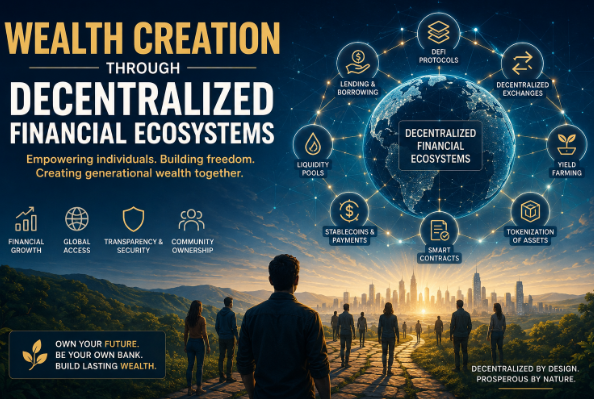
Decentralized Finance (DeFi) has revolutionized the finance sector, introducing innovative mechanisms for wealth creation that empower users to manage their financial resources independently. Key among these mechanisms are yield farming, liquidity provision, and staking, all of which utilize cryptocurrencies to yield substantial returns.
Yield farming, or liquidity mining, allows users to earn rewards by providing liquidity to decentralized exchanges (DEXs). In this scenario, individuals lock their cryptocurrencies in smart contracts, facilitating trading and, in return, receive a share of the trading fees or governance tokens. This process not only incentivizes liquidity but also promotes the growth of the DeFi ecosystem. Yield farming has the potential to generate high returns, attracting a vast number of participants seeking to leverage their crypto assets.
Liquidity provision is closely linked to yield farming, where users supply their tokens to liquidity pools on DEXs. In return for their contributions, liquidity providers earn transaction fees proportional to their share of the pool. As more users engage with the platform, the fees generated can lead to passive income streams. This mechanism has characterized DeFi platforms, allowing users to enhance their capital efficiency.
Staking is another significant mechanism within the DeFi landscape, in which users lock their cryptocurrencies in a network to support its operations, such as transaction validation. In exchange for staking their assets, participants receive rewards, often in the form of additional tokens. This serves to align the interests of network participants while providing an avenue for passive income.
In essence, the wealth creation opportunities in decentralized financial ecosystems are becoming increasingly evident. By utilizing these mechanisms effectively, users can build their wealth, participate in the governance of their investments, and contribute to a rapidly expanding economy driven by innovative financial technologies.
Risks and Challenges in DeFi Investment
Decentralized Finance (DeFi) represents a significant shift in the financial landscape, providing innovative alternatives to traditional banking systems. However, investing in DeFi is not without its risks and challenges. One of the most concerning issues is the vulnerability of smart contracts. These digital contracts are at the heart of DeFi platforms, automating transactions without intermediaries. Nonetheless, if a smart contract is poorly coded, it can lead to exploitable flaws, resulting in substantial losses for investors. Vulnerabilities have been exploited in high-profile cases, leading to millions of dollars lost.
In addition to technical risks, regulatory uncertainties present another challenge for DeFi investors. As governments worldwide grapple with the implications of cryptocurrencies and blockchain technology, regulatory frameworks are evolving. This shifting landscape can create volatility and confusion for investors. New regulations can impact the functionality of DeFi platforms or even render certain projects non-compliant, which may jeopardize investments and lead to unexpected consequences.
Furthermore, the inherent volatility of cryptocurrencies poses a risk that cannot be overlooked. Prices of tokens can fluctuate dramatically within short periods, often influenced by market dynamics, investor sentiment, or macroeconomic factors. Such volatility can lead to rapid gains or steep losses. Investors may find it hard to navigate these fluctuations, particularly without experience in managing such unpredictable assets. Furthermore, the lack of historical data due to the nascent stage of DeFi makes predictions particularly challenging.
In summary, while DeFi opens up exciting possibilities for wealth creation, it is crucial for investors to conduct thorough research and understand the risks associated with smart contract vulnerabilities, regulatory uncertainties, and cryptocurrency volatility. Awareness and diligence are paramount for anyone looking to engage with DeFi ecosystems.
Case Studies of Successful Wealth Creation
Decentralized Finance (DeFi) has revolutionized the way individuals and organizations approach wealth creation. By leveraging blockchain technology, various innovative strategies have been employed that enable wealth accumulation outside of traditional financial systems. This section highlights several case studies that illuminate the pathways of successful wealth creation through DeFi.
One noteworthy example is a young entrepreneur who ventured into yield farming. By allocating capital to liquidity pools in decentralized exchanges, they were able to earn significant returns on their investments. By continuously reinvesting the earnings into high-APR (Annual Percentage Rate) pools, this individual multiplied their initial investment within a year. This success underscores the potential of yield farming as a viable strategy in the DeFi ecosystem.
Another case involves a small organization that utilized tokenization to raise capital. By creating a unique token that represented asset ownership, they successfully attracted investors’ interest. This token navigated existing barriers by permitting fractional ownership of high-value assets, making investment accessible to a broader audience. The organization was able to complete its fundraising goal, illustrating how token economics can facilitate wealth creation.
A collective of investors also found success through a decentralized autonomous organization (DAO), which allowed them to pool resources and make collective investment decisions. They carefully curated a diverse portfolio that included various cryptocurrencies and blockchain projects. The DAO’s structure fostered a community-oriented approach, leading to sound investment choices based on group consensus. This collaborative model demonstrated the strengths of decentralized governance in maximizing returns.
These case studies exemplify that through strategic approaches within DeFi, individuals and organizations can effectively create and enhance their wealth. The real-time adaptability and innovative solutions inherent in decentralized finance continue to provide new opportunities for wealth creation.
The Role of Community and Governance in DeFi
Decentralized Finance (DeFi) represents a significant shift in the traditional financial systems, with its foundations deeply rooted in the principles of community involvement and decentralized governance. At the core of DeFi ecosystems, the community functions as the essential pillar that influences the development and evolution of projects. Unlike traditional finance systems, which often centralize decision-making power, DeFi democratizes this process, empowering users to actively participate in governance decisions. This is primarily achieved through decentralized autonomous organizations (DAOs), which facilitate collective decision-making based on consensus from token holders.
The governance structure of DeFi projects varies significantly, often allowing token holders to propose enhancements, modifications, and new initiatives. Such a model ensures that community members can voice their opinions and vote on the trajectory of the project, influencing everything from protocol upgrades to voting on treasury expenditures. This participatory governance fosters a sense of ownership and accountability among community members, encouraging them to align their interests with the long-term success of the project.
Moreover, community engagement is pivotal in driving innovation and project resilience. Through active discussions and collaboration, users can share insights, identify challenges, and propose effective solutions, ultimately contributing to the project’s robustness. The feedback loop created by community interactions enhances transparency and trust, as stakeholders feel invested in the outcomes of governance decisions.
In a decentralized ecosystem, the coordination of governance and community involvement becomes essential in navigating the complexities of financial systems. The emphasis on user participation not only empowers stakeholders but also promotes resilience against potential vulnerabilities. This ecosystem reflects a significant departure from traditional structures, prioritizing collaboration and shared responsibility among users, which is integral to the concept of wealth creation in Decentralized Financial frameworks.
Future Trends in Decentralized Finance
The landscape of decentralized finance (DeFi) is rapidly evolving, influenced by a myriad of factors that aim to enhance its functionality and regulatory compliance. One notable trend is the increasing scrutiny from regulators worldwide. As DeFi platforms gain popularity and attract significant capital, the need for regulatory frameworks becomes more pressing. Regulatory bodies are beginning to focus on ensuring consumer protection and combating money laundering without stifling innovation. This is expected to shape the future of DeFi, mandating that platforms become more transparent and accountable, thereby instilling greater confidence among users.
Furthermore, the integration of traditional finance (TradFi) with DeFi is set to revolutionize the financial industry. As banks and financial institutions explore partnerships with DeFi platforms, a convergence of traditional and decentralized systems is envisioned. This synergy can enhance liquidity, expand the range of financial products available, and potentially reduce transaction costs for consumers. Such collaboration might lead to a hybrid financial ecosystem where users derive benefits from both realms, including the security of established institutions and the innovative features of decentralized alternatives.
Moreover, the emergence of new financial products is anticipated to significantly influence the DeFi sector. Financial instruments such as decentralized insurance, synthetic assets, and innovative lending solutions are already gaining traction, with firms continuously developing unique products tailored to meet diverse user needs. These offerings not only enhance the accessibility of financial services but also provide users with options that were previously unavailable in conventional financial markets. As the DeFi landscape continues to mature, it is likely that the introduction of new products will drive participation and foster community engagement.
Building Your Own Wealth Creation Strategy in DeFi
Creating a successful wealth strategy within the decentralized finance (DeFi) landscape requires careful planning and deliberate actions. As a starting point, it is paramount to assess your risk tolerance. DeFi markets can be highly volatile, and understanding your capacity for loss is crucial before venturing into any investment opportunity. Begin by determining how much capital you can afford to allocate to DeFi projects without jeopardizing your financial security.
Next, portfolio diversification should be a critical consideration in your wealth creation strategy. By spreading your investments across various assets and platforms, you can mitigate risks associated with market fluctuations. Consider including a mix of stablecoins, governance tokens, and other cryptocurrencies that demonstrate potential for growth. Furthermore, researching and selecting projects with robust fundamentals and reputable teams can enhance your investment’s durability.
Education plays an essential role in developing a wealth strategy in DeFi. The realm of decentralized finance is constantly evolving, with new protocols and technologies emerging regularly. Keeping informed about the latest trends, regulatory developments, and high-profile projects can help you make educated decisions. Participate in online forums, follow expert analyses, and engage with communities to build a comprehensive understanding of the ecosystem. Moreover, many platforms offer resources and tutorials that can equip you with the necessary knowledge needed to navigate DeFi effectively.
Lastly, establish a clear set of goals for your wealth creation journey. Whether you aim to generate passive income through lending protocols or seek to enhance your capital through trading, having specific objectives will provide direction. Regularly review your investment performance, adjust your strategies as needed, and commit to continuous learning to adapt to the dynamic nature of the DeFi space.
Conclusion and Call to Action
In summary, decentralized financial ecosystems represent a pivotal shift in the way wealth can be created and managed. By leveraging blockchain technology, these platforms offer a transparent, efficient, and inclusive alternative to traditional financial systems. Key points discussed throughout this blog post highlight the benefits of decentralization, including enhanced accessibility to financial services, the potential for innovative investment opportunities, and the empowerment of individuals to take control of their financial futures.
Throughout the various segments of this discussion, we have emphasized the advantages that decentralized finance (DeFi) platforms offer over conventional banking institutions. These advantages include opportunities for higher returns through yield farming and liquidity provision, as well as reduced fees and quicker transactions. Furthermore, decentralized finance fosters a global ecosystem where individuals from varying economic backgrounds can engage without the restrictions typically imposed by centralized entities.
As the landscape of decentralized finance continues to evolve, it is essential for individuals to stay informed about developments in this space. The potential for innovative financial products and services is tremendous, and engaging with these opportunities early can significantly impact personal wealth creation strategies. We encourage readers to explore DeFi platforms, participate in community discussions, and consider investment strategies that align with their financial goals.
Ultimately, embracing decentralized financial ecosystems not only promotes individual wealth but also encourages a more equitable financial landscape. Join the DeFi movement today and take actionable steps toward enhancing your financial future. Discover the possibilities that decentralized finance holds and become a part of this transformative journey.