





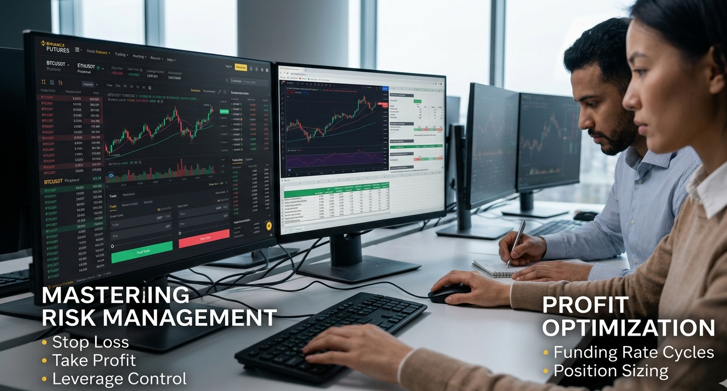
Introduction to Binance Futures Trading
Binance Futures trading refers to the ability to enter into contracts that allow investors to speculate on the future price of cryptocurrencies. It operates under the Binance exchange, which is one of the largest and most popular cryptocurrency trading platforms globally. Participants can trade various cryptocurrencies on futures contracts, which are agreements to buy or sell an asset at a predetermined price at a specific future date.
A critical feature of Binance Futures is the use of leverage. Leverage enables traders to control a larger position size than their actual capital would ordinarily allow. For instance, using a leverage of 10x means that with a capital of $1,000, a trader can open a position worth $10,000. This magnification of potential profits also amplifies the risk, as losses can exceed the initial investment. Consequently, effective risk management strategies are essential for successful futures trading.
Another essential element is the margin, which refers to the minimum amount required to open and maintain a leveraged position. Traders must deposit a certain percentage of the total trade value as margin in order to secure their positions. Two common types of contracts available on Binance Futures are perpetual contracts and futures contracts with an expiration date. Perpetual contracts do not have a set expiration, allowing for greater flexibility, whereas traditional futures contracts will settle on a specific date.
The growing popularity of Binance Futures can be attributed to various factors, including high liquidity, a wide range of trading pairs, and intuitive user interface. By offering diverse options to traders, Binance has positioned itself as a competitive choice for both novice and experienced investors looking to engage in futures trading.
Understanding the Risks of Futures Trading
Futures trading involves several intrinsic risks that traders must comprehend to engage in the market prudently. The primary risk associated with futures trading on platforms like Binance is market volatility. Sudden fluctuations in market prices can result in substantial gains; however, they can also lead to significant losses. For instance, news events or shifts in market sentiment can cause prices to swing sharply, often catching traders off guard, particularly if they maintain positions without proper risk management strategies.
Another critical aspect of futures trading risk is leverage risk. Futures contracts allow traders to control large amounts of an asset with a relatively small capital outlay due to the use of leverage. While this can amplify profits, it similarly heightens the potential for loss. If a trader utilizes high leverage, even minor market movements can lead to margin calls or complete liquidation of their position, emphasizing the need for caution and thorough understanding of margin requirements and leverage implications.
Liquidity risk is also a concern in futures markets. It refers to the potential difficulty in buying or selling contracts without affecting the market price significantly. Low liquidity can stall a trader’s ability to execute trades at desired prices, especially during volatile periods. For example, if a trader seeks to exit a position but the market is illiquid, they may need to accept a far lower price than expected, leading to a detrimental outcome for their trading strategy.
In navigating the risks of futures trading on Binance, it is vital for traders to familiarize themselves with these potential pitfalls and develop risk management strategies that include proper position sizing, utilization of stop-loss orders, and maintaining an awareness of overall market conditions. Understanding these risks lays the groundwork for informed trading decisions and can facilitate better outcomes in the futures market.
Establishing a Risk Management Strategy
In the realm of futures trading, particularly on platforms like Binance, establishing a comprehensive risk management strategy is paramount. The volatile nature of the cryptocurrency markets necessitates that traders not only seek profit but also safeguard their investments against potential losses. A robust risk management strategy serves as the foundation for sustained trading success, ensuring traders can withstand the inevitable fluctuations in market conditions.
One of the first techniques to consider is the implementation of stop-loss orders. These orders are designed to limit losses by automatically closing a position when the asset reaches a predetermined price. By using stop-loss orders, traders effectively cap their potential losses, allowing them to focus on other aspects of trading without the constant worry of unforeseen market shifts.
Another essential component of a sound risk management strategy is managing position sizes. This involves determining the appropriate amount of capital to risk on each trade, often informed by a trader’s risk tolerance. By adhering to the principle of not risking more than a certain percentage of their trading capital on any single trade, traders can minimize their exposure and improve their long-term viability in the market.
Furthermore, traders may employ hedging strategies to mitigate risk exposure. Hedging involves taking an offsetting position in a related asset or using derivatives to protect against adverse price movements. This technique can be particularly useful in uncertain market conditions, enabling traders to preserve capital while maintaining a presence in the market.
In conclusion, effective risk management is a key factor in successful futures trading. By utilizing techniques such as stop-loss orders, managing position sizes, and implementing hedging strategies, traders can significantly reduce their risk exposure while optimizing profit potential. Establishing a solid risk management framework will ultimately support a trader’s efforts on platforms like Binance, leading to more informed and strategic trading decisions.
Leveraging for Profit: Things to Consider
In the realm of Binance Futures trading, leveraging represents a pivotal strategy that traders can employ to magnify potential profits. Leverage enables traders to control larger positions in the market than their actual capital would otherwise allow. For example, with a leverage of 10x, a trader can open a position worth $10,000 using only $1,000 of their own funds. This amplified buying power is attractive; however, it also comes with increased risk.
Understanding how leverage operates in Binance Futures is crucial for any trader aiming to optimize their profit potential. While high leverage can lead to substantial gains, it can also lead to significant losses. For this reason, it is essential to utilize leverage judiciously. Traders should meticulously assess their risk tolerance, as well as the volatility of the assets they are trading, before deciding the level of leverage they wish to employ.
Moreover, traders should be mindful of the margin requirements set forth by Binance Futures. Each position opened with leverage requires a certain percentage of equity to be maintained in the trader’s account, known as the margin. If the market moves against a trader, they might face a margin call, at which point they are required to either add more funds to maintain the position or risk liquidation of their assets. Thus, effective risk management is indispensable when engaging in trades with leverage.
In summary, while leveraging can significantly enhance profit opportunities in Binance Futures trading, it is imperative that traders approach this strategy with a comprehensive understanding of both its benefits and potential pitfalls. Employing careful planning and robust risk management strategies will assist traders in optimizing their profits while mitigating the risks associated with trading on margin.
Technical Analysis for Profit Optimization
Technical analysis plays a significant role in optimizing profits in Binance Futures trading. It encompasses various tools and techniques that traders utilize to analyze market trends, define entry and exit points, and manage potential risks effectively. By focusing on price movements and trading volume data, traders can derive valuable insights to make informed decisions that lead to profit optimization.
One common technique employed in technical analysis is the identification of chart patterns. Patterns such as head and shoulders, triangles, and flags can provide signals regarding potential market movements. For instance, a bullish flag pattern may indicate a continuation of an uptrend, prompting traders to enter long positions in Binance Futures, while a bearish head and shoulders may suggest a reversal, advising traders to consider short positions.
Indicators also play a crucial role in aiding technical analysis. Tools like the Relative Strength Index (RSI), Moving Average Convergence Divergence (MACD), and Bollinger Bands provide quantitative aspects that help traders identify overbought and oversold conditions, as well as the strength of a given trend. By integrating such indicators into their trading strategy, traders can better time their market entries and exits, ultimately leading to improved profitability.
Trend analysis, which involves assessing the general direction of the market, is another fundamental aspect of technical analysis. Recognizing whether a market is in an uptrend, downtrend, or ranging phase allows traders to align their strategies accordingly. Entering trades in the direction of the prevailing trend significantly enhances the likelihood of profit optimization, as trades are placed with the market momentum rather than against it.
In conclusion, technical analysis offers valuable methods for profit optimization in Binance Futures trading. By utilizing chart patterns, indicators, and trend analysis, traders can make informed decisions that enhance their profitability while managing risks effectively.
Fundamental Analysis and its Role in Futures Trading
Fundamental analysis is an essential component of futures trading, serving as a framework to evaluate the intrinsic value of assets and predicting potential future movements in price. This analysis often involves examining economic indicators, market news, and geopolitical events, all of which can significantly impact asset prices. By understanding the factors that drive supply and demand, traders can make informed decisions that align with market trends.
Market news, such as interest rate changes, employment reports, and economic growth data, plays a crucial role in fundamental analysis. These indicators provide insights into the overall economic health and can influence traders’ sentiment. For instance, an increase in interest rates may strengthen a currency, while poor employment data could lead to a decline. By staying updated on such information, traders can better gauge market movements and adjust their strategies accordingly.
Additionally, geopolitical events, including elections, trade agreements, or conflicts, can have profound effects on futures markets. Traders must consider how these events can alter the supply chain or shift market dynamics. By integrating this knowledge into their trading strategies, they can enhance their market responsiveness and optimize profit outcomes. Moreover, this awareness can lead to better risk management practices, allowing traders to identify potential pitfalls in their positions.
Incorporating fundamental analysis within a trading strategy not only enhances decision-making but also enriches a trader’s ability to forecast market movements. By combining this approach with technical analysis, traders can develop a more holistic view of the markets. This combined methodology ensures they are not solely reliant on price charts but are also informed by underlying economic variables that influence market behavior. By mastering fundamental analysis, futures traders can effectively navigate the complexities of the markets and potentially increase their success in achieving favorable returns.
Creating a Trading Plan for Success
Developing a personalized trading plan is a crucial step for anyone engaging in Binance Futures trading. A thoughtfully crafted trading plan not only enhances decision-making but also aligns trading activities with individual risk tolerance and profit objectives. To do this effectively, several key components need to be incorporated.
Firstly, entry and exit strategies are fundamental within the trading plan. An entry strategy should outline the specific criteria for entering a trade, which may include technical indicators, market trends, or specific price levels. Similarly, an exit strategy must define clear objectives for closing trades, regardless of whether they result in profit or loss. This proactive approach helps to prevent emotional decision-making during trading sessions, thereby facilitating a more disciplined trading practice.
Another vital aspect of a trading plan is establishing risk-reward ratios. This metric helps traders quantify the potential profit against the risk of loss for each trade. For instance, a favorable risk-reward ratio might be set at 1:3, meaning that for every unit of risk, there is a potential to gain three units. By measuring each trade against this ratio, traders can ensure that the potential profits outweigh the risks, thus supporting the overall integrity of their trading plan.
Discipline cannot be understated in the context of trading. Adhering strictly to the pre-determined plan requires a strong degree of self-control. Traders must resist the temptation to deviate from their strategies based on momentary market fluctuations or emotional impulses. Building a habit of following the trading plan not only reinforces discipline but also enhances long-term trading outcomes.
By incorporating these essential elements into a trading plan, traders can set a solid foundation for successful operations in Binance Futures trading, substantially increasing their likelihood of achieving desired profit outcomes while managing risk effectively.
Psychological Aspects of Trading: Maintaining Focus and Discipline
In the dynamic world of trading, especially in platforms like Binance Futures, psychological challenges are prevalent among traders. These challenges can hinder decision-making and affect overall performance. Maintaining focus and discipline becomes crucial for success in this high-stakes environment. The pressures of profit and loss can lead to emotional turmoil, which in turn can result in impulsive trading decisions or fear-based withdrawals. Thus, cultivating a disciplined approach while trading not only enhances profitability but also fosters a healthier trading mindset.
The first step in managing psychological challenges is self-awareness. Traders must recognize their emotional responses to market fluctuations. By identifying triggers that induce anxiety or euphoria, one can develop strategies to counteract these emotions. For example, setting predetermined entry and exit points for trades helps eliminate the emotional component, allowing for a more methodical approach. This discipline aids in maintaining consistency, which is crucial for long-term success in Binance Futures trading.
Moreover, traders can benefit from establishing a routine that includes regular breaks, exercise, and relaxation techniques. Such practices can mitigate stress and help maintain mental clarity. Additionally, engaging with a trading community can provide support and accountability, further reinforcing disciplined habits. Sharing experiences with peers allows for a broader perspective and can introduce new strategies for coping with the emotional aspects of trading.
Incorporating mindfulness practices, such as meditation or deep-breathing exercises, can significantly enhance emotional control. These techniques help traders stay grounded during market volatility, allowing for clearer reasoning in decision-making. Overall, by focusing on developing a disciplined mindset and embracing emotional intelligence, traders can optimize not only their trading outcomes but also their overall psychological well-being.
Conclusion
In the realm of Binance futures trading, achieving a harmonious balance between risk management and profit optimization is crucial for long-term success. Throughout this blog post, we have explored various strategies aimed at enhancing trading performance while simultaneously safeguarding against the inherent volatility of cryptocurrency markets. Key aspects such as proper leverage utilization, robust stop-loss mechanisms, and emotional discipline have been emphasized as essential components in the risk management framework.
Additionally, the importance of continuous education has been highlighted. As the cryptocurrency landscape evolves, traders must remain informed about market trends, emerging technologies, and new trading strategies. This emphasis on knowledge ensures that traders are well-equipped to adapt their methods in response to changing market conditions, thereby optimizing profit potential while minimizing exposure to risks.
Moreover, it is imperative for traders to maintain a realistic understanding of their risk tolerance. Recognizing one’s limits and setting achievable trading goals forms the foundation of a sustainable trading practice. By developing a personalized trading plan grounded in effective risk management principles, traders can approach Binance futures trading with greater confidence.
Ultimately, mastering Binance futures trading requires diligence, adaptability, and a commitment to striking the appropriate balance between risk and returns. Encouraging the implementation of learned strategies, alongside continuous refinement of skills, will empower traders to navigate the complexities of the market and enhance their overall trading proficiency.