





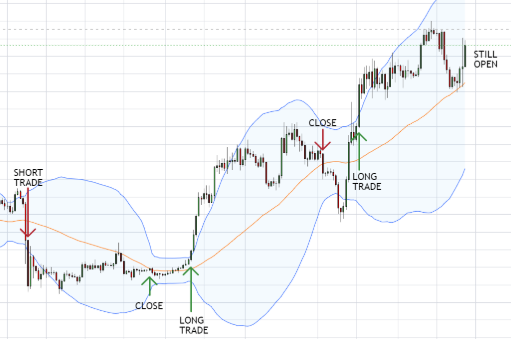
Introduction to Momentum Trading
Momentum trading is a strategy that aims to capitalize on the continuation of existing market trends. It is based on the belief that assets that have been performing well in the recent past will continue to do so in the near future, while those that have been underperforming are expected to continue on their downward trajectory. This strategy is applicable across various asset classes, but it has gained significant traction within the cryptocurrency market, which is characterized by its high volatility and rapid price movements.
One of the fundamental principles of momentum trading is the concept of price momentum, which refers to the rate of acceleration of an asset’s price or volume. Traders utilizing momentum strategies often rely on technical indicators such as moving averages and the Relative Strength Index (RSI) to identify points at which an asset’s price is likely to continue trending in a particular direction. By analyzing these indicators, traders can make informed decisions about when to enter or exit a trade.
The cryptocurrency market has shown a unique propensity for momentum trading due to its inherent volatility. Prices in this market can fluctuate dramatically over short periods, providing numerous opportunities for traders to profit. For instance, a trader might identify a cryptocurrency that has recently broken above a key resistance level and enter the market, anticipating that the price will continue to rise as momentum builds. The ability to react swiftly to market changes is crucial in this space, as conditions can change rapidly.
Furthermore, momentum trading has become popular among both novice and experienced traders Edwin due to its straightforward nature and the potential for significant returns. It allows traders to harness both market trends and the psychological aspects of trading, as many participants often chase price increases or sell off after declines. The combination of these factors contributes to the effectiveness of momentum strategies in the ever-evolving landscape of cryptocurrencies.
The Mechanics of Crypto Momentum Trading
Momentum trading in the cryptocurrency market involves capitalizing on the continuation of existing price trends. Traders aim to identify whether an asset will maintain its price movement in a given direction, and various technical analysis tools are employed to capture these trends effectively. Understanding the mechanics behind momentum trading can enhance a trader’s ability to make informed decisions.
Key elements of momentum trading include trend analysis, volume assessments, and the recognition of price patterns. Trend analysis serves as the foundation, where traders typically look for directional movements in crypto prices over specific time frames. This can involve identifying bullish trends, where prices are rising, or bearish trends, where prices are falling. Chart patterns, such as ascending triangles or head and shoulders, can signal potential momentum shifts.
Volume considerations play a critical role as well. High trading volume often confirms trends, suggesting that there is substantial market participation behind price movements. Conversely, low volume may indicate that the trend lacks strength and could be prone to reversal. Therefore, traders frequently monitor volume indicators in conjunction with price changes to validate their momentum strategies.
Price patterns are also vital in identifying momentum. Tools such as moving averages, Relative Strength Index (RSI), and MACD (Moving Average Convergence Divergence) provide insights into bullish or bearish momentum. For example, a trader may use the RSI, which ranges from 0 to 100, to determine whether a cryptocurrency is overbought or oversold, which can indicate potential reversal points.
In summation, approaching crypto momentum trading requires a solid grasp of various analytical tools and indicators. By effectively analyzing trends, considering volume, and recognizing distinct price patterns, traders can navigate the volatile crypto market with improved precision.
Identifying Momentum in Cryptocurrency Markets
Identifying momentum within cryptocurrency markets is a crucial aspect of trading strategies. Traders often utilize various techniques and indicators to assess market momentum, ensuring they can make informed decisions regarding entry and exit points. Key indicators in this context include moving averages, the Relative Strength Index (RSI), and other widely recognized momentum indicators.
Moving averages serve as foundational tools for measuring momentum. A simple moving average (SMA) smooths out price fluctuations over a specified period, allowing traders to observe price trends more clearly. Conversely, exponential moving averages (EMAs) place greater weight on recent prices, making them more responsive to current market conditions. By analyzing the crossover of different moving averages, traders can identify potential buy or sell signals, helping them capitalize on prevailing momentum.
The Relative Strength Index (RSI) is another popular momentum indicator that helps traders determine the strength of price movements. Ranging from 0 to 100, the RSI measures the speed and change of price movements, aiding traders in identifying overbought or oversold conditions. An RSI value above 70 often indicates that an asset is overbought and may experience a price correction, while a value below 30 can suggest oversold conditions, indicating possible upward momentum. By incorporating the RSI into their analysis, traders can enhance their ability to recognize momentum shifts and implement timely trading actions.
Additionally, other momentum indicators such as the Moving Average Convergence Divergence (MACD) and the Stochastic Oscillator also contribute to the assessment of momentum. The MACD illustrates the relationship between two moving averages of a security’s price and signals potential changes in momentum through its crossovers. Meanwhile, the Stochastic Oscillator compares a particular closing price to a range over time, indicating momentum changes through its moving averages.
By effectively utilizing these techniques and indicators, traders can discern momentum more accurately in the cryptocurrency markets. This awareness not only supports their trading decisions but also enhances their overall strategy effectiveness, increasing their likelihood of achieving desired trading outcomes.
Building a Crypto Momentum Trading Strategy
To effectively construct a crypto momentum trading strategy, several elements must be considered carefully. A well-defined strategy is critical for navigating the volatile landscape of cryptocurrencies, allowing traders to capitalize on price movements while managing risk effectively.
The first step in building a comprehensive crypto momentum trading strategy is to establish clear entry and exit points. Entry points should be based on significant price levels where momentum is likely to increase, such as breakouts from established resistance levels or strong bullish signals confirmed by momentum indicators. Conversely, exit points are equally crucial, enabling traders to lock in profits or cut losses. This can be achieved through target prices determined by previous support and resistance levels or using trailing stop orders to maximize gains while reducing downside risk.
Implementing effective risk management techniques is vital when crafting a trading strategy for cryptocurrencies. Successful traders often allocate a specific percentage of their total capital to each trade, known as position sizing. This method ensures that no single trade can significantly impact the trader’s overall portfolio. Moreover, employing stop-loss orders can help mitigate losses by automatically closing a position when it hits a predetermined price.
Additionally, traders should consider utilizing various indicators to gauge momentum and determine optimal trading opportunities. Common indicators include the Moving Average Convergence Divergence (MACD) and the Relative Strength Index (RSI), which help assess momentum by measuring price fluctuations over time. These tools, when integrated into the strategy, can enhance decision-making and improve the likelihood of successful trades.
In conclusion, building a crypto momentum trading strategy requires a thoughtful approach that incorporates entry and exit points, employs sound risk management techniques, and utilizes appropriate indicators. By focusing on these elements, traders can develop a robust framework that enhances their ability to navigate the challenges of the crypto market, all while aiming for sustained profitability.
Risk Management and Position Sizing in Momentum Trading
In the realm of momentum trading, implementing effective risk management strategies is paramount for safeguarding capital while seeking potential profits. As a trader engages in momentum strategies, understanding the inherent risks becomes essential. The volatility characteristic of momentum assets requires traders to establish robust risk management protocols to avert significant losses.
One vital aspect of risk management in momentum trading is the setting of stop-loss orders. A stop-loss is an automated order that triggers a sale if the asset price falls to a predetermined level. This tool serves to limit losses and is particularly useful in fast-moving markets where price fluctuations can occur rapidly. Traders should determine an appropriate stop-loss distance based on their risk tolerance and the asset’s volatility to ensure they remain in control of their trades.
Another important component of risk management is the concept of position sizing. This involves determining the size of a trader’s position relative to their account balance and risk appetite. A common approach is the fixed fractional method, where a trader risks a fixed percentage of their total capital on each trade. This method not only helps in managing risk but also allows traders to capitalize on significant opportunities without overexposing themselves to potential losses.
Additionally, employing risk/reward ratios can aid traders in assessing the potential profitability of a trade compared to the associated risks. A favorable risk/reward ratio, such as 1:3 or higher, allows traders to achieve a greater potential return relative to their risk undertaken. Adopting such techniques in momentum trading can optimize the risk management process.
In conclusion, the integration of sound risk management practices and thoughtful position sizing in momentum trading is crucial. By utilizing tools like stop-loss orders, applying fixed fractional position sizing, and maintaining favorable risk/reward ratios, traders can navigate the dynamic landscape of financial markets while protecting their capital and potentially maximizing returns.
Common Mistakes in Crypto Momentum Trading
Momentum trading can be an effective strategy in the fast-paced world of cryptocurrency markets. However, many traders encounter common mistakes that can lead to less favorable outcomes. One of the primary pitfalls is the overreliance on market trends without performing adequate research. Traders often jump on trending assets based solely on popularity rather than substantive analysis, resulting in premature entries and exits.
Another significant error is neglecting to manage risk effectively. Many traders underestimate the volatility of cryptocurrencies, which can lead to substantial financial losses. Setting proper stop-loss orders is essential. Without them, traders may find themselves holding assets as they plummet, in hopes that prices will eventually recover, which does not always materialize.
Furthermore, emotional trading can severely impact decision-making. Many traders allow fear and greed to dictate their actions, such as selling too early due to panic or holding onto a losing position longer than rational. Developing an objective trading plan and adhering to it can mitigate these emotional responses. Establishing clear entry and exit points based on well-defined criteria can lead to more disciplined trading decisions.
Additionally, failing to diversify can be a considerable mistake in momentum trading. Concentrating investments in a handful of assets increases risk exposure. Diversifying a portfolio can safeguard against significant losses if one asset performs poorly. Traders should consider a balanced mix of high and low volatility cryptocurrencies to better manage risks while pursuing momentum-based opportunities.
Lastly, overlooking the importance of ongoing education is a frequent mistake among traders. The cryptocurrency market evolves rapidly, and keeping abreast of the latest trends, strategies, and technologies is vital for maintaining a competitive edge. Continuous learning through reputable resources can enhance trading strategies and help avoid common pitfalls.
By recognizing and understanding these mistakes, traders can improve their crypto momentum trading strategies. Implementing effective risk management practices, adhering to an objective plan, diversifying investments, and committing to continuous learning can lead to better trading outcomes.
Case Studies of Successful Momentum Trading
To truly grasp the efficacy of momentum trading strategies in the cryptocurrency arena, it is essential to examine real-life examples where these strategies have been successfully implemented. These case studies not only illuminate the potential rewards of momentum trading but also encapsulate the strategic thinking that underpins each successful trades.
One prominent example dates back to late 2020, when Bitcoin experienced a significant price surge, moving from approximately $10,000 to nearly $30,000 in a matter of weeks. Traders who applied momentum trading strategies during this period took advantage of the upward trend by entering positions shortly after momentum indicators signaled potential buy opportunities. By analyzing momentum oscillators, such as the Relative Strength Index (RSI) and Moving Average Convergence Divergence (MACD), many were able to enter and exit trades efficiently, securing substantial gains.
Another case worth noting occurred in the altcoin market, particularly with Ethereum during the first half of 2021. As Ethereum began to break resistance levels, momentum traders leveraged the increasing volume and positive sentiment in the market. Many utilized trailing stops on their positions to lock in profits as Ethereum soared to all-time highs. This strategic approach exemplified the importance of adhering to momentum signals while managing risk effectively.
These examples highlight that successful momentum trading is not simply about making arbitrary bets on price movements. Instead, it emphasizes a disciplined approach that combines technical analysis with market sentiment insights. By critically analyzing past successful trades, traders can extract valuable lessons about timing, order placement, and risk management.
Through these case studies, readers can appreciate the practical application of momentum trading strategies in the ever-evolving crypto market. As they delve deeper into these successful trades, they can gain insights that might inform their own trading decisions in the future.
The Impact of Market Sentiment on Momentum Trading
In the realm of cryptocurrency trading, momentum strategies are significantly influenced by market sentiment. Momentum trading involves buying assets that are trending upward while selling those that are decreasing, a practice that becomes profoundly affected by psychological factors and external influences. Market sentiment encompasses the overall attitude of investors towards a particular asset or the market as a whole, which can shift rapidly in response to news events, social media trends, and broader market conditions.
News events play a crucial role in shaping market sentiment, often leading to immediate and drastic changes in momentum. For instance, positive announcements such as regulatory approvals or partnerships can create a surge in buying activity, propelling prices higher. Conversely, negative news—such as potential government crackdowns or security breaches—can trigger a swift sell-off, impacting momentum negatively. Traders who closely monitor these news events can better anticipate shifts in market sentiment, using such insights to capitalize on emerging trends.
Social media platforms have also emerged as a significant force in influencing market sentiment. Tweets from influential figures, viral news stories, or trending topics can generate considerable market reactions, sometimes leading to rapid spikes or drops in prices of cryptocurrencies. This phenomenon suggests that traditional forms of analysis are no longer sufficient. Traders must now integrate social media sentiment analysis into their momentum trading strategies to effectively gauge potential market movements.
Moreover, overall market conditions and investor psychology contribute to momentum trends. During bullish markets, traders tend to exhibit optimism, leading to heightened buying pressure. In contrast, bearish conditions can instill fear, prompting sell-offs and diminishing momentum. Understanding these collective emotional responses is essential for traders to navigate the often volatile landscape of cryptocurrency trading.
In conclusion, market sentiment plays a pivotal role in momentum trading within the cryptocurrency ecosystem. By staying attuned to news events, social media influences, and overall market conditions, traders can better harness momentum shifts to enhance their trading strategies and outcomes.
Future Trends in Crypto Momentum Trading
As the cryptocurrency market continues to evolve, momentum trading strategies are also expected to adapt to new trends and developments. One significant trend is the increasing integration of artificial intelligence and machine learning in trading strategies. These technologies can analyze vast amounts of data more efficiently than human traders, identifying patterns that may indicate potential price movements. As these systems become more sophisticated, they could lead to more effective momentum trading strategies that capitalize on rapid market fluctuations.
Another noteworthy development is the growing acceptance and adoption of cryptocurrencies among institutional investors. This shift could lead to increased liquidity in the market, potentially creating more opportunities for momentum trading. As institutional players enter the crypto space, their trading behaviors and strategies will begin to influence market dynamics, potentially resulting in more pronounced momentum trends.
Furthermore, the rise of decentralized finance (DeFi) platforms is likely to introduce new instruments for momentum trading. DeFi allows for a broader range of trading options, including derivatives and liquidity pools, which can be utilized by momentum traders to enhance their strategies. Traders will increasingly be able to employ leverage more confidently and access new markets through innovative financial products.
The continual evolution of regulatory frameworks surrounding cryptocurrencies will also play a critical role in shaping the future of momentum trading. As governments formulate more comprehensive regulations, market conditions may stabilize, encouraging a wider array of traders to participate in momentum strategies. This could cultivate a more robust trading environment where individuals and institutions alike can leverage their trading abilities effectively.
In conclusion, the future of crypto momentum trading appears promising, driven by technological advancements, the growing influx of institutional capital, innovative DeFi solutions, and evolving regulatory landscapes. By staying informed about these trends, traders can better position themselves to leverage potential opportunities in the dynamic world of cryptocurrency trading.