





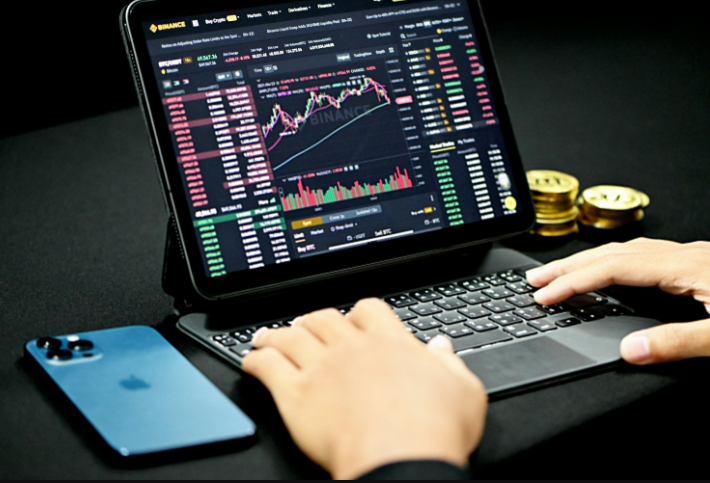
Introduction to Market Volatility in Cryptocurrency
Market volatility in cryptocurrency refers to the degree of variation in the price of cryptocurrencies over a specified period. It is characterized by rapid and significant price movements that can occur in a matter of hours or even minutes. This volatility is one of the defining traits of the cryptocurrency market, distinguishing it from traditional financial markets, where price fluctuations tend to be more moderate and predictable.
Several factors contribute to the high volatility observed in cryptocurrency trading. One primary factor is the relatively low liquidity compared to traditional asset classes. Liquidity, which refers to how easily an asset can be bought or sold in the market without affecting its price, is often lower in cryptocurrency exchanges. This diminished liquidity can lead to larger price swings in response to market activities such as buying or selling chains of cryptocurrencies.
Moreover, the cryptocurrency market is significantly influenced by external factors including regulatory news, technological advancements, and market sentiment. For example, announcements from governments regarding regulations can lead to sharp price increases or decreases, as traders react quickly to perceived threats or opportunities. Similarly, technological changes, such as forks or enhancements in blockchain technology, can also lead to heightened market activity and volatility.
The speculative nature of cryptocurrency investment is another key element contributing to market volatility. Many investors engage in trading decisions based on market trends or news rather than evaluating long-term fundamentals. This speculative trading can amplify price movements, leading to a cycle where traders move in and out of positions based on short-term market signals, thereby fueling further volatility.
Traders must be acutely aware of these volatility dynamics when developing their trading strategies. An understanding of market volatility is crucial for making informed decisions and managing risk effectively in the fast-evolving cryptocurrency landscape.
Understanding the Risks of Trading in a Volatile Market
Engaging in cryptocurrency trading during periods of high market volatility brings about unique risks that traders must navigate. Market volatility is characterized by rapid price fluctuations, which can result in significant gains, but conversely, can lead to considerable losses if appropriate measures are not taken. A prominent risk associated with trading in such turbulent conditions is the potential for emotional decision-making. Investors may react impulsively to sudden price changes, leading to hasty trades that do not align with their overall strategy or objectives.
Moreover, the unpredictability of cryptocurrencies can create an environment where price trends shift rapidly and unexpectedly. For instance, a trader might buy into a spike without fully understanding the underlying factors, only to experience a sharp drop soon after. This can be detrimental to an investment portfolio, as losses could accumulate quickly without a solid trading strategy in place. Hence, risk management is essential for mitigating these hazards.
Implementing effective risk management strategies is critical in safeguarding investments during volatile market conditions. Diversification, setting stop-loss orders, and employing position sizing tactics are common practices among seasoned traders. These techniques help to limit exposure to individual trades and protect capital from extensive losses caused by sudden market shifts. Furthermore, maintaining a disciplined trading plan and adhering to pre-established guidelines can aid in avoiding emotional pitfalls.
One should also consider the role of market analysis and due diligence before entering trades during high volatility periods. A thorough understanding of market trends, geopolitical influences, and overall economic indicators can provide valuable insights and help in making informed decisions. By recognizing the risks and prioritizing risk management strategies, traders can better navigate the unpredictable landscape of cryptocurrency trading during high market volatility.
Key Concepts in Trading Strategies
In the dynamic landscape of cryptocurrency trading, especially during periods of high market volatility, it is crucial for traders to grasp several key concepts that can significantly enhance their trading strategies. Understanding technical indicators, chart analysis, and market sentiment forms the backbone of effective trading during such uncertain times.
Technical indicators serve as essential tools for traders to assess price movements and market trends, helping them identify potential entry and exit points. Common indicators include moving averages, Relative Strength Index (RSI), and Bollinger Bands. Each of these indicators provides unique insights; for instance, moving averages help smooth price data to discern overall trends, while the RSI identifies whether a cryptocurrency is overbought or oversold, signaling possible price reversals. The careful application of these tools can empower traders to make decisions amid market fluctuations.
Chart analysis, another fundamental aspect, involves examining historical price data to identify patterns and trends. Traders utilize various types of charts, such as candlestick and line charts, to visualize price changes over time. By recognizing patterns like head and shoulders or double tops and bottoms, traders can predict future price movements, thus enhancing their chances of success during volatile periods. Moreover, the ability to interpret volume metrics alongside price charts can further refine a trader’s strategy.
Market sentiment plays a critical role in shaping cryptocurrency prices. Understanding the prevailing mood of investors—whether optimistic or pessimistic—can offer invaluable insights into future market behaviors. Tools such as the Fear and Greed Index can serve as additional indicators of market sentiment, allowing traders to gauge when to enter or exit positions.
When utilized collectively, these concepts lay the groundwork for creating sound trading strategies that can withstand the challenges posed by high market volatility. Traders equipped with this knowledge are more likely to navigate the mercurial nature of cryptocurrency markets effectively.
Types of Trading Strategies for High Volatility
High market volatility presents both opportunities and challenges for cryptocurrency traders. Several trading strategies can be effectively employed during these turbulent periods. Among them, day trading, scalping, and momentum trading stand out due to their adaptability to rapid price fluctuations.
Day trading is a strategy where traders capitalize on short-term price movements by buying and selling cryptocurrencies within the same trading day. This method aims to profit from market inefficiencies and often involves executing multiple trades in a single day. The primary benefit of day trading is the ability to limit exposure to overnight market risks, allowing traders to secure profits quickly. However, it requires a deep understanding of market trends, as well as significant time and attention to monitor the market closely.
Scalping, a subset of day trading, entails making numerous trades over very short time frames. Scalpers seek to exploit tiny price gaps resulting from order flows or spreads. The unique advantage of scalping is the potential for consistent gains through frequent trades, even from small fluctuations. However, this strategy demands a high level of discipline and fast execution, as profits can be minimal per trade. Traders must also be prepared to handle significant transaction costs, which can eat into profits if not managed properly.
Momentum trading involves identifying and riding the momentum of an asset’s price movement. Traders employing this strategy look for assets exhibiting strong price movements in a particular direction, based on the belief that trends will continue. This approach can be advantageous during high volatility periods, as it allows traders to capitalize on significant price trends. Nonetheless, momentum trading can be risky, as sudden reversals may occur, leading to potential losses if traders do not act swiftly to adjust their positions.
Utilizing Stop-Loss and Take-Profit Orders
In the fast-paced environment of cryptocurrency trading, particularly during periods of high market volatility, the use of stop-loss and take-profit orders is paramount for managing risk and securing profits. A stop-loss order is designed to limit potential losses by automatically selling a cryptocurrency when its price falls below a predetermined level. This type of order serves as a safeguard against rapid declines in market value, enabling traders to exit positions before losses escalate. To set an effective stop-loss order, a trader should consider various factors, including market conditions, trading strategy, and their own risk tolerance.
Conversely, take-profit orders are implemented to secure gains by automatically selling an asset when it reaches a specified price point. This order helps traders lock in profits without the need for constant monitoring of market movements, which is particularly valuable during periods of heightened volatility. Setting a take-profit order requires an understanding of the asset’s price trajectory and market sentiment, ensuring that the selected exit point is realistic and beneficial.
Moreover, the effective management of these orders can significantly enhance trading performance. For instance, setting stop-loss orders too close to the current price may result in premature exits, while placing them too far may expose the trader to unnecessary risk. Similarly, take-profit levels should be set based on an analysis of previous price movements and projected market behavior, balancing between securing profits and allowing for further price appreciation. Ultimately, the prudent use of stop-loss and take-profit orders can provide cryptocurrency traders with essential tools for navigating the unpredictable nature of the market, thus facilitating smarter and more strategic trading decisions.
The Role of Technical Analysis in Volatile Markets
In the realm of cryptocurrency trading, particularly during periods marked by high volatility, technical analysis emerges as a vital tool for traders seeking to make informed decisions. This analytical approach leverages historical price data to forecast future price movements and assists traders in identifying potential entry and exit points in the market.
One of the primary advantages of using technical analysis in volatile markets is its reliance on key indicators that can signal potential price changes. Among these indicators, the Relative Strength Index (RSI) is noteworthy. The RSI helps traders determine whether a cryptocurrency is overbought or oversold, thereby facilitating strategic decision-making. A reading above 70 often indicates an overbought condition, suggesting a possible decline, while a reading below 30 may highlight oversold conditions and potential upward momentum.
Another essential component of technical analysis is trend lines, which help traders understand the general direction of the market. By drawing trend lines on price charts, traders can identify patterns that may indicate future behavior. For instance, ascending trend lines signal bullish sentiment, while descending lines can suggest bearish movement. Coupled with chart patterns such as head and shoulders or triangles, traders can gain insights into potential reversals or continuations in price trends.
Moreover, moving averages serve as foundational tools in the technical analyst’s arsenal. The use of simple moving averages (SMA) and exponential moving averages (EMA) allows traders to smooth out price fluctuations, providing a clearer picture of the trend. Crossovers of these averages often signal critical changes in momentum, guiding traders in making timing decisions regarding their trades.
In conclusion, technical analysis equips cryptocurrency traders with the necessary frameworks to navigate high market volatility effectively. By employing various indicators, charting techniques, and patterns, traders can enhance their ability to anticipate price movements, thus fostering more informed trading strategies in unpredictable market conditions.
Psychological Aspects of Trading in Volatile Environments
Trading in volatile markets can present unique psychological challenges for investors, as the rapid price fluctuations often lead to heightened emotional responses. Traders may experience fear, greed, or anxiety, which can significantly affect their decision-making processes. Emotional decision-making tends to cloud judgment and can lead to impulsive actions that deviate from well-planned trading strategies. For instance, when faced with sudden market drops, a trader might panic and sell assets at a loss, driven by fear rather than logical analysis.
Furthermore, the pressure to capitalize on market movements during times of volatility can foster unrealistic expectations. Traders may find themselves caught in the chase for high returns, leading to increased risk-taking behavior. This behavior often manifests in overleveraging positions and neglecting proper risk management practices, ultimately hampering long-term trading success. It is crucial for traders to recognize these psychological traps and cultivate a disciplined approach grounded in researched strategies.
Establishing a sound mindset through psychological preparation can be a significant advantage. Techniques such as setting clear trading goals, maintaining a structured trading plan, and practicing mindfulness can help traders stay focused and reduce the impact of emotional disturbances. An awareness of one’s psychological state during trading can also aid in developing resilience against the stress associated with high volatility.
Ultimately, understanding the psychological aspects that influence trading behavior emerges as a pivotal factor in achieving success in volatile markets. By prioritizing emotional discipline and maintaining a systematic approach, traders can navigate the turbulent landscape of cryptocurrency trading with greater efficacy.
Real-life Examples of Trading Strategies During High Volatility
High market volatility in cryptocurrency can pose both challenges and opportunities for traders. Analyzing real-life case studies helps to illustrate effective trading strategies used during these turbulent times. One notable example includes the Bitcoin price surge in December 2017, where a rapid increase led to massive fluctuations. Traders employing a momentum strategy capitalized on the rising prices by buying into the trend, which allowed them to profit from short-term gains. However, those who did not employ stop-loss orders faced significant losses as prices plummeted. Learning from this, it is essential to have risk management in place, regardless of market conditions.
Another relevant case is the market correction in March 2020, when the COVID-19 pandemic caused worldwide economic uncertainty. During this period, cryptocurrency prices experienced significant drops. Traders who had previously engaged in hedging strategies, such as using options or futures to offset potential losses, managed to protect their investments to some extent. The use of such derivatives can provide a buffer against sudden market downturns, allowing traders to maintain stability even in high volatility.
Additionally, the gradual adoption of algorithmic trading during volatile periods has emerged as a significant strategy. For instance, traders utilized automated trading bots to execute rapid trades based on predefined parameters. This approach enabled them to respond quickly to market fluctuations, capitalizing on price changes that human traders might miss. The implementation of these algorithms during the heightened volatility of 2021 demonstrated their effectiveness in executing numerous trades in seconds, resulting in profitable outcomes for many.
These examples highlight that successful trading during high volatility relies on a blend of strategies, including momentum trading, hedging, and algorithmic approaches. Understanding the outcomes of these real-life cases offers valuable insights into how traders can navigate the unpredictable nature of the cryptocurrency market effectively. Emphasizing risk management and the adaptation of diverse strategies becomes crucial for ensuring long-term success in an ever-evolving trading environment.
Conclusion and Final Thoughts
In the dynamic world of cryptocurrency trading, particularly during periods of high market volatility, having a well-defined trading strategy is essential. Throughout this blog post, we have discussed various effective trading strategies that traders can employ to navigate the unpredictable nature of the cryptocurrency market. The unpredictable fluctuations in prices can present both challenges and opportunities, making it crucial for traders to remain adaptable and informed.
One of the key takeaways is the importance of risk management. Protecting capital through diversified investments, setting stop-loss orders, and identifying entry and exit points can help mitigate losses during turbulent market conditions. Moreover, traders should focus on their emotional responses, as high volatility can often lead to impulsive decisions. Maintaining a disciplined approach, guided by a previously devised strategy, is vital to achieving long-term success in cryptocurrency trading.
Additionally, ongoing education is paramount. The cryptocurrency landscape is continuously evolving, and staying abreast of market trends, news developments, and emerging technologies will empower traders to make informed decisions. Regularly adjusting strategies based on real-time data and personal performance evaluations can also enhance effectiveness in trading endeavors.
Ultimately, surviving and thriving in a volatile market requires a balance of foresight, tactical planning, and the flexibility to adapt to changing conditions. By implementing robust strategies and committing to lifelong learning, traders can significantly improve their chances of success in the high-stakes environment of cryptocurrency trading.