





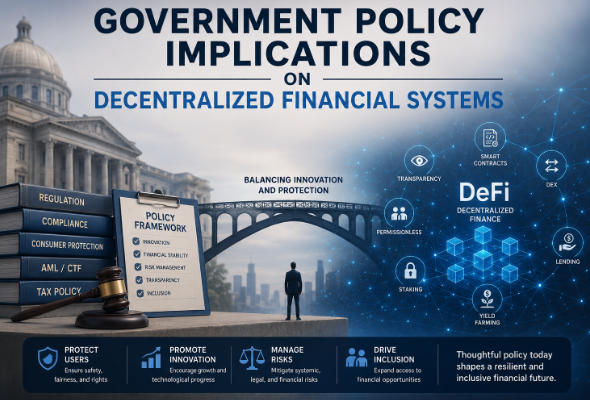
Introduction to Decentralized Financial Systems
Decentralized financial systems, often referred to as DeFi, represent an innovative approach to financial services that fundamentally contrasts with traditional banking systems. At the core of decentralized finance is the notion of removing intermediaries—such as banks and brokers—from financial transactions. Instead, DeFi relies on blockchain technology, which ensures security, transparency, and immutability of transaction records. This technology facilitates peer-to-peer transactions, enabling individuals to engage in financial activities directly with one another without the need for centralized oversight.
One of the defining characteristics of decentralized financial systems is their accessibility. Unlike traditional finance, which can be exclusionary—often favoring certain demographics—DeFi platforms strive to democratize access to financial services. By leveraging smart contracts, users can participate in lending, borrowing, trading, and investing opportunities, often at lower costs compared to conventional systems. This opens the door for individuals in underserved regions or sectors to access financial resources that were previously out of reach.
Furthermore, decentralized finance promotes enhanced user autonomy. Individuals maintain control of their assets and can execute transactions at their discretion, without having to adhere to the limitations typically imposed by traditional financial institutions. By eliminating reliance on intermediaries, DeFi aims to increase financial inclusion, foster innovation in financial products, and drive down costs. These systems harness the power of open-source technology, allowing developers and users alike to refine and enhance the ecosystem collaboratively.
In summary, decentralized financial systems are reshaping how individuals interact with financial services. Through the principles of decentralization and the use of blockchain technology, they provide unique benefits, including greater accessibility, cost-efficiency, and increased control over financial assets. As this technology continues to evolve, its implications on the broader financial landscape become increasingly significant, warranting deeper examination and understanding.
Current Trends in Decentralized Finance (DeFi)
The decentralized finance (DeFi) sector has been experiencing significant growth, characterized by an innovative approach to traditional financial products and services. A primary trend is the rise of decentralized exchanges (DEXs), which allow users to trade cryptocurrencies directly with one another without the need for centralized authority. This shift not only enhances user autonomy but also augments liquidity through automated market-making algorithms, drawing significant involvement from both retail and institutional investors.
In addition to decentralized exchanges, lending platforms have gained traction within the DeFi ecosystem. These platforms facilitate peer-to-peer lending, enabling users to borrow and lend assets without intermediaries. This trend has redefined access to credit, allowing individuals in underbanked regions to participate in global finance. Furthermore, the advent of collateralized loans and over-collateralization practices has provided a safety net, ensuring that both lenders and borrowers can engage in secure transactions.
Yield farming and liquidity mining have also emerged as pivotal components of the DeFi landscape, presenting lucrative opportunities for investors seeking passive income. Yield farming involves depositing cryptocurrency into liquidity pools to earn rewards in the form of additional tokens, while liquidity mining incentivizes users to provide liquidity in exchange for governance tokens. These practices not only attract substantial capital inflow but also empower users by granting them influence over protocol development and decision-making processes.
The rapid expansion of DeFi has forced traditional financial institutions to reconsider their business models and strategies. As interest in decentralized finance increases, conventional banks and financial service providers are exploring partnerships and integrating blockchain technology to remain relevant in this evolving landscape. Therefore, understanding these current trends in DeFi is essential for grasping the implications for governmental policy and the global financial ecosystem.
Understanding Government Policies and Regulations
The regulatory landscape surrounding financial systems is shaped significantly by government policies. These policies are designed to ensure stability, maintain consumer protection, and foster fair competition within financial markets. Regulatory bodies, such as central banks and financial commissions, play a crucial role in establishing and enforcing these regulations to promote a sound financial environment.
One of the key objectives of government regulations is to address systemic risks that threaten the stability of financial systems. Regulatory frameworks often aim to ensure transparency and accountability among financial institutions, which is critical in protecting consumers and investors. With the rise of decentralized finance (DeFi), traditional regulatory approaches have faced challenges, as DeFi operates outside conventional financial intermediaries. This poses a unique dilemma for governments looking to maintain regulatory oversight without stifling innovation.
Governments have responded in various ways to the emergence of decentralized finance. Some jurisdictions are actively developing tailored regulatory frameworks that aim to encompass the characteristics of DeFi while ensuring compliance with safety and security standards. These frameworks might include measures for anti-money laundering (AML) and know your customer (KYC) protocols, particularly as DeFi can obscure user identities and transaction information.
However, the rapid evolution of financial technologies presents challenges that complicate regulatory efforts. Policymakers often struggle to keep pace with the speed at which innovations occur. Consequently, regulations may lag behind technological advancements, leading to potential risks in maintaining market integrity. Furthermore, because Decentralized Finance thrives on the principles of autonomy and decentralization, creating regulations that are both effective and non-intrusive proves to be a difficult balancing act for governments.
Impact of Government Policies on DeFi Growth
The growth of decentralized financial systems (DeFi) has been significantly influenced by government policies, which can either impede or promote this burgeoning sector. Regulatory frameworks often play a crucial role in shaping the operational landscape for DeFi projects and their users. For instance, stringent requirements for Know Your Customer (KYC) processes can pose barriers to entry for many participants, particularly in cases where anonymity is valued and often sought by users in decentralized platforms. Such restrictive measures might lead to decreased user engagement and hinder innovation, as potential new projects may be deterred from entering the market due to an unfavorable regulatory environment.
Conversely, government approaches that embrace innovation can catalyze the growth of decentralized finance. Regulatory sandboxes, for instance, are frameworks set up by governments to allow startups and fintech companies to test their products and services in a controlled environment with relaxed regulatory requirements. This approach not only fosters innovation but also helps regulatory bodies gather data and insights on how decentralized systems operate without imposing immediate restrictions. Countries such as Singapore and the United Kingdom have successfully implemented such sandboxes, demonstrating a balanced approach that safeguards consumer interests while encouraging technological advancements.
Furthermore, supportive regulations can help to legitimize DeFi projects, instilling greater confidence among users and investors. By crafting policies that focus on consumer protection instead of outright bans, governments can facilitate a resilient ecosystem, thereby appealing to a broader audience and ensuring sustainable growth. Overall, the relationship between government policies and the growth of decentralized financial systems is complex, necessitating a careful balancing act to promote innovation while maintaining necessary safeguards.
Challenges Faced by Policymakers
The emergence of decentralized financial systems (DeFi) has introduced a myriad of challenges for policymakers seeking effective regulation. One significant hurdle is the inherent complexity of the technology underlying DeFi platforms. These systems often operate on sophisticated blockchain architectures that can be difficult for regulators to fully comprehend. This technological complexity poses risks of inadvertently misregulating or overlooking critical components that could ensure consumer protection and market stability.
Additionally, the global nature of digital financial markets further complicates regulatory efforts. DeFi operates without centralized authorities, transcending geographical boundaries. As a result, national regulators may find it challenging to enforce existing regulations designed for traditional financial markets. This decentralized structure permits users from different jurisdictions to transact without the oversight of any single authority, leading to a potential regulatory void. Consequently, regulators must grapple with aligning policy approaches across various countries to effectively address risks associated with cross-border transactions.
Moreover, there is a palpable risk that stringent regulations could stifle innovation within the DeFi ecosystem. Policymakers face the difficult task of crafting regulations that protect users and maintain market integrity without hindering the unique benefits of decentralization. Striking a balance between regulation and support becomes paramount. Overregulation could deter emerging projects that might otherwise drive technological advancement and economic growth, whereas underregulation may expose consumers to risks like fraud and volatility. Thus, ongoing dialogue between stakeholders, including developers, regulators, and users, is essential to create a dynamic yet stable regulatory landscape for decentralized finance.
Case Studies of Government Responses to DeFi
Governments around the world are grappling with the rise of decentralized finance (DeFi), resulting in a variety of regulatory approaches. Understanding these diverse responses provides insights into how governments perceive and manage the challenges posed by DeFi systems.
One notable example is the European Union’s upcoming Markets in Crypto-Assets (MiCA) regulation. This comprehensive framework aims to provide a unified regulatory landscape for crypto-assets across member states. The MiCA proposal seeks to balance innovation with consumer protection, requiring DeFi projects to comply with standards related to transparency, operational resilience, and investor rights. This proactive approach exemplifies an effort to foster innovation while placing regulatory safeguards around decentralized finance.
In contrast, the United States exhibits a more fragmented regulatory framework. Individual states have adopted varying positions towards DeFi. For instance, Wyoming has been at the forefront, passing legislation to facilitate the growth of blockchain technology and decentralized finance by providing legal recognition for digital assets. Conversely, other states have been more cautious, prompting a complex patchwork of regulations that can be challenging for DeFi projects to navigate. This decentralized regulatory response highlights the balancing act between fostering innovation and addressing potential risks associated with decentralized financial systems.
Meanwhile, China has taken a more prohibitive stance towards DeFi. The Chinese government has implemented strict regulations, including a ban on cryptocurrencies and tightened controls over blockchain technologies. The government’s primary focus has been to curb financial risks associated with speculation and to maintain control over its financial system. As a result, many DeFi projects have found it difficult to operate legally within China, reflecting a challenge faced by governments aiming for a balance between promoting technological development and safeguarding financial stability.
Future of Decentralized Finance and Policy Interactions
The relationship between decentralized finance (DeFi) and government policies is poised for significant evolution as the landscape of financial technology transforms. Government regulation, traditionally focused on centralized financial systems, is becoming increasingly pertinent in the decentralized finance realm. This shift stems from the growing adoption of blockchain and cryptocurrencies, which necessitates a reevaluation of existing financial regulations.
One potential scenario involves the development of cohesive regulatory frameworks specifically designed for decentralized financial systems. These regulations could aim to ensure consumer protection, prevent financial crimes, and promote market stability while fostering innovation. Governments may begin working in tandem with DeFi projects to create guidelines that support transparency and accountability in a space that is often criticized for its anonymity and lack of oversight.
Moreover, the evolution of decentralized governance models could become pivotal in shaping the future of DeFi. The integration of governance tokens in numerous DeFi protocols allows users to participate in decision-making processes directly. This participatory approach could lead to a more democratized financial ecosystem, wherein users have an active role in influencing policy decisions. As these governance models mature, they could serve as frameworks for collaborative regulation, possibly leading to a harmonious relationship between DeFi and regulatory authorities.
In light of current trends, it is conceivable that regulators might embrace a more adaptive posture towards blockchain technologies, acknowledging the benefits they offer. Engaging with the DeFi community could result in innovative compliance strategies that respect the essence of decentralization while addressing regulatory concerns. Consequently, the future promises a dynamic interplay between decentralized finance and government policies, where both entities might ultimately find synergy in advancing the financial landscape.
The Role of Stakeholders in Shaping Policy
In the evolving landscape of decentralized financial systems, the role of stakeholders cannot be understated. Different groups, including developers, consumers, regulatory bodies, and financial institutions, play crucial roles in shaping the policies that govern decentralized finance (DeFi). Each stakeholder brings a unique perspective, and their collective input is vital for the formulation of effective regulations.
Developers are at the forefront of innovation, responsible for creating the protocols and platforms that underpin DeFi applications. Their technical expertise provides insights into the capabilities and limitations of decentralized systems. By actively engaging with policymakers, developers can advocate for regulations that support innovation while ensuring compliance with existing legal frameworks. Their involvement is essential in balancing the need for security and user protection with the desire for technological advancement.
Consumers also have a significant voice in shaping financial policies, as their experiences and needs influence market trends and demand for various services. As the end-users of decentralized financial products, consumers must communicate their concerns regarding issues such as security, privacy, and access to services. Consumer feedback can guide regulators to understand the real-world implications of their policies and ensure that they are responsive to the evolving needs of the market.
Regulatory bodies play a pivotal role in establishing guidelines that protect both consumers and the integrity of financial systems. By fostering an open dialogue with other stakeholders, regulators can develop adaptive policies that encourage innovation while mitigating risks. Collaboration with developers and consumers can lead to regulations that are not only effective but also promote the growth of decentralized finance in a sustainable manner.
Financial institutions, as traditional players in the finance sector, can also contribute to shaping decentralized finance policies. Their experience with established regulatory frameworks can help bridge the gap between traditional and decentralized systems, ensuring that new regulations foster cooperation rather than conflict.
The interplay between these diverse stakeholders is crucial for the development of a balanced and effective policy environment. Continuous dialogue and cooperation are essential to address the challenges and opportunities that arise from the decentralized financial ecosystem.
Conclusion: Balancing Innovation and Regulation
As the landscape of decentralized finance continues to expand, the implications of government policy on these systems become increasingly significant. A balanced approach is essential to nurture innovation while ensuring that adequate protections for consumers and the broader financial ecosystem are implemented. Policymakers face the challenge of fostering an environment conducive to technological advancements in decentralized finance, including Blockchain and smart contracts, which promise to enhance financial inclusion and efficiency.
Moreover, it is crucial to recognize that innovation in decentralized finance comes with inherent risks. These include potential market volatility, security threats, and issues related to fraud and manipulation. Therefore, robust regulatory frameworks are needed, which not only safeguard participants but also promote sustainable growth within the sector. Striking this balance requires collaborative efforts among stakeholders, including innovators, regulators, and consumers to develop policies that both support growth and protect users.
In order to achieve a harmonized relationship between decentralized finance and government regulation, it is vital for policymakers to stay informed about ongoing developments in technology and market dynamics. Future research should explore the impacts of emerging technologies on economic stability and consumer behavior, paving the way for more informed policy decisions. Furthermore, encouraging open dialogues among various stakeholders will help to identify best practices, improve compliance measures, and ultimately lead towards a more inclusive financial environment.
In summary, the challenge lies not only in regulating decentralized finance effectively but also in fostering an atmosphere that encourages innovation. This dual focus will be beneficial as we navigate the evolving intersection of technology and finance, paving the way for responsible growth in this transformative sector.