




Understanding Trend Following
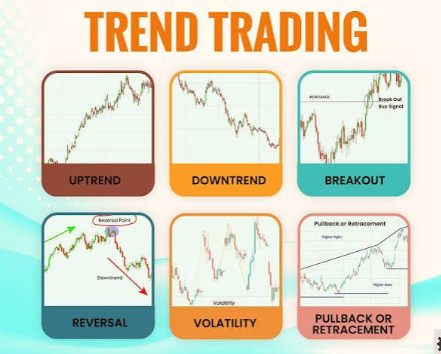
Trend following is a trading strategy that seeks to capitalize on upward or downward market trends. It is particularly relevant in the context of cryptocurrency trading, where market volatility can present both opportunities and risks. By identifying prevailing market trends, traders can make informed decisions that align with price movements, thereby enhancing their potential for profit.
The foundation of trend following lies in the concept of momentum. Momentum refers to the tendency of an asset’s price to persist in its current direction for a period of time. In cryptocurrency markets, where rapid shifts in price can occur, understanding and harnessing momentum can be crucial for success. Traders who adopt a trend following approach typically look for benchmarks that signal when to enter or exit a position based on these trends.
One of the primary principles of trend following is the idea of buying high and selling higher. This may seem counterintuitive, but it is based on the belief that in a strong uptrend, prices will continue to rise, and capitalizing on these upward movements can yield significant returns. Conversely, in a downtrend, traders may look to sell low and secure profits before further declines. This strategy requires traders to be vigilant and responsive to market cues, utilizing tools such as technical analysis to identify trends.
Moreover, realizing that trends can exist at different time frames is critical. Some traders focus on short-term movements, while others may adopt a longer-term perspective, aligning their strategies with broader market trends. Regardless of the time frame chosen, the core principle remains the same: identifying trends can empower traders to make strategic decisions that may increase their potential for success in the dynamic cryptocurrency landscape.
Why Trend Following Works in Cryptocurrency Markets
Trend following is a popular investment strategy employed by traders in various financial markets, including the highly volatile cryptocurrency sector. One key reason why this approach proves effective is the inherent nature of price movements within these markets. Cryptocurrencies are known for their rapid price fluctuations, which can lead to significant opportunities for traders who recognize and act upon prevailing trends.
Investor psychology plays an essential role in the efficacy of trend following strategies. In the cryptocurrency markets, emotions such as fear and greed often drive market movements, leading to the establishment of trends. When a cryptocurrency witnesses a bullish momentum, it creates a psychologically driven following, attracting more investors and fueling further price increases. Conversely, negative market sentiment can lead to sharp declines. Trend following, therefore, capitalizes on these psychological patterns by encouraging traders to align their strategies with the prevailing market momentum.
Additionally, historical trends in popular cryptocurrencies such as Bitcoin and Ethereum serve as powerful examples of the effectiveness of trend following. Over the past few years, these assets have displayed clear upward and downward trends, demonstrating that past performance can be indicative of future price movements. For instance, during the bullish phases of Bitcoin’s price trajectory, many traders achieved significant returns by implementing trend following techniques, thereby underlining the importance of recognizing and acting upon established trends.
The combination of price movements driven by market psychology and the historical patterns observed in cryptocurrency performance reinforces the value of trend following. By utilizing this strategy, traders can position themselves advantageously in the market, potentially enhancing their chances of success in the unpredictable world of cryptocurrencies. Understanding why trend following works can be critical for those looking to navigate this dynamic landscape effectively.
Setting Up for Success: Key Tools and Indicators
Implementing a successful trend following strategy in the cryptocurrency market requires familiarization with essential tools and technical indicators. These tools not only assist traders in identifying existing trends but also help to affirm potential trading opportunities based on market conditions.
One of the most widely used tools in trend analysis is the moving average. This indicator smooths out price fluctuations by averaging prices over a specified period, enabling traders to determine the direction of the trend more effectively. There are several types of moving averages, including the simple moving average (SMA) and the exponential moving average (EMA). The EMA gives more weight to recent prices, making it particularly useful in fast-moving markets such as cryptocurrencies.
Another vital indicator to consider is the Relative Strength Index (RSI). This momentum oscillator measures the speed and change of price movements and ranges between 0 and 100. An RSI value above 70 typically indicates that an asset is overbought, while a value below 30 suggests it is oversold. By integrating RSI into your analysis, you can gain insights into the strength of a trend and its potential reversal points.
Chart patterns also play a critical role in technical analysis. Familiarizing yourself with common patterns, such as head and shoulders, flags, and triangles, can provide visual cues regarding potential trend reversals or continuations. These patterns often communicate important information about market psychology and investor sentiment. By analyzing these formations in conjunction with moving averages and RSI, traders can confidently confirm trends.
Incorporating these essential tools and indicators into your trend-following strategy will significantly enhance your decision-making process. Learning how to use them together effectively can lead to a more structured approach to trading, making it easier for beginners to navigate the complexities of the cryptocurrency market.
Developing a Simple Trend Following System
Creating a simple trend following system can empower new traders to navigate the dynamic world of cryptocurrency trading effectively. The first essential step in this process is to identify the entry and exit points. A trader might choose to enter a position when the price moves above a certain moving average, indicating an uptrend. For example, utilizing the 50-day moving average can provide a reliable signal for identifying bullish trends. Conversely, setting exit points, which can also be based on moving averages or certain percentage gains, is crucial in capitalizing on market movements.
Next, the implementation of stop-loss orders is vital for risk management. A stop-loss order serves as a safety net, enabling traders to minimize potential losses. As a general guideline, a stop-loss can be set below the most recent swing low for long positions, thereby exiting the trade if the market moves unfavorably. This mechanism helps maintain discipline and protect trading capital, reflecting sound investment practice.
Moreover, managing leverage is an important consideration within the trend following strategy. It allows traders to control a larger position in the market than their initial capital would permit, but it also amplifies risk. Beginners should approach leverage with caution, using lower levels to avoid significant losses when the market experiences volatility. A common recommendation for new traders is to use leverage no greater than 2:1, as it balances the potential for profits with manageable risk exposure.
In essence, a simple trend following system comprises defining entry and exit points, setting stop-loss orders, and exercising prudent leverage management. By keeping the approach straightforward, novice traders can build their confidence while developing essential trading skills. This foundational framework not only makes the trading journey more approachable but also enhances the likelihood of achieving favorable results in the ever-changing cryptocurrency arena.
Risk Management in Trend Following Strategies
Risk management stands as a foundational pillar within the realm of trading, especially when employing trend following strategies in cryptocurrency markets. Acknowledging the inherent volatility of these assets, traders must prioritize the protection of their capital to ensure long-term sustainability and success. One effective method of managing risk is through the implementation of stop-loss orders. This tool allows traders to set predetermined exit points for their positions, thereby minimizing potential losses in the event of adverse market movements.
Another critical aspect of risk management is diversification. By spreading investments across various cryptocurrencies rather than concentrating all capital in a single asset, traders can significantly reduce the impact of any one asset’s poor performance on their overall portfolio. A diversified approach not only mitigates risk but also allows traders to capitalize on multiple trends simultaneously, enhancing their potential returns.
Position sizing, the practice of determining how much capital to allocate to a particular trade, is equally vital in managing risk. Traders must evaluate their risk tolerance and adjust their position sizes accordingly. By adhering to a disciplined approach that factors in both risk and reward, traders can avoid the pitfalls of over-leveraging or under-investing. It is imperative to assess risk comprehensively before entering any trade. Engaging in thorough market analysis and maintaining a keen awareness of both macroeconomic factors and market sentiment can enable traders to make informed decisions.
Furthermore, maintaining discipline in executing trades and adhering to established risk management strategies is paramount. Emotional decision-making can lead to significant losses; therefore, traders must cultivate patience and remain committed to their risk management protocols. By creating and following a structured trading plan, individuals can enhance their chances of achieving success in the volatile world of cryptocurrency trading.
Backtesting Your Strategy
Backtesting is an essential component of developing a successful trend following strategy in the realm of cryptocurrency trading. This process involves testing a trading strategy using historical data to determine how it would have performed in the past. By simulating trades using past market conditions, traders can gain valuable insights into the potential effectiveness of their strategies before committing real capital.
The first step in backtesting a trend following strategy is to select an appropriate historical dataset. This data should encompass various market conditions, including bullish trends, bearish trends, and periods of high volatility. Utilizing a diverse range of historical data allows traders to understand how their strategy might behave across different market environments.
Once the dataset is selected, traders should focus on identifying key metrics that will help evaluate the strategy’s performance. Important performance indicators include the win/loss ratio, maximum drawdown, total return, and risk-adjusted returns such as the Sharpe ratio. Analyzing these metrics can provide insight into the strategy’s risk profile and its potential profitability.
After conducting initial analyses, traders should refine their strategies based on backtesting results. This may involve adjusting entry and exit signals, tweaking stop-loss levels, or modifying position sizing. It is crucial to remain objective during this process. Over-optimization, also known as curve fitting, can lead to strategies that perform well on historical data but fail to deliver similar results in live markets.
Furthermore, traders should document all findings from the backtesting process thoroughly. This documentation serves as a reference point when implementing the strategy in real-time trading and helps in making informed decisions based on empirical evidence rather than assumptions. Having a clear record of the strategy’s historical performance can boost confidence when facing the volatility of the cryptocurrency markets.
In conclusion, backtesting is a pivotal step in creating a robust trend following strategy. It enables traders to evaluate their approach against historical data, refine their methods, and prepare for real-world trading conditions, ultimately enhancing their likelihood of success in the dynamic cryptocurrency landscape.
Common Mistakes to Avoid as a Beginner
Entering the world of cryptocurrency trading can be exhilarating, but it also comes with its challenges. For beginners, understanding common pitfalls when employing trend following strategies is crucial for building a sustainable trading approach. One frequent mistake is over-trading. Many novice traders feel the pressure to constantly engage in the market, believing that more trades will lead to higher profits. However, this can lead to unnecessary losses, as it may result in reacting impulsively to every price movement instead of adhering to a well-thought-out strategy.
Another significant issue is the tendency to neglect strategy adaptation in response to changing market conditions. The cryptocurrency market is known for its volatility, and what might have worked in one period may not perform as well in another. Failing to adjust one’s trend following strategies based on evolving market trends can lead to missed opportunities or, worse, substantial losses. It is essential to regularly reevaluate and adjust strategies, incorporating new information and market indicators.
Emotional decision-making is another common mistake among novice traders. Many beginners allow emotions such as fear and greed to dictate their trading strategies, which can lead to rash and reactive decisions. Successful trend following requires a clear mindset and disciplined approach, preventing emotions from overshadowing rational analysis. Implementing a trading plan that outlines specific criteria for entering and exiting trades can help mitigate the risk of emotional trading.
To avoid these common pitfalls, beginners should focus on developing a robust trading strategy, practicing discipline, and remaining aware of market conditions. Utilizing tools like paper trading to practice different scenarios can also be beneficial before committing real capital. By recognizing these mistakes early on, beginner traders can enhance their likelihood of success in the ever-evolving cryptocurrency market.
Embracing a Mindset for Success
In the volatile world of crypto trading, having the right mindset is crucial for success, particularly when employing trend following strategies. Successful traders understand that achieving consistent results is not solely reliant on strategy or market knowledge, but it is significantly influenced by psychological factors. A trader must cultivate a mindset that emphasizes patience and emotional control, which are essential attributes when navigating the unpredictable nature of the cryptocurrency market.
Patience is a virtue that is particularly relevant in trading. It is important to recognize that trends do not always develop rapidly; sometimes they require time to manifest fully. A patient trader is more likely to stick to their strategy and wait for optimal conditions rather than make impulsive decisions based on short-term market fluctuations. This long-term perspective is vital, as it allows traders to capitalize on the full potential of a trend instead of prematurely exiting due to momentary volatility.
Emotional control follows closely behind patience in terms of importance. The emotional highs and lows that come with trading can significantly impact decision-making. Traders must develop strategies to manage these emotions effectively. Techniques such as setting clear risk management rules, maintaining a diversified portfolio, and regularly reviewing overall performance can help mitigate emotional responses to market movements. Furthermore, by cultivating resilience, traders can better cope with losses without letting fear or frustration derail their overall strategy.
An essential component of a successful trading mindset is the ability to view losses as part of the learning process. Every trader experiences losses, but how one responds to them determines future success. Embracing these challenges with a mindset focused on growth can turn setbacks into valuable lessons, fostering improvement in trading strategies and psychological fortitude.
Continuing Your Education and Staying Informed
As a beginner engaging in cryptocurrency trading, it is crucial to recognize the importance of ongoing education and remaining informed about market trends. The crypto market is highly dynamic, with changes occurring rapidly, so adapting your strategies based on new information is vital for long-term success.
One effective way to enhance your understanding is by seeking out reputable educational resources. Numerous online platforms offer tutorials, webinars, and courses focused on cryptocurrency trading and trend-following strategies. Websites like Coursera and Udemy provide structured courses, while YouTube channels can offer practical insights and real-time analysis. These resources can help you grasp the nuances of the market and refine your trading techniques.
Additionally, joining cryptocurrency communities can greatly enhance your learning experience. Forums such as Reddit’s r/CryptoCurrency or specialized platforms like Bitcointalk allow you to engage with other traders. These communities can be invaluable for sharing experiences, asking questions, and discussing new strategies. Networking with others who share similar interests can foster a supportive environment where you can learn best practices and stay updated on trends, news, and any shifts in market sentiment.
It is also imperative to keep yourself informed about the latest news within the cryptocurrency sector. Following credible news sources, such as CoinDesk and CoinTelegraph, can help you acquire information on regulatory changes, technological advancements, and emerging blockchain projects. Having this knowledge will aid you in making informed decisions and adapting your strategies to align with current market conditions.
In conclusion, as you continue your journey in cryptocurrency trading, prioritize your education and stay proactive in gathering information. By leveraging available resources and engaging with the community, you can enhance your understanding and develop more effective trend-following strategies tailored to the ever-evolving nature of the crypto market.